Carrd and Shopify get compared a lot, but they are not really built for the same job.
Carrd is a low-cost builder for fast, responsive one-page sites. Shopify is a full ecommerce platform built to run, manage, and scale an online store.
We built test sites on both to work out who each one actually serves, and the short version is simple: if your goal is to sell products properly, Shopify wins comfortably. If you just need a cheap, quick landing or sales page, Carrd is hard to beat.
In this comparison we look at pricing, selling features, ease of use, design, and scaling, then break down which tool fits which type of business.
Carrd vs Shopify: Quick Verdict
- Shopify: Best overall for selling online, ideal for stores that want to grow. New stores can get their first 3 months for $1/month.
- Carrd: Best for low-cost, one-page sites such as landing pages, link-in-bio pages, and simple sales pages.
These two tools sit in different categories, so the right answer depends entirely on what you are trying to build. The comparison below is most useful once you have decided whether you need a single page or a real store.
Quick Comparison: Carrd vs Shopify
| Feature | Carrd | Shopify |
|---|---|---|
| Best for | One-page sites, landing pages, link-in-bio | Full online stores and scaling sales |
| Starting price | Free; paid from $9 to $49 per year | From $29/month (Basic, billed annually) |
| Free option | Free plan with up to 3 sites | 3-day free trial, then $1/month promo |
| Product catalog | No catalog or inventory | Unlimited products |
| Payments | Stripe payment forms only | Shopify Payments plus 100+ gateways |
| Cart and checkout | No native cart | Built-in cart and checkout |
| Inventory and shipping | None | Full inventory, shipping labels, taxes |
| Apps and integrations | Embeds and basic integrations | Large app store with thousands of apps |
| Multichannel selling | No | Yes (social, marketplaces, POS) |
| Transaction fees | None from Carrd | None with Shopify Payments |
| Setup time | Minutes | Longer, but guided |
Carrd at a glance
Strengths
- Extremely cheap and quick to launch
- Clean, responsive one-page templates
- Forms, embeds, and Stripe-powered payment buttons
Limits
- No real cart, catalog, or inventory
- Annual-only billing with no monthly option
- Hits a ceiling fast for anything store-like
Shopify at a glance
Strengths
- Complete commerce engine with checkout, inventory, and shipping
- Multichannel selling and a huge app ecosystem
- Built to scale from first sale to enterprise
Limits
- Much higher monthly cost than a simple page builder
- More setup and decisions before launch
- Overkill if you only need one page
Best for Pricing: Carrd
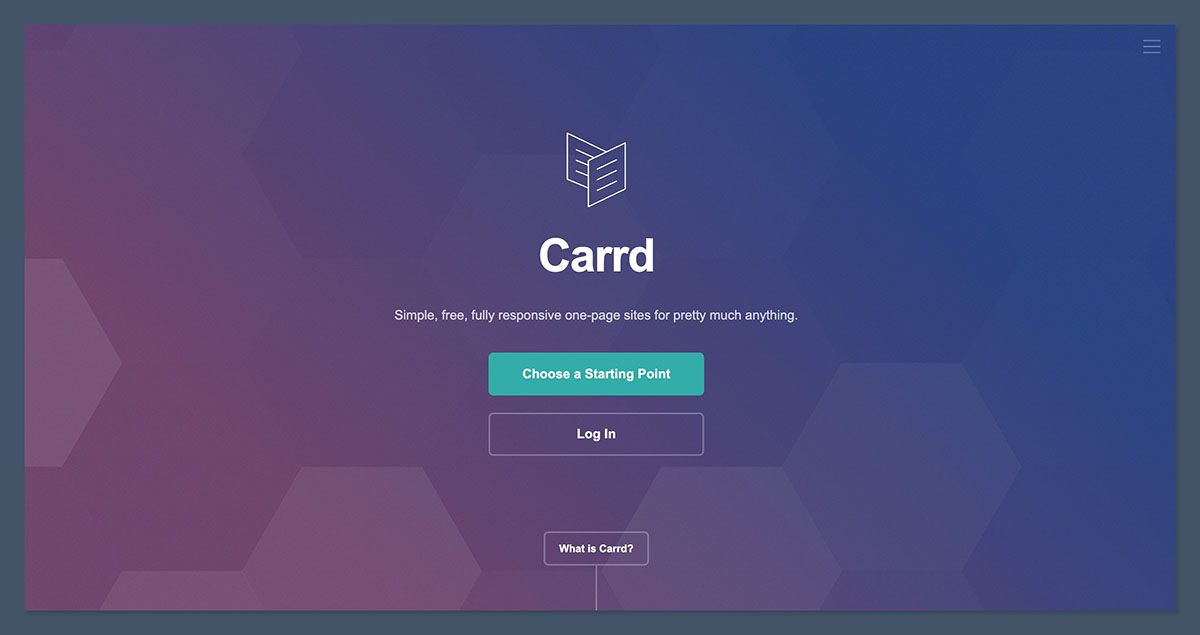
On raw cost, there is no contest. Carrd is annual-only and runs from a free tier up to Pro Plus, with paid plans at $9, $19, and $49 per year.
Pro Standard at $19 per year is the plan most people land on because it adds a custom domain, forms, and analytics. Carrd also charges no transaction fees of its own.
Shopify operates on a completely different scale. Its three core plans run from $29/month for Basic up to $399/month for Advanced when billed annually, with Plus starting from roughly $2,300/month for enterprise sellers.
There is also a lightweight Starter plan at $5/month for selling through social and link sharing rather than a full store. New stores can claim a 3-day free trial followed by a promotional rate of $1/month for the first three months on the core plans.
The catch is that you are paying for very different things. Carrd is cheap because it does very little beyond hosting a page. Shopify costs more because it runs an entire store, including payments, inventory, and shipping. So Carrd wins on price, but only the price comparison itself is misleading until you match it to what you need.
The Winner
Carrd is far cheaper, but for a narrower job. If you only need a single page, paying a few dollars a year is unbeatable. If you need to actually sell at scale, Shopify’s higher cost buys functionality Carrd does not offer.
Best for Selling Online: Shopify
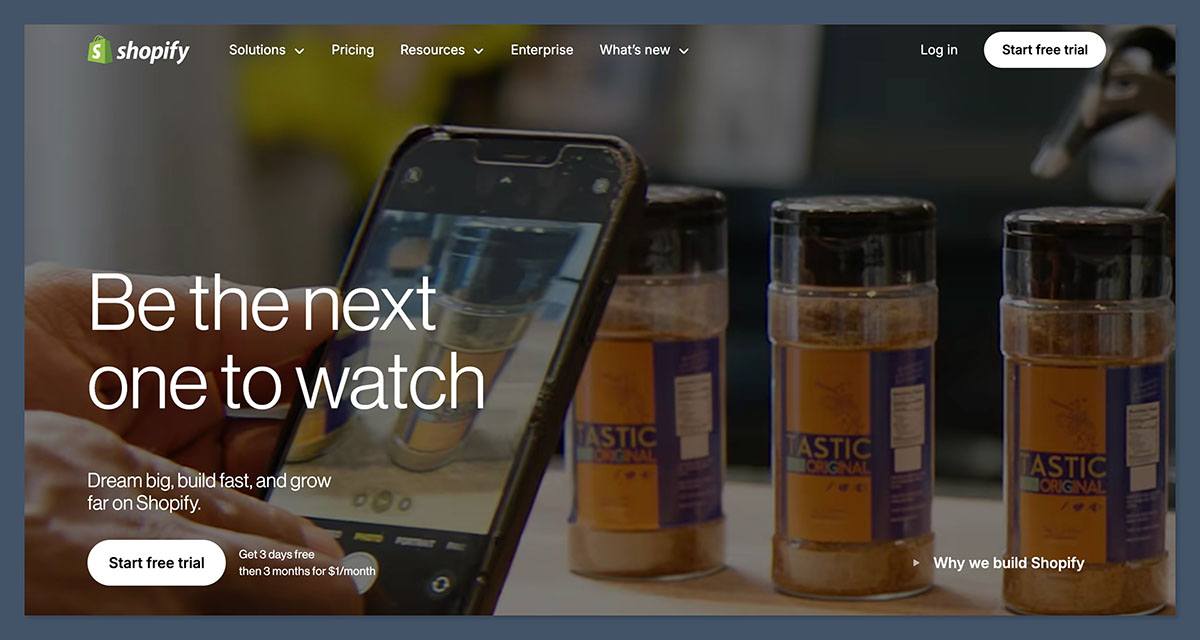
This is where the two tools stop being comparable. Shopify is a dedicated ecommerce platform, so selling is the core of the product.
You get unlimited products, a built-in cart and checkout, inventory management, shipping labels, discount codes, automated tax handling, abandoned checkout recovery, gift cards, fraud analysis, and B2B features on higher plans. You can also sell across multiple channels, including Instagram, TikTok, Amazon, Etsy, and in person through Shopify POS.
Carrd, by contrast, was never designed to be a store.
You can collect payments through Stripe-powered forms or buttons, which works fine for a single product, a tip jar, or a simple digital download. But there is no shopping cart, no product catalog, no inventory, and no order management. Once you want to sell more than a handful of items or track stock, you have outgrown it.
The Winner
Shopify wins on selling by a wide margin. Carrd can take a payment, but Shopify runs a real store with everything a growing seller needs.
Easiest to Use and Fastest to Launch: Carrd
If speed is the priority, Carrd is the clear pick. You can choose a template, drop in your text and images, and publish a polished one-page site in minutes.
The learning curve is almost flat, which is exactly why it is so popular for landing pages, waitlists, and quick personal sites.
Shopify is more involved, simply because it does more. You set up products, configure payments, choose shipping rules, and pick a theme before you go live. It guides you through the process with a setup checklist, and it is genuinely approachable for a platform of its scope, but it will never be as fast as publishing a single page.
That extra time is the cost of building something that can actually run a business.
The Winner
Carrd is faster and simpler to launch. Shopify is reasonable given everything it sets up, but it cannot match a one-page builder for raw speed.
Best for Design and Templates: It Depends
Carrd’s templates are clean, modern, and fully responsive, but they are built for one page. That focus is a strength when you want a tight, scroll-friendly landing page that looks sharp on mobile without any tinkering.
Shopify offers full multi-page store themes, with a library of free options plus premium themes as a one-time purchase.
These are designed around product pages, collections, and checkout rather than a single scrolling page. Neither is better in the abstract; they are built for different outcomes.
The Winner
It comes down to what you are building. Carrd wins for single-page polish, Shopify wins for full storefront design.
Best for Scaling and Growth: Shopify
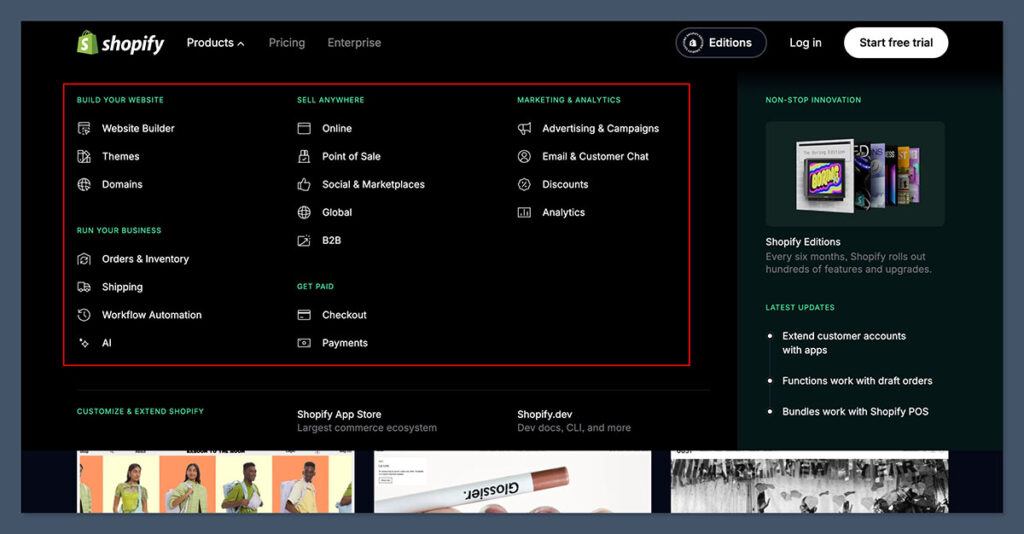
If there is any chance your project grows into a real business, Shopify is the safer foundation. The app store lets you add reviews, email, upsells, and dozens of other functions.
Multichannel selling, detailed analytics, international currencies and languages, point of sale, and B2B tools all sit inside one platform, so you rarely have to migrate away as you grow.
Carrd has a low ceiling by design. It is excellent at being a page, but it offers no path to inventory, order management, or multichannel sales. The moment your needs expand, you are looking at moving to a different tool entirely.
The Winner
Shopify scales, Carrd does not. Start on Shopify if growth is part of the plan; choose Carrd if the project is intentionally small.
Which Should You Choose?
Because these tools do different jobs, the best way to decide is to match the platform to your scenario.
Choose Carrd if you are:
- A creator who needs a link-in-bio or personal page
- A service business or freelancer who wants a simple portfolio or contact page
- Validating an idea with a coming-soon page, waitlist, or lead capture form
- Selling a single digital product through a Stripe button
Choose Shopify if you are:
- Selling physical products or managing real inventory
- Listing more than a handful of products
- Planning to sell across social, marketplaces, or in person
- Building something you expect to grow over time
If you only want to test the water with social selling and a few product links rather than a full store, Shopify’s $5/month Starter plan sits neatly between the two options.
How We Test Ecommerce Tools
We compare ecommerce and website tools using a consistent, hands-on process so the recommendations reflect real use rather than marketing claims.
We build test pages and stores on each platform and weigh seven areas by how much they matter to the reader.
| Criteria | Weight | What we assess |
|---|---|---|
| Ecommerce capabilities | 35% | Checkout, payments, inventory, and selling tools |
| Ease of use and setup speed | 20% | How quickly you can build and publish |
| Value for money | 15% | What each plan delivers for the price |
| Design and templates | 12% | Quality and flexibility of available designs |
| Scalability and integrations | 10% | Apps, channels, and room to grow |
| Support and resources | 8% | Help channels, guides, and documentation |
We also test each platform ourselves so the insights come from first-hand experience rather than spec sheets, which matters most when two tools are as different as these.
Carrd vs Shopify: Our Winner
For anyone whose goal is to sell online, Shopify is the better choice without much debate.
It runs a complete store, scales with you, and packs in features Carrd simply does not have. The trade-off is a higher monthly cost and a longer setup.
Carrd wins on its own terms. For a fraction of the price and a fraction of the effort, it produces a clean, fast one-page site that is ideal for landing pages, link-in-bio pages, and lightweight selling through Stripe. It is not a store, and it does not pretend to be.
So the honest verdict is the one we started with: define your goal first. If you need a real online store, go with Shopify. If you need a cheap, quick page, Carrd is the smarter spend.
Frequently Asked Questions
Can you sell products with Carrd?
You can collect payments through Stripe-powered forms and buttons, which works for a single product, a digital download, or a simple checkout. Carrd has no shopping cart, product catalog, or inventory, so it is not suited to running a real store.
Is Carrd cheaper than Shopify?
Yes, by a large margin. Carrd’s paid plans run from $9 to $49 per year, while Shopify’s core plans start at $29 per month. The two are priced differently because they do very different jobs.
Can Carrd replace Shopify?
Only for very light use cases. If you need one page and a simple way to take a payment, Carrd can stand in. For inventory, multiple products, shipping, or multichannel selling, you need Shopify or a comparable platform.
Does Shopify have a free plan?
There is no permanent free plan, but Shopify offers a 3-day free trial followed by a promotional rate of $1/month for the first three months on its core plans, so you can build and test before paying full price.
Which is better for a complete beginner?
For pure simplicity, Carrd is easier and faster to launch. If the beginner intends to sell products and grow, Shopify is more to learn upfront but a better long-term foundation.
Can I use Carrd and Shopify together?
Yes. A common setup is using Carrd for a campaign landing page or link-in-bio and pointing buyers to a Shopify store for the actual checkout, letting each tool do what it does best.


