Stan Store and Shopify are two very different routes into selling online, but which one actually fits your business?
We’ve spent hours testing creator-focused storefronts and full ecommerce platforms to bring you an expert recommendation.
As a result, Shopify is the clear winner if you want to build a scalable online store, while Stan Store is the smarter pick for creators monetizing a social audience with digital products.
Stan Store vs Shopify: Quick Verdict
- Shopify – Best overall, ideal for building and scaling a real ecommerce business with physical or digital products
- Stan Store – Best for creators selling digital products, coaching, and memberships straight from a link in bio
In this review, I’ll take a closer look at how Stan Store and Shopify compare on pricing, sales features, ease of use, design, and support, so you can pick the right platform for your business model.
Quick Comparison: Stan Store vs Shopify
Get a fast overview of how the two platforms stack up in the table below:
| Feature | Stan Store | Shopify |
|---|---|---|
| Starting price | $29/month (Creator) | $29/month annual ($39 monthly) on Basic |
| Free trial | 14 days | 3 days, then $1/month promo available |
| Best for | Creators, coaches, digital products | Physical and digital stores, growing brands |
| Product types | Digital products, courses, coaching, memberships | Physical, digital, services, subscriptions |
| Storefront style | Mobile-first link in bio | Full branded website |
| App ecosystem | Limited, integrates via Zapier | Thousands of apps |
| Built-in email marketing | Yes (Creator Pro) | Shopify Email, plus apps |
| Funnels and upsells | Native on Creator Pro | Via apps |
| Transaction fees | 0% platform fee (Stripe fees apply) | 0% with Shopify Payments, otherwise extra fees |
Best for Pricing: Stan Store
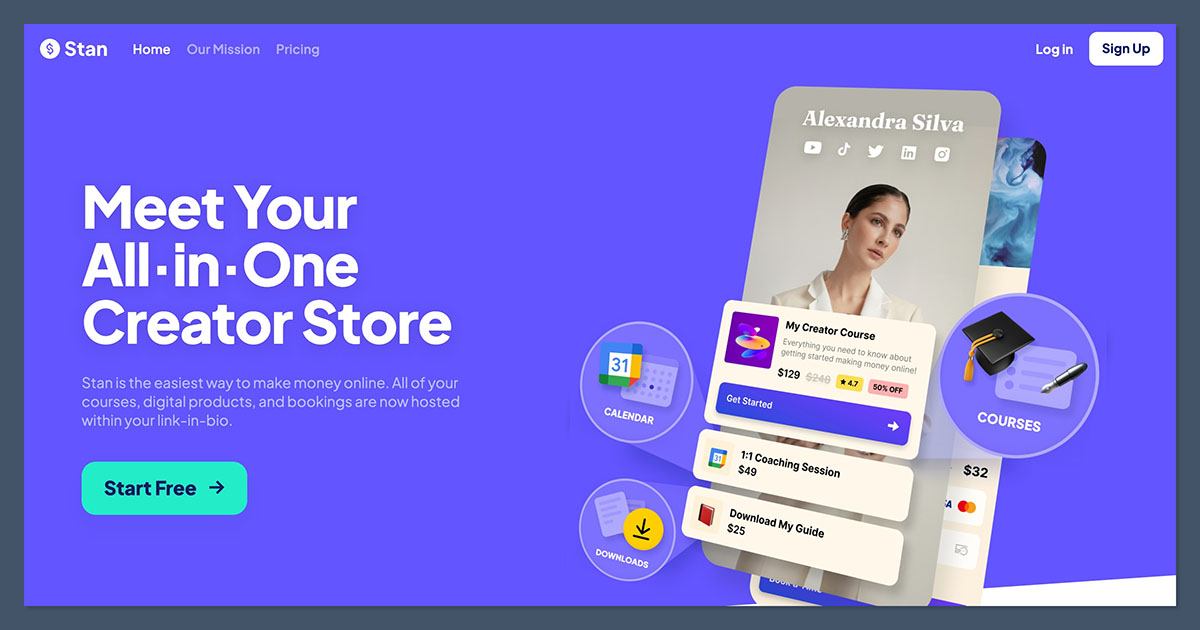
If you’re starting small and want predictable costs, Stan Store wins on pricing for most creators. Both platforms start at $29 per month, but what you get for that price, and what you’ll likely pay in total, is very different.
Stan Store has just two plans:
- Creator – $29 per month ($25 per month billed annually)
- Creator Pro – $99 per month
The Creator plan gives you a mobile-optimized storefront, unlimited digital products, a course builder, calendar bookings, subscriptions, and AutoDM. Creator Pro adds the marketing stack: funnels, upsells, downsells, email marketing, discount codes, affiliate tracking, and pixel-based retargeting.
There are no platform transaction fees on either plan, though Stripe and PayPal processing still apply on every sale.
Stan also offers a 14-day free trial, which gives you a reasonable window to set up products and test the funnel flow before committing.
Shopify’s pricing in 2026 looks like this:
- Basic – $29 per month billed annually ($39 per month monthly)
- Grow – $79 per month billed annually ($105 per month monthly)
- Advanced – $299 per month billed annually ($399 per month monthly)
- Shopify Plus – from $2,300 per month
Shopify’s headline price matches Stan’s, but the total cost of ownership tends to climb. Most stores end up paying for a premium theme (between $100 and $500 one-time), several apps for things like email, reviews, subscriptions, or upsells, and credit card processing on top of the plan fee.
If you don’t use Shopify Payments, you’ll also pay an additional transaction fee of 0.5% to 2% depending on your plan.
Shopify offers a three-day free trial, plus an introductory deal of $1 per month for the first three months on annual billing.
The Winner
Stan Store is cheaper to run for small creator businesses
Both platforms start at $29 per month, but Stan keeps total cost low because email, funnels, and bookings are built in. Shopify’s true cost usually climbs once you add a theme and core apps.
Best for Selling Online: Shopify
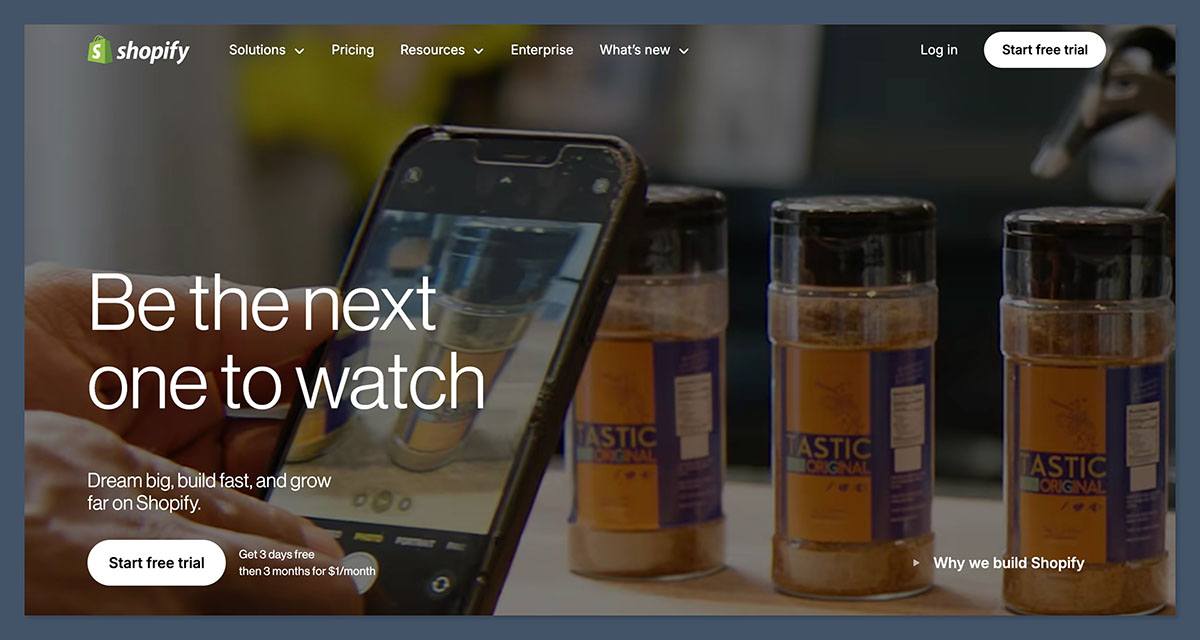
Based on the way each platform is built, Shopify is the stronger ecommerce engine, while Stan Store is the stronger conversion endpoint for social traffic. If you plan to run a real product catalog with inventory, shipping, and multi-channel sales, Shopify is in a different league.
Sales Features
Shopify and Stan Store both support discount codes, abandoned cart recovery, and selling across multiple channels, but they approach the job very differently.
Shopify gives you native product and variant management, inventory tracking across locations, tax calculation, shipping rules, and abandoned cart emails on every plan. You also get Shopify Magic, the platform’s AI assistant for generating product descriptions, email subject lines, and other store copy.
Stan Store is built for digital offers. You can set up courses, coaching calls, memberships, and digital downloads in minutes, with checkout, delivery, and access management handled inside the platform.
On Creator Pro you also get unlimited funnels, order bumps, upsells, downsells, payment plans, and an affiliate program, which makes it strong for direct-response creators who want to maximize AOV from a warm audience.
Where Stan falls short is anything to do with physical retail. Inventory, SKUs, warehouse management, real-time shipping rates, and multi-warehouse fulfillment simply aren’t part of the platform.
Payment Options
To accept payments with Shopify, you can connect to over 100 payment providers, including PayPal, Apple Pay, Google Pay, and most regional gateways. You can also use Shopify Payments, the native gateway, which removes the extra transaction fee. With Shopify Payments on Basic, you’ll pay 2.9% + $0.30 per online transaction, dropping to 2.5% + $0.30 on Advanced.
Stan Store processes payments through Stripe and PayPal. There’s no platform transaction fee, but standard processor fees apply: roughly 2.9% + $0.30 per US transaction, with extra costs for international currency and refunds (Stripe keeps its processing fee even if you refund a customer).
App Market
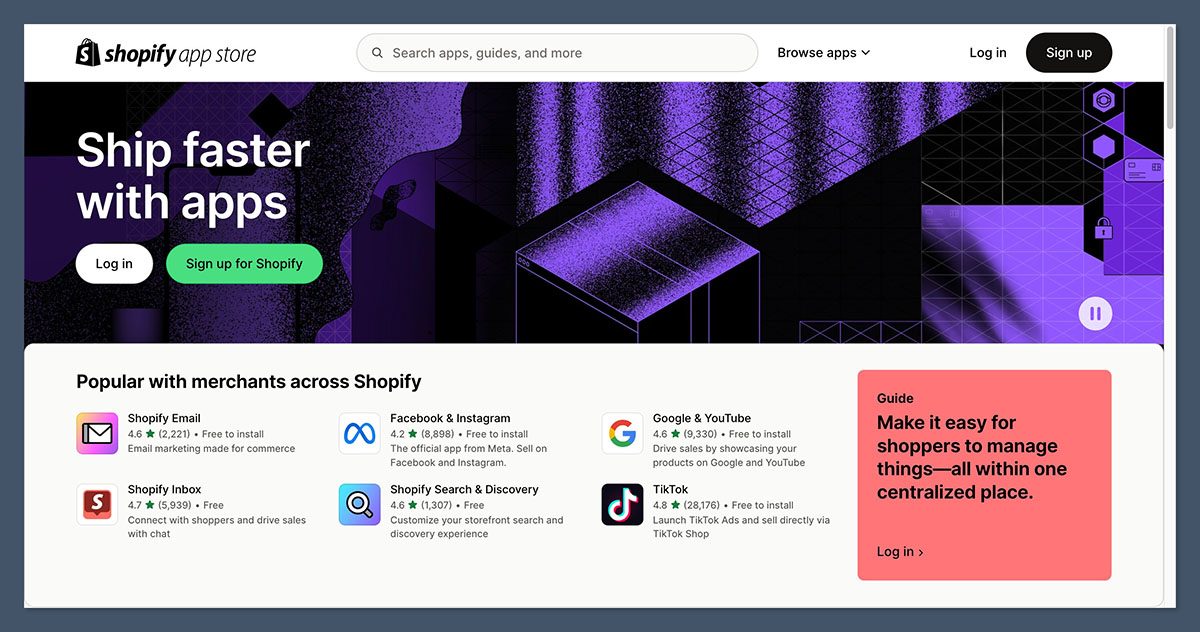
Shopify’s app market is one of the platform’s biggest advantages, with thousands of integrations covering email, reviews, subscriptions, B2B workflows, fulfillment, accounting, and almost anything else you can think of. The trade-off is that many of the features creators expect “out of the box” require paid apps, which add to your monthly bill.
Stan Store has a much smaller integration ecosystem. The platform’s pitch is that you shouldn’t need a stack: link in bio, store, courses, bookings, funnels, and email are all native.
For anything Stan doesn’t do, Zapier acts as the bridge, and there are pre-built workflows for syncing Stan customers into Shopify, email tools, and CRMs.
The Winner
Shopify is the stronger sales platform
Shopify wins on raw ecommerce capability with deeper inventory tools, more payment options, and a vast app ecosystem. Stan Store wins narrowly on built-in funnels for digital products, but its scope is much smaller.
Best for Marketing Products: Shopify
Setting up an inventory is one thing, but none of it matters if customers don’t know your products exist. Both platforms include marketing tools, but they target different stages of the funnel.
Marketing Tools
Shopify offers a strong native marketing layer. You can connect your store to Instagram, TikTok, Facebook, and YouTube to sell across channels, install the Shopify Marketplace Connect app to sell on Amazon and Etsy, and use Shopify Email to design and send branded campaigns directly from your admin. Shopify Magic also helps generate copy for emails, product pages, and ads.
Stan Store’s marketing approach is built around the social-to-funnel path. AutoDM lets you trigger Instagram DMs based on comments, freebie requests, or product purchases.
The platform also has built-in email marketing on Creator Pro, with automations for welcome sequences, post-purchase flows, and broadcasts. For creators who live on TikTok and Instagram, this is often closer to how they actually sell than a traditional storefront.
SEO
This is where the gap is widest. Shopify gives you full control over page titles, meta descriptions, alt text, sitemaps, structured URLs, and a blog you can use to build topical authority. It also integrates with SEO and analytics tools to support long-term organic growth.
Stan Store is not built for SEO. It’s a link-in-bio destination optimized for converting traffic that already arrived from social platforms. There’s no blog, limited control over metadata, and no real way to build a content hub. If your strategy depends on organic search or AI-driven answer engines, Stan won’t carry the weight.
Internationalization
For stores selling globally, Shopify supports multi-currency, multi-language storefronts, automatic language redirects, and region-based pricing on higher plans. Stan Store handles international payments through Stripe but doesn’t offer the same depth of localization.
The Winner
Shopify has better tools to promote your business and products online
Shopify’s built-in features, SEO depth, and large app store make it easier to market your business and connect with multiple sales channels. Stan Store wins for social-native marketing but has almost no SEO footprint.
Easiest to Use: Stan Store
When testing the two, Stan Store is noticeably easier to get up and running, while Shopify offers a deeper but slower setup experience.
With Stan, signup takes seconds. You pick what you want to sell, drop in your products, set prices, and your storefront link is live.
The interface is mobile-first and opinionated, which means there are fewer decisions to make. Most creators can go from zero to a working store with a paid product and a working checkout in under an hour.
Shopify’s onboarding is more involved. You’ll answer a short series of questions about your business, then land on a dashboard with a setup checklist that walks you through adding products, choosing a theme, configuring shipping and taxes, setting up payments, and connecting a domain.
None of this is hard, but it takes time, and most stores need to install at least a few apps before they’re ready to launch.
Both editors avoid pure drag-and-drop. Shopify uses a section-based theme editor where you stack and rearrange blocks like image banners, product carousels, and rich text.
Stan Store is even more constrained: you adjust colors, media, and copy on a fixed template, with very little control over layout. That’s restrictive if you want a unique brand look, but it removes a lot of the decision overhead.
The Winner
Stan Store is faster and simpler to set up
Stan’s opinionated, mobile-first interface gets non-technical creators selling in under an hour. Shopify is still user-friendly for a full ecommerce platform, but onboarding takes longer and demands more decisions.
Best Online Store Templates: Shopify
Your storefront has to make a strong first impression, and this is one of Shopify’s biggest advantages.
Shopify offers more than 190 templates across industries like apparel, jewelry, electronics, pet supplies, food and drink, and services. You can filter themes by use case, preview them across devices, and customize sections, typography, and layouts.
Shopify has 13 free templates, with premium themes ranging between $100 and $500 as a one-time charge.
Stan Store’s design library is much smaller and deliberately uniform.
Templates focus on the link-in-bio aesthetic: a vertical, mobile-first layout with product blocks, call-to-action buttons, and content tiles. You can change colors, fonts, and images, but you can’t restructure the page or build custom landing pages the way you can on Shopify.
For creators selling a few offers, this is often a feature, not a flaw. Stan’s templates are designed to convert mobile traffic from social platforms, and that’s exactly what they do. But if you want a fully branded ecommerce site that feels distinctive, Shopify gives you far more room to design.
The Winner
Shopify offers a more diverse range of templates for different industries
Shopify’s template library is broader, more customizable, and better suited to building a real brand. Stan Store’s templates are tight and conversion-focused but offer limited design control.
Best for Business Support: Shopify
Every business needs help at some point, so support quality matters. Both platforms offer multiple channels, but Shopify’s support infrastructure is more developed.
Shopify Support
- 24/7 live chat through the Help Center, with escalation to human support advisors for complex issues
- 24/7 phone support for Shopify Plus merchants
- Active social media support across Facebook, X, Instagram, TikTok, LinkedIn, and YouTube
- Extensive Help Center with guides, video tutorials, a community forum, and business courses
- Priority support is reserved for Shopify Plus customers
- Direct email support is no longer offered
- In-editor guidance is limited for new users
Stan Store Support
- In-app chat support and a knowledge base for common setup questions
- Active creator community with templates, examples, and peer feedback
- Onboarding content and tutorials tailored to social creators
- Email support for billing and technical issues
- No 24/7 phone support
- Response times can vary by plan and time of day
- Documentation is lighter than Shopify’s, with less coverage of advanced workflows
The Winner
Shopify offers more robust 24/7 support and documentation
Shopify’s Help Center, live chat, and community resources are more developed. Stan’s support is friendly and fast for typical creator questions but doesn’t match Shopify’s depth or availability.
How We Tested Stan Store and Shopify
Both platforms were assessed using a consistent set of criteria, weighted by how much each factor matters when picking a place to sell online:
- Sales Features – 40% We test the ecommerce capability of each platform, including checkout, inventory, and digital delivery
- Website Features – 15% We test the quality and quantity of website features, including SEO and blogging
- Help and Support – 12% We check what support channels and resources are available for store owners and creators
- Design Functionality – 10% We look at templates, layout flexibility, and brand control
- User Experience – 10% We test every platform first-hand to assess ease of use and onboarding speed
- Customer Score – 8% We compare how each platform performs against its market and competitors
- Value for Money – 5% We review pricing plans to see what you get for what you pay
Where possible, we cross-referenced live pricing pages, app marketplaces, and support documentation against hands-on testing to make sure the recommendations reflect how each platform actually behaves in 2026.
Stan Store vs Shopify: Our Winner
For businesses looking to build a real online store and grow into a brand, Shopify is the stronger ecommerce platform. Its sales features, app ecosystem, design flexibility, and SEO depth are unmatched in this comparison, and the platform is built to scale from a single product to a multi-warehouse operation.
For creators monetizing an existing audience with digital products, courses, coaching, or memberships, Stan Store is the better fit. It removes the friction of stacking tools, ships with funnels and email built in, and turns social traffic into sales without forcing you to learn an ecommerce platform.
The decision usually comes down to the shape of your business. If you’re selling a product catalog and care about brand and SEO, Shopify wins.
If you’re a creator with an audience and a small set of offers, Stan wins. A growing number of operators run both: Stan as a high-converting funnel for social traffic, Shopify as the main brand and catalog. The free trials on each platform make it easy to test before committing.
FAQ
Is Stan Store a good alternative to Shopify?
Stan Store is a strong alternative to Shopify for creators selling digital products, coaching, memberships, or a small course catalog. It’s not a real alternative for stores that sell physical products at scale, need inventory and shipping tools, or want a fully branded ecommerce website with custom design.
Can you sell physical products on Stan Store?
Stan Store is built around digital products, coaching, and memberships. While you can technically list a physical product, Stan doesn’t offer real inventory management, shipping rate calculation, or multi-warehouse fulfillment. If physical retail is your core business, Shopify is a much better fit.
Does Stan Store charge transaction fees?
Stan Store charges 0% platform transaction fees on both Creator and Creator Pro plans. You still pay standard Stripe or PayPal processing fees on each sale, which typically run around 2.9% + $0.30 for US transactions, with extra costs for international currency and refunds.
Is Shopify worth it for digital products?
Shopify can sell digital products, but it usually requires apps for digital delivery, course hosting, or membership access, which adds to your monthly cost. If digital is your only product type, Stan Store or a dedicated course platform is usually cheaper and faster to set up. If you sell digital alongside physical products, Shopify is the better all-in-one choice.
Can I use Stan Store and Shopify together?
Yes. Many creators run Stan Store as a social-first funnel for digital offers and Shopify as a branded ecommerce site for physical products, accessories, or merch. Zapier connects the two so customer data and orders can sync between platforms.
Which is easier for beginners?
Stan Store is easier for beginners who want to start selling fast without learning a full ecommerce platform. Shopify is still beginner-friendly, but it asks you to make more decisions about themes, apps, shipping, and taxes before you launch.


