We’ve spent hours analyzing both platforms to bring you a clear, honest recommendation. Shopify and ThriveCart are built for fundamentally different jobs, and picking the wrong one can cost you time, money, and conversions.
The short version: Shopify wins if you need a full online store. ThriveCart wins if you need high-converting checkout funnels for digital products. For many sellers, the real answer is both — but understanding the difference starts here.
Shopify vs ThriveCart: Quick Verdict
- Shopify — Best overall ecommerce platform for building and growing an online store
- ThriveCart — Best checkout and funnel tool for course creators, coaches, and digital product sellers
In this comparison, I’ll break down how Shopify and ThriveCart stack up on pricing, features, checkout, ease of use, and more — so you can decide which one (or which combination) is right for your business.
Quick Comparison: Shopify vs ThriveCart
| Feature | Shopify | ThriveCart |
|---|---|---|
| Primary role | Full ecommerce platform and storefront builder | Checkout, cart, and funnel tool for offers and digital products |
| Pricing model | Monthly SaaS from ~$29/month (Basic) to $299/month (Advanced) | Lifetime deal from ~$495 one-time (Standard); no platform transaction fee |
| Storefront & CMS | Full site builder, themes, blog, SEO, navigation | No full site; checkout and simple funnel pages only |
| Catalog & inventory | Strong catalog management, variants, collections, stock tracking | Designed around single offers; large catalogs are inefficient |
| Checkout & funnels | Standard checkout; advanced funnels via apps or Shopify Plus | Native bumps, upsells, downsells, A/B tests, conversion templates |
| Payments & fees | Shopify Payments + 100+ gateways; extra fee if not using Shopify Payments | Stripe, PayPal, and others; 0% platform fee on sales |
| Shipping & fulfilment | Shipping tools, 3PL integrations, Shopify Shipping, POS | Requires external fulfilment; best suited to digital delivery |
| Ideal users | Product brands, retailers, multi-channel sellers | Course creators, coaches, info-product sellers, marketers |
1. Best for Pricing: ThriveCart (Long-Term)

Pricing is where these two platforms diverge most sharply, and the right answer genuinely depends on your time horizon.
Shopify pricing
Shopify runs on a monthly or annual subscription model. The three core plans (billed annually) are:
- Basic — $29/month
- Shopify (mid-tier) — $79/month
- Advanced — $299/month
On top of the plan cost, you’ll pay payment processing fees through Shopify Payments — around 2.9% + $0.30 per transaction on Basic, dropping slightly on higher plans. If you use an external payment gateway instead of Shopify Payments, an additional transaction fee applies (typically 0.5% to 2% depending on your plan).
Factor in apps for funnels, subscriptions, affiliates, and email, and your monthly outlay can climb significantly above the headline plan price.
ThriveCart pricing
ThriveCart uses a lifetime-license model that’s unusual in the SaaS world. The Standard plan is widely available for a one-time payment of around $495, with a Pro upgrade available for approximately $195 more.
Some offers bundle additional Pro+ features for a separate annual fee of around $295/year covering advanced tracking and affiliate tools.
There are no platform transaction fees on your sales — you only pay your payment processor (Stripe, PayPal, etc.) as usual. There’s no free trial, but a 14-day refund window is typically offered.
Worth noting: ThriveCart has signalled a potential move to recurring pricing of around $95/month in the future. If you’re considering it, that’s a meaningful reason to buy sooner rather than later.
Run the numbers over two or three years and ThriveCart’s lifetime deal can easily beat the cost of stacking Shopify apps for bumps, upsells, affiliates, and subscription management. For pure pricing efficiency on digital products, ThriveCart wins — but Shopify’s monthly model is more appropriate if you need the full storefront infrastructure it provides.
The Winner: ThriveCart (for long-term cost efficiency on digital products)
ThriveCart’s lifetime deal is hard to beat if you’re selling courses, subscriptions, or info-products. Shopify’s monthly pricing makes sense when you need the full ecommerce platform it delivers.
2. Best for Selling Online: Shopify
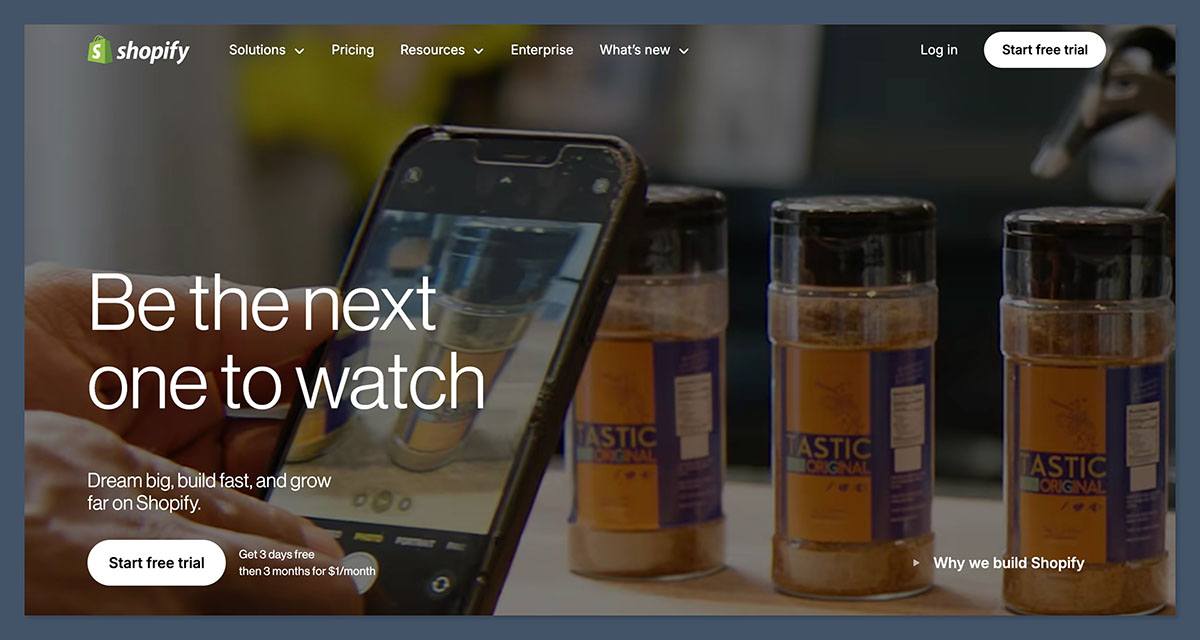
This category depends entirely on what you’re selling. For physical products, multi-channel retail, and large catalogs, Shopify is in a different league.
For digital products and funnel-driven sales, ThriveCart is purpose-built.
Storefront and catalog management
Shopify is a complete ecommerce platform. You get a theme-based storefront builder, responsive templates, product and inventory management with variants and SKUs, collections, a blog, basic CMS, and built-in SEO tools.
It handles physical products, digital downloads, subscriptions (via native tools or apps), and connects to marketplaces and social channels for multi-channel selling.
ThriveCart is not a storefront. It focuses on individual checkout pages, order bumps, and funnel flows — not a browsable catalog or brand website.
If you need customers to navigate a product range, compare items, or experience a brand, ThriveCart isn’t the tool. It works best alongside a separate website or page builder, with ThriveCart handling the checkout and post-purchase flow.
Checkout and conversion features
This is where ThriveCart genuinely outperforms Shopify on core plans. ThriveCart’s dedicated funnel builder supports order bumps, one-click upsells and downsells (up to around five per funnel), A/B testing, conversion-optimized templates, and real-time stats on sales, profits, and upsell take-rates.
Built-in dunning for subscription recovery is included without needing extra apps.
Shopify’s checkout is clean and reliable but relatively opinionated. Advanced funnel logic, custom checkout fields, and deep upsell sequences generally require third-party apps or a Shopify Plus subscription.
For merchants who need aggressive average-order-value optimization out of the box, ThriveCart has the edge.
Payment options
Shopify supports over 100 payment gateways globally, including Shopify Payments as its native option, which reduces transaction fees. Multi-currency and local payment methods are well supported. The trade-off is that using any gateway other than Shopify Payments incurs an additional platform fee.
ThriveCart integrates with Stripe, PayPal, and other major processors, charges 0% platform fee on sales, and includes built-in sales-tax calculation based on customer location — reducing the need for separate tax apps, which is a real advantage for digital sellers.
The Winner: Shopify (for overall ecommerce selling)
Shopify’s catalog management, payment options, and multi-channel selling make it the stronger platform for most online businesses. ThriveCart wins specifically on checkout conversion and digital product delivery.
3. Best for Marketing Your Products: Shopify
Getting customers to your products requires solid marketing tools, and here Shopify’s broader ecosystem gives it an advantage.
Shopify offers built-in connections to social media platforms like Instagram and TikTok, and the Shopify Marketplace Connect app makes it straightforward to sync products across Amazon and Etsy.
Native email marketing via Shopify Email, the Semrush-powered Ecommerce Booster app for SEO, and Shopify Magic for AI-generated product descriptions round out a strong marketing toolkit.
Support for over 30 languages and automatic storefront translation also makes it capable for international businesses.
ThriveCart’s marketing strengths are more focused. Its built-in affiliate management system is a genuine differentiator — you can run a full affiliate program without a separate tool, which is valuable for course creators and digital product sellers. Funnel-level A/B testing and conversion tracking give marketers solid data to optimize on.
But broader channel marketing — SEO, social selling, email campaigns — requires connecting external tools, and ThriveCart doesn’t have a storefront to optimize in the first place.
For businesses that need to drive top-of-funnel traffic and convert across multiple channels, Shopify’s marketing reach is broader. ThriveCart excels at converting traffic that’s already arrived at a checkout page.
The Winner: Shopify
Shopify’s built-in marketing tools, multichannel integrations, and large app store give it the edge for promoting products and reaching new customers.
4. Easiest to Use: Shopify
Both platforms are designed for non-technical users, but they feel quite different in practice.
Shopify’s onboarding walks you through a short setup process — describing your business stage, what you plan to sell, and where — before dropping you into a clean dashboard with a 13-step setup checklist.
The section-based editor is intuitive enough for beginners, and the product backend for managing inventory is well-organized. There’s a learning curve to the full feature set, but daily use is manageable for most business owners.
ThriveCart has a steeper learning curve for users new to funnel-based selling. Setting up individual carts, configuring bump offers, and building upsell sequences requires understanding a different mental model than a traditional store.
That said, once you understand how offers and funnels are structured, ThriveCart’s interface is logical and its templates speed up setup considerably.
The platform is also genuinely less complex than Shopify in terms of overall scope — you’re not managing a full website, just checkout flows.
The difficulty isn’t which platform is “harder” in absolute terms — it’s that they require different types of knowledge. Shopify assumes you’re building a store; ThriveCart assumes you’re building a sales funnel. Neither is especially technical, but both reward time spent learning their logic.
The Winner: Shopify
Shopify’s guided setup, familiar storefront structure, and comprehensive help resources make it the more accessible starting point for most users.
5. Best for Templates and Design: Shopify
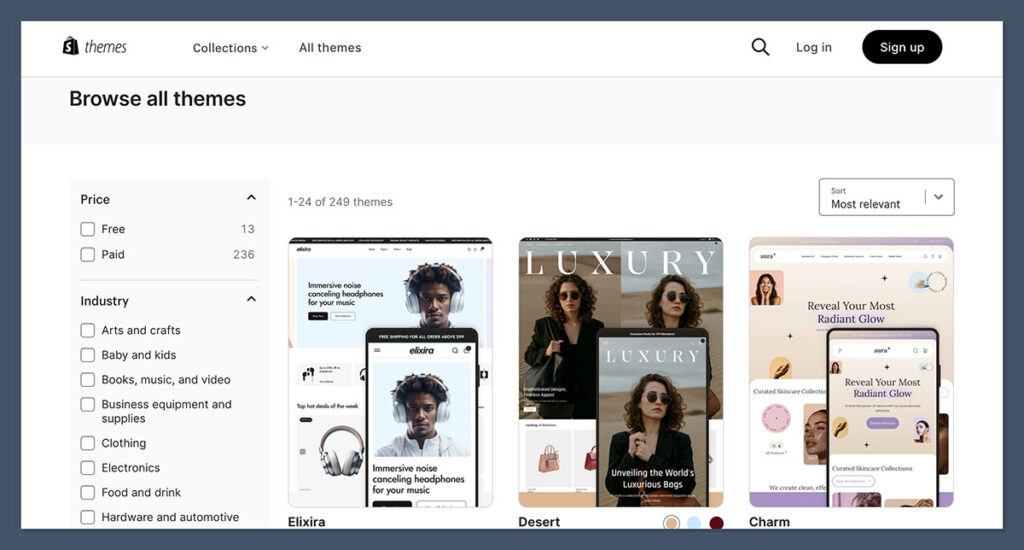
If your business needs a branded online presence, Shopify is the clear winner — ThriveCart simply isn’t in this category.
Shopify offers more than 190 templates covering a wide range of industries. There are 13 free themes, with premium options ranging from $100 to $500 as a one-time purchase.
Templates are modern, mobile-responsive, and customizable through the section-based editor.
ThriveCart provides checkout page templates and funnel layouts — not full website themes. The templates are designed specifically for conversion: clean checkout forms, bump offer placements, and upsell page layouts.
They do their job well, but they’re not comparable to a full storefront theme library. If you’re embedding ThriveCart checkouts into an existing website, the design of your broader site is handled elsewhere.
The Winner: Shopify
Shopify’s extensive theme library makes it the right choice if a branded storefront matters to your business. ThriveCart’s templates are purpose-built for checkout conversion, not brand building.
6. Best for Business Support: Shopify
Both platforms offer support, but Shopify’s resources are more comprehensive for a wider range of users.
Shopify support includes:
- 24/7 live chat with an AI assistant, with escalation to human advisors for complex issues
- Phone support for Shopify Plus merchants
- Social media support across multiple platforms
- A detailed Help Center with guides, video tutorials, a community forum, and business courses
ThriveCart support includes:
- Email-based ticket support (no live chat or phone)
- A knowledge base with documentation and tutorials
- An active Facebook community group that many users find useful for peer advice
ThriveCart’s support is adequate for a focused tool, but Shopify’s 24/7 live chat and extensive self-help resources are meaningfully better for businesses that need fast answers when things go wrong.
The Winner: Shopify
Shopify’s 24/7 live support and comprehensive Help Center give it a clear advantage for businesses that need reliable, accessible customer service.
How We Compared Shopify and ThriveCart
This comparison is based on hands-on research into both platforms, including their current pricing structures, documented feature sets, and user feedback. We evaluated both tools across the following areas:
- Sales and ecommerce features — catalog management, checkout, funnels, and payment processing
- Pricing and total cost of ownership — including apps, transaction fees, and lifetime vs subscription models
- Design and storefront capabilities — templates, customization, and brand building
- Marketing tools — SEO, email, social, affiliates, and multi-channel reach
- Ease of use — onboarding, dashboard navigation, and day-to-day usability
- Support — availability, channels, and quality of help resources
It’s worth being direct: Shopify and ThriveCart are not true like-for-like competitors. Shopify is a complete ecommerce platform; ThriveCart is a checkout and funnel optimization tool. We’ve structured this comparison to help you understand where each excels and — more practically — whether you need one or both.
Shopify vs ThriveCart: Our Verdict
For most online businesses, Shopify is the stronger overall platform. It covers the full scope of ecommerce: a branded storefront, catalog and inventory management, multi-channel selling, global payments, shipping, and a large app ecosystem.
If you’re building or scaling a product-based business, Shopify is the right foundation.
ThriveCart is the better tool if your focus is digital products, courses, subscriptions, or paid funnels.
Its lifetime pricing, native funnel builder, affiliate management, and conversion-focused checkout make it exceptionally efficient for creators and marketers — and its 0% platform fee on sales is a meaningful cost advantage over time.
The most effective setup for many sellers is actually both: Shopify as the storefront and long-term brand infrastructure, ThriveCart as the checkout and funnel layer for high-value digital offers.
If you’re forced to choose one, let your product type decide. Physical goods and multi-channel retail — go Shopify. Digital products, courses, and funnel-driven sales — ThriveCart delivers more for less.
Not sure which fits your business?
Shopify offers a three-day free trial to test the platform before committing. ThriveCart doesn’t offer a free trial but provides a 14-day refund window — enough time to set up a cart and see how it performs.


