
Shopify
Compare costs Try Shopify →Basic: $39/month
$29/month with annual billing (USD)
- Customizable branded storefront
- Connected selling channels
- Shipping, pickup and local delivery settings
Instacart
Compare costs Explore Instacart →Retailer-specific pricing
Request commercial terms
- Local marketplace discovery
- Shopping and fulfillment options
- Separate branded storefront products
Shopify is the better default for building a general retail brand online. Instacart deserves a closer look if you’re an eligible grocery or local retailer that wants marketplace discovery and fulfillment support rather than another website to manage.
The key to Shopify vs Instacart is knowing which Instacart product you’re considering. Marketplace puts your store inside Instacart’s shared shopping app and website. Storefront provides retailer-branded ecommerce, while Storefront Pro adds greater customization and enterprise integration options.
The decision reaches beyond your website. Shopify leaves you organizing marketing and fulfillment; an Instacart arrangement may cover more of that work. The better fit depends on the tasks you need help with, retailer eligibility and the costs you agree to.
Key takeaways
- Pricing: Shopify is easier to budget for; Instacart requires retailer-specific terms.
- Local grocery: Instacart is the stronger starting point when shopping and delivery support are central.
- Brand building: Shopify offers broader control over your store’s content and presentation.
- Discovery: Instacart Marketplace reaches existing app shoppers, without guaranteeing orders.
- Setup and design: Shopify suits a self-service launch; Instacart’s branded products deserve a separate evaluation.
Shopify vs Instacart at a Glance
Choose Shopify if your main goal is a branded store you can develop across product categories and sales channels. Consider Instacart if your immediate problem is reaching nearby shoppers and fulfilling local baskets.
| Decision factor | Shopify: best for broad retail | Instacart: best for local grocery |
|---|---|---|
| Strongest business fit | General retailers building a direct ecommerce business | Eligible grocery and other local retailers |
| Storefront model | Merchant-managed online store | Shared Marketplace or branded Storefront/Pro |
| Retailer pricing basis | Published subscriptions plus processing and extras | Agreement-specific fees |
| Customer discovery | Your marketing plus eligible connected sales channels | Existing Marketplace shopping audience |
| Fulfillment | Shipping, pickup and merchant-arranged local delivery | Local shopping and fulfillment capabilities, subject to arrangement |
| Marketing control | Direct-store content and campaign tools | Retailer promotions; capabilities depend on product |
| Design | Theme selection and customization | Standard Marketplace experience; branded alternatives available |
| Geographic scope | International selling tools, with operational requirements | Marketplace serves the US and Canada |
| Setup approach | Self-service store configuration | Retailer onboarding and catalog preparation |
Shopify is best for your business if…
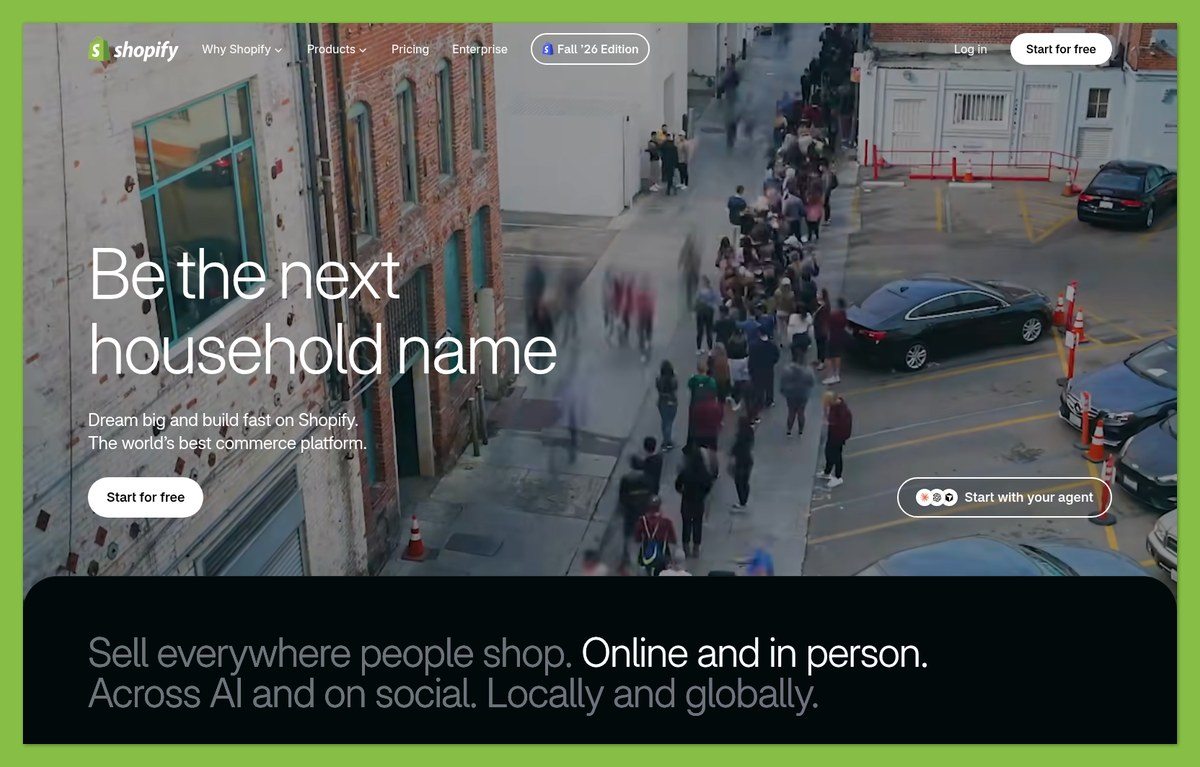
- You sell products beyond a local delivery area. Apparel, accessories and specialty goods are straightforward examples of the broader retail use case.
- Your content helps make the sale. Buying guides and detailed product explanations can live alongside your catalog.
- You can organize fulfillment. You have staff, shipping processes or delivery partners ready to support orders.
Shopify is not limited to waiting for shoppers to find your website. Eligible social, marketplace and Shop channels provide additional routes to customers. You still need to decide which channels justify their cost and workload.
Instacart is best for your business if…
- You want local marketplace exposure. Your target customers already shop through delivery apps.
- Grocery operations are a priority. Order picking and local delivery matter more than an elaborate editorial website.
- You’re prepared for a commercial agreement. You can evaluate eligibility, service scope and order economics before committing.
Instacart is not grocery-only. Its Marketplace also includes categories such as beauty, pet care and home, but category presence does not guarantee that your store or location will qualify.
1. Pricing: Shopify Is Easier to Budget For
Verdict: Shopify wins on pricing transparency, not proven lowest total cost. Its subscription gives you a clear starting point; Instacart needs a retailer-specific quote.
Shopify: predictable subscriptions, variable operating costs
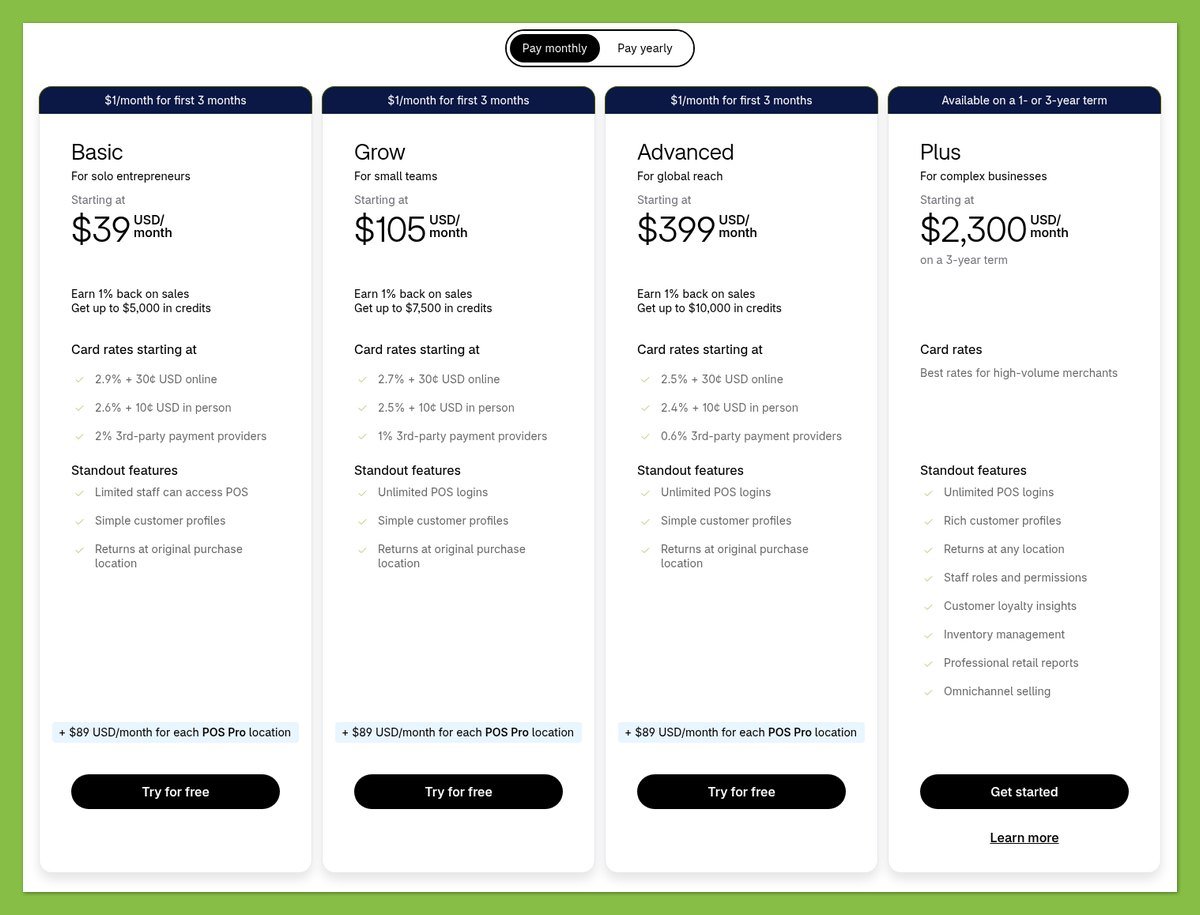
Shopify’s main retail plans have published US prices. Annual billing reduces the effective monthly rate, but you pay the annual subscription upfront.
| Shopify plan | Monthly billing | Effective monthly price, billed annually | US online card rates starting at |
|---|---|---|---|
| Basic | $39/month | $29/month | 2.9% + $0.30 |
| Grow | $105/month | $79/month | 2.7% + $0.30 |
| Advanced | $399/month | $299/month | 2.5% + $0.30 |
These are advertised starting Shopify Payments card rates, not universal rates for every card or international transaction. All 3 plans include a full online store and unlimited products.
For Basic, the annual subscription is $348 upfront, compared with $468 across 12 monthly payments. That $120 saving is useful, but monthly billing offers more flexibility while you establish whether the store works for your business.
Payment-provider choice also affects the bill. Third-party transaction charges can apply on top of an external provider’s processing fees. Shopify Payments avoids that particular third-party-provider charge, not normal card-processing costs.
Instacart: price the actual retailer agreement
Instacart retailer fees are separate from what customers pay to shop. There is no single commission percentage you should assume applies to your business.
| Instacart product | Retailer pricing approach | Terms to confirm |
|---|---|---|
| Marketplace | Contract-specific commercial terms | Transaction charges, fulfillment scope and settlement |
| Storefront | Agreement-specific ecommerce and order fees | Platform costs, implementation and included services |
| Storefront Pro | Enterprise scope and negotiated terms | Integration work, support and ongoing charges |
Retailer agreements can use percentage-based fees, per-transaction charges, platform licensing or combinations. Treat those as possible fee structures, not a current quote.
Instacart+ is a consumer membership, not the price a retailer pays to sell. Customer delivery fees and retailer-added item markups also do not reveal your contracted merchant costs.
Compare the margin left after each order
A subscription comparison alone misses the expensive parts of selling groceries online. Build a budget that includes:
- Software extras: apps, themes, implementation and integrations.
- Order handling: picking, packing, delivery labor and refunds.
- Customer acquisition: campaigns, promotions and discounts.
For an illustrative $60 basket, subtract product cost and every order-related expense before allocating monthly overhead. Use your proposed Instacart terms on one side and your actual Shopify operating model on the other.
Instacart may justify higher visible platform charges if its arrangement replaces work you would otherwise fund yourself. Shopify may be better value if you already have efficient fulfillment and an established customer base. Neither outcome follows from the subscription price alone.
2. Selling Online: Shopify for Broad Retail, Instacart for Local Grocery
Verdict: Shopify wins for broad retail flexibility; Instacart is the stronger fit when local grocery shopping and fulfillment drive the decision.
Sales features: start with your catalog and order workflow
Shopify gives you a merchant-managed storefront and connected selling channels. You can organize products into collections and support them with content that explains why customers should buy from you.
Instacart’s Platform Portal supports catalog, order, store operations and merchandising management across its solutions. That is useful for evaluating the everyday work behind a grocery order, not just the appearance of a product page.
Grocery adds complications that deserve attention before you choose:
- Weighted items: the final quantity and price can differ from the customer’s request.
- Pricing policies: Marketplace item prices are set by retailers and can differ from in-store prices.
- Catalog maintenance: product information and availability need a dependable update process.
Ask how each proposed setup handles those details. A store that sells sealed coffee bags has different requirements from one selling produce by weight.
Storefront supports loyalty and promotional capabilities; Pro adds customer-data isolation. Include these options if repeat grocery orders are your priority.
Payments: choice versus product-specific arrangements
Shopify offers payment-provider choice, subject to eligibility and location:
- Shopify Payments for integrated payment processing.
- Third-party providers where supported.
- Alternative and accelerated checkout options, including supported PayPal, Apple Pay and Shop Pay configurations.
For Instacart, evaluate payment handling within the product and agreement you’re buying. A Pro implementation includes payment requirements in onboarding.
Before signing, ask who handles settlement, refunds and payment-related exceptions. Those responsibilities matter more operationally than a long list of payment logos.
Apps and integrations: check the connection you actually need
Shopify can manage connected products and orders through its admin across supported sales channels. Channel eligibility and availability vary, so check your intended destinations before designing a multichannel operation.
For either platform, make integration review specific:
- Which system is the source of truth for inventory?
- How will online prices and product changes update?
- Where will staff process exceptions and refunds?
Do not assume an app or enterprise integration removes all manual work. Ask for the exact data flow and who maintains it.
Fulfillment: software settings are not delivery staff
Shopify supports conventional shipping, store pickup and local delivery. Local delivery can use a radius or postal codes, but you, your staff or a third-party service perform the delivery.
There are checkout constraints too. Shopify local delivery requires eligible inventory at one location and a verified address within the delivery zone. It works with Shop Pay, but not other accelerated checkout options such as Apple Pay or PayPal. That restriction is specific to local delivery.
Instacart offers an established local shopping and fulfillment model, subject to your arrangement and coverage. Confirm precisely which tasks are included rather than assuming every operational responsibility disappears.
Illustrative scenarios: A boutique shipping clothing nationally is better aligned with Shopify. A neighborhood grocer trying to add nearby delivery should evaluate Instacart first, then compare its quote against the cost of running that service independently.
3. Marketing: Shopify for Brand Control, Instacart for Marketplace Reach
Verdict: Shopify wins for developing your brand’s marketing system. Instacart Marketplace wins for access to an existing local-shopping audience, not guaranteed sales.
Marketing tools: campaigns versus marketplace promotions
Shopify Messaging lets you create branded email campaigns for all subscribers or selected customer segments. Sending costs can apply, so include email volume in your budget rather than treating every campaign as free.
This suits a retailer building repeat business around its own offers. You choose the message and connect it to your store’s content, but you also need a permission-based subscriber list and a reason for people to return.
Instacart separates two kinds of promotion:
- Retailer promotions encourage customers to choose your store.
- Consumer packaged goods advertising promotes individual products. Sponsored product, display and video formats for brands are not automatically part of your retailer toolkit.
Confirm which tools your agreement includes before planning a campaign.
For branded Instacart stores, advertising policy is another buying question. Standard Storefront displays ads with revenue going to Instacart; Pro offers alternatives, including turning ads off. Decide whether that tradeoff fits the shopping experience you want.
SEO: Shopify gives you more direct publishing control
Shopify is the stronger choice if search-friendly product and editorial content are central to your plan. Its SEO tools include:
- Automatic technical foundations: canonical tags, a sitemap and a robots.txt file.
- Editable search information: page titles and meta descriptions.
- Content-level controls: URLs and image alt text.
Those tools make optimization possible; they do not guarantee rankings. Your product information still needs to be useful, and someone must maintain it.
Marketplace exposure is a different acquisition strategy: reaching shoppers inside Instacart. If you’re considering its branded products instead, ask for a demonstration of the search and content controls your team will use.
International selling: Shopify has the broader toolkit
Shopify Markets supports country and regional audiences through localized currency and language. Product availability and pricing can also be configured for different markets, subject to applicable capabilities.
That is not automatic worldwide fulfillment. You still need to solve shipping, tax and payment eligibility for the destinations you serve.
Instacart Marketplace operates in the US and Canada. For a retailer focused on nearby households, that narrower geographic model may be entirely appropriate.
The practical choice is where your next customers are likely to come from. Choose Shopify for a broader content and channel strategy. Consider Instacart Marketplace when access to local app shoppers is more valuable, while budgeting for promotions and competition within that marketplace.
4. Ease of Use: Shopify for a Self-Service Store Launch
Verdict: Shopify wins for a self-service launch because you can configure your store directly. Instacart may reduce delivery setup after approval, but onboarding is a different process.
Shopify: a clear setup path, with decisions to make
Shopify’s launch process gives you a defined sequence:
- Set your business details, payments, taxes and domain.
- Add products and organize collections.
- Customize the theme and navigation.
- Configure shipping, pickup or local delivery.
- Place test orders and check refunds and fulfillment before launch.
The advantage is that you can work through the storefront yourself. The limitation is the number of decisions that remain yours.
A grocery retailer should not stop at checking whether a payment succeeds. Rehearse the operational steps from receiving an order to handing it over, including what staff should do when the requested item is unavailable.
Instacart: prepare for retailer onboarding
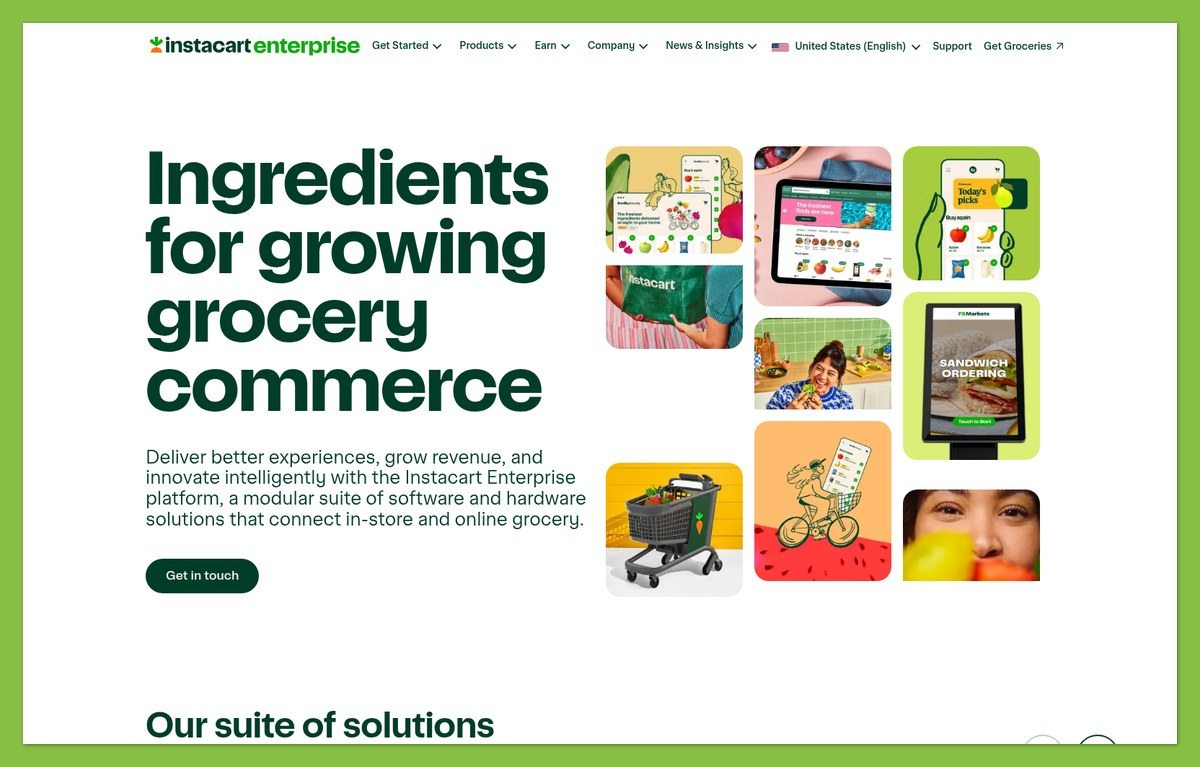
Instacart setup involves a representative and catalog preparation rather than simply choosing a subscription.
The onboarding work includes:
- Providing an administrator email and completing Platform Portal signup.
- Configuring the retailer profile and store locations.
- Establishing pricing policy and store hours.
- Preparing catalog data with the onboarding team.
Eligibility and local service coverage should be confirmed before you plan a launch date. Accurate product data matters more here than having an attractive logo ready.
A Storefront Pro rollout adds its own requirements. Start with Marketplace setup and coordination with a representative, then work through branding, domain and operational requirements for the branded site.
After launch: compare the workload you retain
Shopify leaves you managing the storefront and coordinating fulfillment. Instacart can reduce the need to assemble a separate delivery operation when that service is part of your arrangement.
Neither eliminates routine retail work. Catalog accuracy and order exceptions still need an owner.
If you have limited technical resources but strong store operations, Shopify’s self-service route can make sense. If delivery is the capability you lack, Instacart’s onboarding effort may be worth accepting.
5. Store Templates: Shopify for Design Choice
Verdict: Shopify wins for design choice because it offers a theme-based storefront you can customize. Instacart’s strongest answer is its branded ecommerce products, not Marketplace.
Shopify: choose a theme, then shape the store
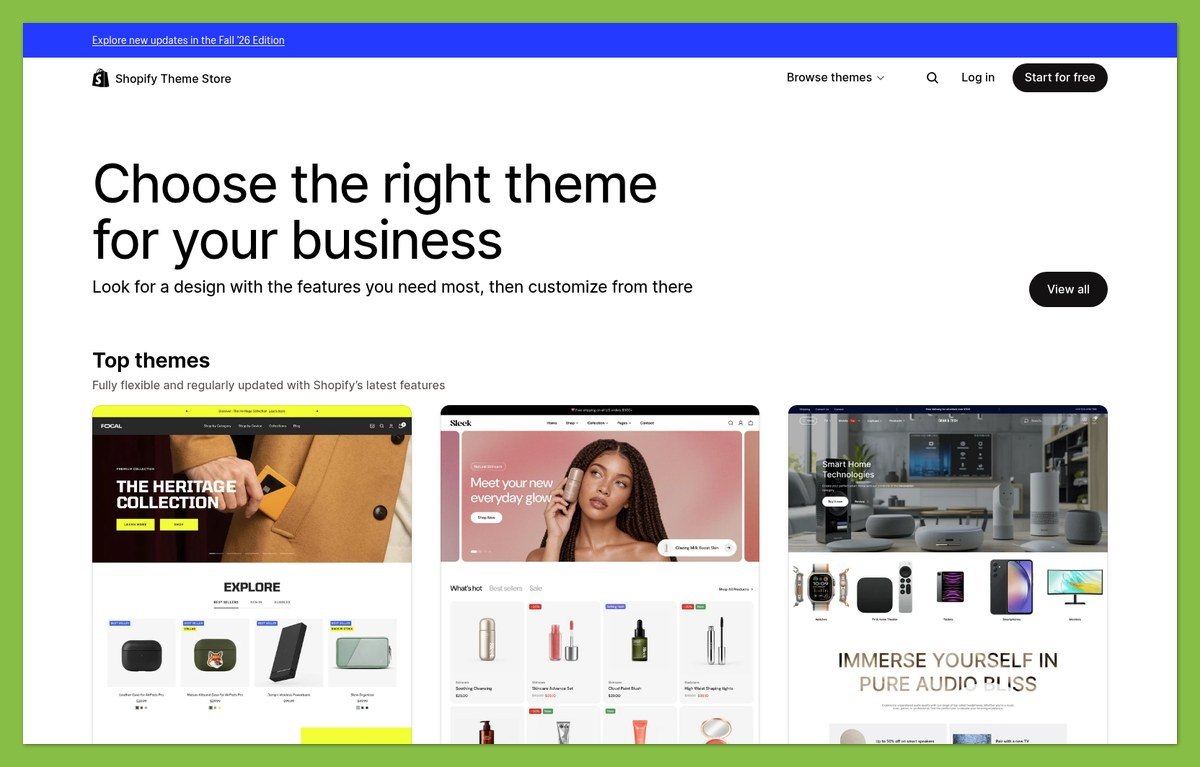
Shopify offers free and paid themes. You can preview and customize a paid theme before buying it, but you must purchase it before publication.
The theme editor lets you change settings and rearrange content. Deeper code changes can use HTML, CSS and Liquid, Shopify’s template language.
Choose a theme around how customers buy your products. Before committing, check:
- Product presentation: can customers understand the important differences between items?
- Navigation: can they reach the right category without unnecessary steps?
- Mobile layout: does the store remain clear on a smaller screen?
Customization also creates maintenance work. A restrained design that helps shoppers find products is often a better recommendation than extensive code changes with no clear commercial purpose.
Instacart: distinguish Marketplace from branded design
Marketplace uses a standardized Instacart shopping experience. That limits your visual differentiation, but gives shoppers a familiar way to browse.
Storefront offers own-domain branding, while Pro adds greater control over the shopping experience.
Shopify is the stronger starting point for a distinctive general retail site. Instacart may suit you better when familiar grocery shopping matters more than extensive design freedom.
6. Business Support: Compare the Merchant Channels
Verdict: Shopify wins on clearly defined standard support access. Response quality is not scored in this comparison.
Shopify: accessible help, with separate responsibilities
Shopify offers 24/7 chat support across plans. That gives a small retailer a defined route for platform questions.
Theme assistance has limits:
- Eligible free Shopify themes: Basic and higher can receive up to 60 minutes of limited design assistance.
- Paid themes: support comes from the theme developer.
- Custom changes: do not assume arbitrary code modifications are covered.
A clear contact channel is useful, but it is not a promise that every app or design issue will be resolved by Shopify itself.
Instacart: confirm the retailer support agreement
Instacart’s catalog support depends on your launch stage and agreement. Before launch, assistance comes through your representative. After launch, Enterprise Technical Support uses the Enterprise Service Desk when included.
Consumer and shopper support should not be treated as your merchant support entitlement.
Ask who handles urgent catalog errors and failed order flows, and request the applicable escalation process in writing. Instacart may provide support better aligned with your implementation, but confirm coverage and response commitments rather than assuming universal hours or service levels.
How We Compare Shopify and Instacart
This is a document-based comparison, not hands-on testing. The recommendations assess pricing, selling, marketing, setup, design and merchant support using product documentation and retailer-facing information. No numerical ratings or delivery-performance claims are assigned.
US pricing is in USD and current as of October 2026. Subscription prices, eligibility and contract terms can change. Instacart Marketplace, Storefront and Pro are assessed separately where their capabilities differ.
Shopify vs Instacart: Which Should You Choose?
Choose Shopify for a general retail business where brand presentation and a flexible direct store are the priorities. Budget for marketing and fulfillment, not just the subscription.
That said, choose Instacart if you’re an eligible local retailer and its marketplace reach or fulfillment arrangement solves your main operational problem.
You can also maintain a direct store alongside Instacart Marketplace. Before doing both, confirm inventory workflows and channel margins. Do not assume automatic Shopify synchronization. Your next step is a realistic Shopify operating budget and a written Instacart proposal.


