Shopify and Linktree are two widely used tools in the online business world, but they serve very different purposes.
I’ve spent over 150 hours researching and testing both platforms to figure out exactly where each one shines – and where they fall short.
If you’re wondering which one you actually need (or whether you need both), this comparison breaks it all down.
Shopify vs Linktree: Quick Verdict
- Shopify – Best for building and running a full ecommerce store (get your first 3 months for $1/month)
- Linktree – Best for centralizing your links and driving social media traffic
In this review, I’ll compare Shopify and Linktree across pricing, features, ease of use, and more – so you can figure out which platform fits your business goals. Spoiler: for most ecommerce sellers, you’ll want both.
Quick Comparison: Shopify vs Linktree
Get a quick and clear overview of Shopify and Linktree in the table below:
| Feature | Shopify | Linktree |
|---|---|---|
| Primary Purpose | Full ecommerce store builder | Link-in-bio landing page |
| Starting Price | $5/month (Starter) | Free |
| Free Plan | No (3-day free trial) | Yes |
| Product Listings | Unlimited | Limited (via Shopify integration) |
| Payment Processing | 100+ payment gateways | Basic (Commerce Links on paid plans) |
| Custom Domain | Yes (purchased separately) | No (linktr.ee/username only) |
| App Ecosystem | 8,000+ third-party apps | Limited integrations |
| Best For | Merchants building scalable stores | Creators centralizing social traffic |
Best for Pricing: Shopify Is Pricier, Linktree Has a Free Tier
Let’s be upfront here: Shopify and Linktree aren’t in the same pricing league. Shopify is a full-blown ecommerce platform with pricing to match, while Linktree is a lightweight link management tool that you can start using for free.
Shopify’s pricing has gone up since 2023. The plans now look like this:
- Starter – $5 per month
- Basic – $39 per month ($29/month billed annually)
- Grow – $105 per month ($79/month billed annually)
- Advanced – $399 per month ($299/month billed annually)
- Plus – Starting at $2,300 per month
On top of that, Shopify charges transaction fees if you use a third-party payment gateway: 2% on the Basic plan, 1% on Grow, and 0.6% on Advanced.
Use Shopify Payments to avoid these entirely, but you’ll still pay standard credit card processing rates (2.4%–2.9% + $0.30 depending on your plan).
Shopify does offer a solid introductory deal – you can get your first 3 months for just $1/month after a 3-day free trial. That’s a low-risk way to test the platform, but the trial window itself is pretty tight.
Linktree’s pricing is far more accessible, especially for creators and small businesses just getting started:
- Free – $0 per month
- Starter – $8 per month
- Pro – $15 per month
- Premium – $35 per month
It’s worth noting that Linktree’s pricing increased in late 2025 – the Starter plan jumped from $5 to $8, Pro from $9 to $15, and Premium from $24 to $35. If you’re comparing against older articles, make sure you’re looking at the updated numbers.
Linktree doesn’t charge platform transaction fees on purchases made through its Commerce Links, though standard payment processor rates still apply. On the free plan, Linktree takes a 12% commission on digital product sales, which decreases as you move up to paid plans.
| Plan Tier | Shopify (Monthly) | Linktree (Monthly) |
|---|---|---|
| Free/Starter | Starter: $5 | Free: $0 / Starter: $8 |
| Basic/Pro | Basic: $39 ($29 annual) | Pro: $15 |
| Growth/Advanced | Grow: $105 ($79 annual) / Advanced: $399 ($299 annual) | Premium: $35 |
| Enterprise | Plus: from $2,300 | N/A |
💡 Author’s Tip
If budget is your top concern, Linktree’s free plan is a no-brainer starting point. But if you’re serious about selling products online and need a real storefront, Shopify’s Basic plan at $29/month (billed annually) is the entry point that actually makes business sense. Don’t skip the $1/month introductory offer – it’s the cheapest way to test Shopify properly.
🏆 The Winner
Linktree wins on affordability, but it’s not an apples-to-apples comparison
Linktree’s free plan makes it the clear winner on price. But Shopify delivers an entire ecommerce infrastructure for its higher cost. You’re paying for fundamentally different things here.
Best for Selling Online: Shopify
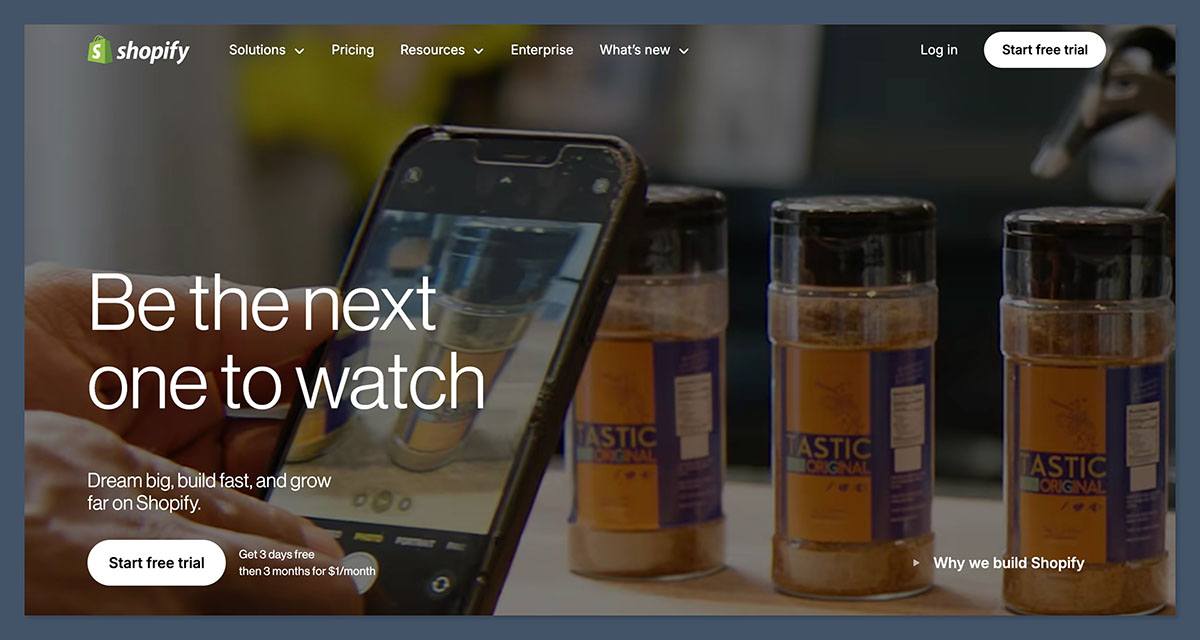
This is where the gap between these two platforms becomes massive. Shopify is a purpose-built ecommerce engine. Linktree is a link aggregation tool with some commerce features bolted on. If selling products is your primary goal, there’s really no contest.
Ecommerce Features
Shopify gives you everything you need to run a serious online store.
I’m talking about inventory management across multiple locations, automated shipping calculations, tax compliance tools, abandoned cart recovery, discount codes, and multichannel selling across marketplaces like Amazon and Etsy.
When I tested it, setting up products was straightforward and the backend for managing orders felt robust without being overwhelming.
Shopify also has its AI integration, Shopify Magic, which lets you generate product descriptions quickly. I found this surprisingly useful when setting up test products – it cut down on the tedious copy work and the output was genuinely decent for a first draft.
Linktree, on the other hand, isn’t designed to be a store.
Its Commerce Links feature lets you accept payments and sell digital products like ebooks, courses, or downloads directly from your Linktree page. It’s handy for simple transactions, but it’s nowhere near a replacement for proper ecommerce functionality.
There’s no inventory management, no shipping tools, no tax calculations, and no abandoned cart recovery.
That said, Linktree does integrate with Shopify – you can embed a mini Shopify storefront directly in your Linktree page, showcasing collections and products that sync automatically. This is actually a pretty compelling use case for using both tools together.
Payment Options
Shopify connects to over 100 payment gateways, including PayPal, Apple Pay, Google Pay, and its own native solution, Shopify Payments.
Using Shopify Payments waives the extra transaction fees, which is a big deal if you’re processing a lot of orders. On the Basic plan, you’re looking at 2.9% + $0.30 per online transaction through Shopify Payments, dropping to 2.4% + $0.30 on Advanced.
Linktree’s payment capabilities are much more limited. On paid plans, you can accept payments through Commerce Links, but you’re working with a fraction of the payment options Shopify offers. It’s perfectly fine for selling a digital download here and there, but it’s not built for high-volume processing.
App Ecosystem
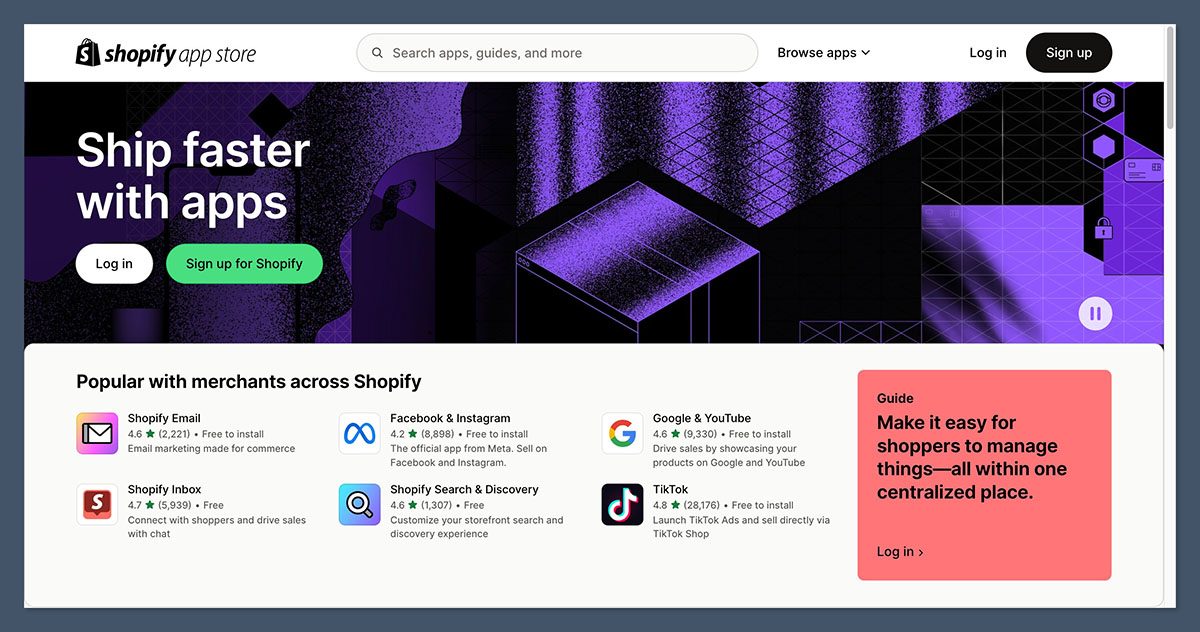
Shopify’s app market boasts over 8,000 third-party integrations. The sheer number is impressive, but I’ll be honest – Shopify leans heavily on these apps to fill feature gaps, and some of the good ones come with their own monthly fees.
That said, if you want a highly customized storefront, the ecosystem is unmatched.
Linktree has a smaller set of integrations – think Mailchimp, Zapier, Google Analytics, Shopify, and a handful of social platform connections. It’s enough for what Linktree does, but you’re not going to build out complex business workflows from it.
🏆 The Winner
Shopify is the clear winner for selling online
Shopify’s ecommerce features are in a different league entirely. From inventory management to 100+ payment gateways and 8,000+ apps, it’s built for serious selling. Linktree’s commerce tools work for quick digital sales but can’t replace a real store.
Best for Marketing: Depends on Your Strategy
This is actually where the comparison gets interesting, because Shopify and Linktree serve different parts of the marketing funnel – and both do their respective jobs well.
Social Media & Traffic
Linktree was literally built for social media. It solves the single-link limitation on platforms like Instagram and TikTok by giving you a landing page that houses all your important links.
With over 70 million users globally and 240 million monthly clicks, Linktree has proven itself as the go-to tool for directing social traffic. When I set one up, it took about five minutes to have a clean, functional page live.
Shopify can connect to social media too – you can sell directly on Instagram, TikTok, and Facebook through its multichannel features, or use the Shopify Marketplace Connect app to sell on Amazon and Etsy. But Shopify isn’t designed to be a social media traffic hub the way Linktree is.
Email Marketing & SEO
Shopify has a clear edge in email marketing with its built-in Shopify Email feature, which lets you build and send campaigns directly from your dashboard. It also excels in SEO, with sitemaps, image alt text, customizable meta descriptions, and a partnership with Semrush for its Ecommerce Booster app.
Linktree provides basic analytics – views, clicks, click-through rates, and geographic data – and on paid plans you get more detailed insights.
But it doesn’t have meaningful SEO capabilities (your page lives on linktr.ee, not your own domain) and its email collection features, while useful, are rudimentary compared to what Shopify offers.
Internationalization
For online stores targeting global markets, Shopify supports over 30 languages, automatic customer redirects based on browser language, and multicurrency checkout.
Linktree is available globally but doesn’t have any significant internationalization features – its interface is English-only.
🏆 The Winner
Shopify wins for comprehensive marketing, but Linktree dominates social traffic direction
If your marketing strategy centers on driving social media followers to specific destinations, Linktree is unbeatable. For everything else – email campaigns, SEO, multichannel selling, internationalization – Shopify is the stronger platform.
Easiest to Use: Linktree
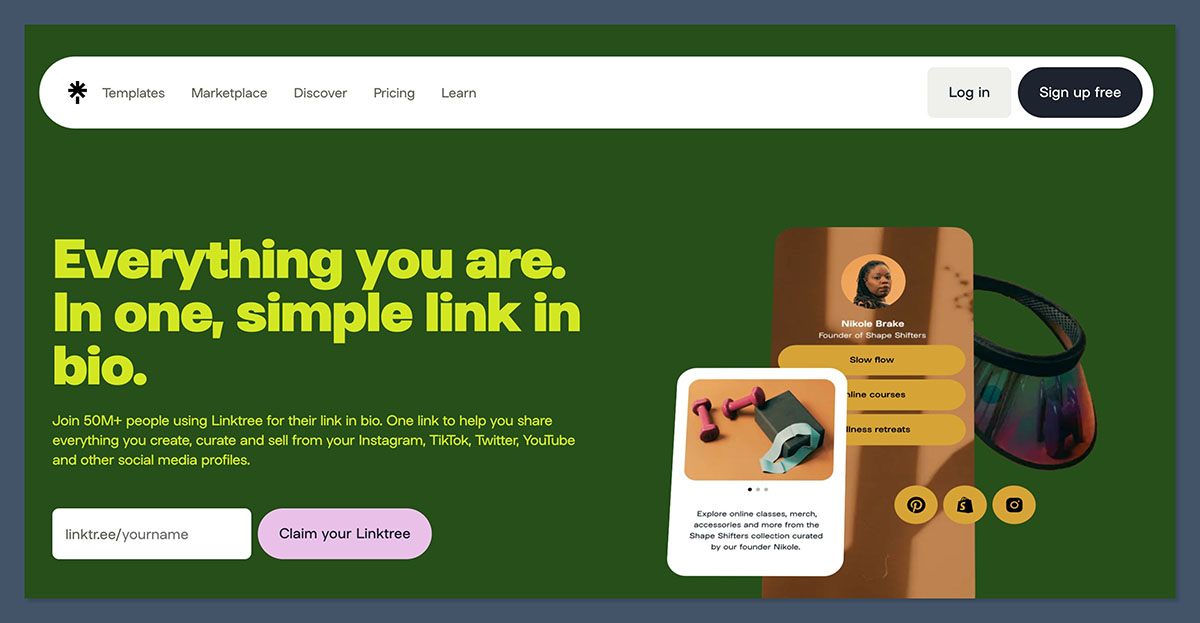
When it comes to getting started quickly, Linktree wins hands down. I had a fully functional Linktree page live within five minutes of signing up. You pick a theme, add your links, customize colors and buttons, and you’re done.
The drag-and-drop interface makes rearranging links effortless. For someone who just wants a clean link hub without any technical headaches, it’s about as simple as it gets.
Shopify is a different story. It’s not hard to use, exactly, but there’s a lot more to it. The onboarding process asks you to describe your business, choose where you want to sell, and what you plan to sell.
From there, you’re dropped into a dashboard with a setup checklist of 13 steps. The section-based editor for designing your store is straightforward but can feel restrictive compared to true drag-and-drop builders.
The complexity is justified – Shopify is managing products, payments, shipping, taxes, and design all in one place. But if you’re looking for the quickest path from zero to a live online presence, Linktree takes a fraction of the time.
💡 Author’s Note
Linktree’s simplicity is both its greatest strength and its biggest limitation. You’ll be live faster than with any other tool, but you can’t build a real website or storefront from it. If you need more than a link landing page, that speed comes at the cost of functionality.
🏆 The Winner
Linktree is significantly easier to set up and use
Linktree gets you from signup to a live page in minutes. Shopify’s learning curve is steeper, but that’s because it’s doing exponentially more.
Best for Design & Customization: Shopify
Shopify offers over 190 templates covering industries from pet supplies to jewelry and accessories. When I previewed templates, I could see pricing and supported features before committing, which was helpful.
Shopify has 13 free templates, with premium options ranging between $100 and $500 as a one-time fee.
Linktree’s design options are considerably more limited. You get a selection of pre-made themes with basic customization – colors, fonts, button styles, background images. On the free plan, your options are pretty bare-bones.
Paid plans unlock more themes and deeper customization, but even at the Premium tier, you’re working within tight design constraints compared to what Shopify offers.
One thing that bugs me about Linktree: there’s no custom domain support. Every Linktree page lives at linktr.ee/yourusername regardless of your plan. For businesses that care about brand consistency and professionalism, that’s a real drawback.
🏆 The Winner
Shopify offers far more design flexibility and customization
With 190+ templates and a section-based editor, Shopify gives you full control over your store’s look and feel. Linktree’s design options are functional but limited.
Who Should Use What: Target Users
Here’s where I’ll be direct about who each platform is actually for, because the answer isn’t always one or the other.
Linktree Is Best For:
- Content creators, influencers, and social sellers who need to centralize multiple links in their Instagram or TikTok bios.
If your business model revolves around driving social media traffic to various destinations – your YouTube channel, a podcast, a merch store, an affiliate link – Linktree is purpose-built for that.
It’s also great for freelancers, artists, and musicians who want a lightweight online hub without building a full website.
Shopify Is Best For:
- Merchants building scalable online stores.
Whether you’re a small business just starting out or an enterprise operation processing millions in revenue, Shopify has a plan for you.
It powers 4.8 million active stores worldwide and holds roughly 29% of the U.S. ecommerce platform market. If you’re serious about product-based selling with proper inventory, shipping, and payment infrastructure, Shopify is the industry standard.
Use Both When:
- You’re a creator or brand that sells products and has an active social media presence.
The Linktree-Shopify integration lets you embed a mini Shopify storefront directly in your Linktree, creating a seamless path from social media bio to product purchase. This combo is increasingly common among social sellers and it genuinely works well.
Best for Support: Shopify
Shopify’s customer service takes the lead here with a comprehensive support infrastructure. You get a 24/7 AI-powered live chat, and for complex issues you can be redirected to a human Support Advisor. Shopify Plus merchants also get 24/7 phone support and priority service.
The Help Center is extensive, featuring guides, video tutorials, a community forum, and business courses.
Linktree offers a 24/7 chatbot for routine queries and a help center with articles and guides. Paid plan users get access to priority support, and Premium subscribers can expect faster response times (around four hours) plus a dedicated customer success manager and onboarding call.
However, several user reviews flag frustrations with Linktree’s support responsiveness, particularly around account and billing issues.
🏆 The Winner
Shopify offers more robust and reliable customer support
With 24/7 live chat, an extensive help center, community forums, and phone support for Plus merchants, Shopify’s support infrastructure is more developed and dependable than Linktree’s.
Market Presence: Both Are Leaders in Their Space
These two platforms dominate their respective categories, which is another reason they complement each other well rather than truly competing.
Shopify holds approximately 29% of the U.S. ecommerce platform market share and powers around 4.8 million active stores globally.
The company generated $8.88 billion in revenue in 2024 and continues to grow aggressively, particularly through its Shopify Plus enterprise plans.
Linktree dominates the link-in-bio space with over 70 million users. The platform generates approximately 240 million clicks monthly and drives around $300 million in monthly commerce. Its nearest competitor, Later, has roughly 7 million users – Linktree’s lead in this category is substantial.
How We Test Ecommerce and Social Commerce Tools
We regularly review and analyze the best ecommerce and social commerce tools using our carefully shaped research process. This helps us identify the best platforms to recommend to our readers.
For this comparison, we carried out extensive testing across several key areas: core features and functionality, pricing and value for money, ease of use, design and customization options, marketing tools, integrations, and customer support.
Perhaps most importantly, I’ve tested both Shopify and Linktree myself, to make sure the insights and recommendations I share with you are based on real, first-hand experience with both platforms.
Shopify vs Linktree: Our Verdict
Comparing Shopify and Linktree head-to-head is a bit like comparing a full kitchen to a microwave. They’re both useful, but they’re built for different things.
If you need to sell products online, Shopify is the platform to choose. Its ecommerce features, payment options, app ecosystem, and scalability are unmatched. The pricing is higher, but you’re getting a complete business infrastructure.
If you need to centralize your social media presence, Linktree is the better tool. It’s fast to set up, has a generous free plan, and it’s the most recognized link-in-bio platform on the market.
For most ecommerce businesses with a social media presence, using both is the smartest move.
Connect your Shopify store to Linktree, embed your products, and create a funnel that turns social followers into paying customers. The two platforms integrate directly and the setup takes minutes.
My recommendation: start with whatever solves your most immediate problem. If you’re a creator who needs a link hub right now, sign up for Linktree’s free plan today.
If you’re ready to build a proper store, take advantage of Shopify’s $1/month introductory offer and give it a real test run. And if you’re already using one, adding the other is a low-effort, high-reward upgrade.


