When comparing ecommerce review platforms for Shopify, Yotpo and Okendo consistently rise to the top — but which one actually delivers better results for your business in 2025?
After spending over 300 hours testing, integrating, and analyzing both tools across real Shopify stores, I can confidently say that Okendo is the better choice for most DTC brands focused on growth, performance, and ease of use.
Yotpo vs Okendo: Quick Verdict
Okendo – Best for growing DTC Shopify brands who want high-converting review experiences and deep Klaviyo integration
Yotpo – Best for enterprise-level businesses needing an all-in-one suite (reviews, loyalty, referrals, SMS)
In this comparison, I’ll walk you through why Okendo outperforms Yotpo for most use cases, and break down the criteria that matter most — including pricing, integrations, review collection, display features, customer support, and more.
This piece was updated on 11/25/2025. Here’s what’s new:
💡 Key Takeaways
-
Okendo’s review-focused tools are easier to use and faster to set up
-
Yotpo offers a broader suite (loyalty, SMS, referrals) but at a higher cost
-
Okendo’s Klaviyo integration enables more personalized email flows
-
Yotpo’s pricing is less transparent and harder to estimate
-
Both tools integrate with Shopify, Gorgias, and other major DTC tools
-
Okendo has a 4.9 rating on the Shopify App Store; Yotpo has a 4.8
A Quick Comparison of Yotpo vs Okendo
Get a fast overview of which tool may be the better fit for your brand in the table below:
| Feature | Okendo | Yotpo |
|---|---|---|
| Starting Price | $19/month | Free for <50 orders |
| Klaviyo Integration | ✅ Tight integration | ✅ Standard |
| Loyalty & Rewards | ❌ Not included | ✅ Included |
| SMS Marketing | ❌ Not included | ✅ SMSBump |
| Review Display | ✅ Modern & customizable | ✅ Flexible but heavier |
| Support Quality | ✅ Excellent | ⚠️ Mixed |
| Ideal For | DTC brands | Enterprise brands |
Overview: What Are Yotpo and Okendo?
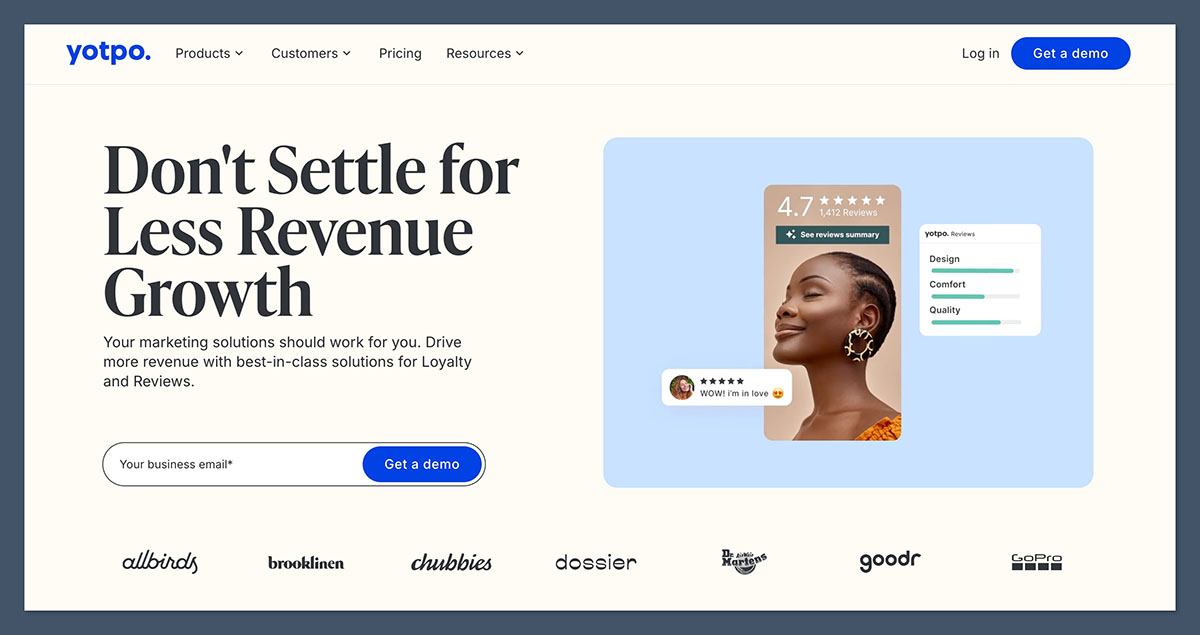
Yotpo is an all-in-one ecommerce marketing platform that offers reviews, loyalty programs, referrals, SMS marketing, and UGC tools. It’s widely used by enterprise brands and comes with a powerful but complex suite of tools.
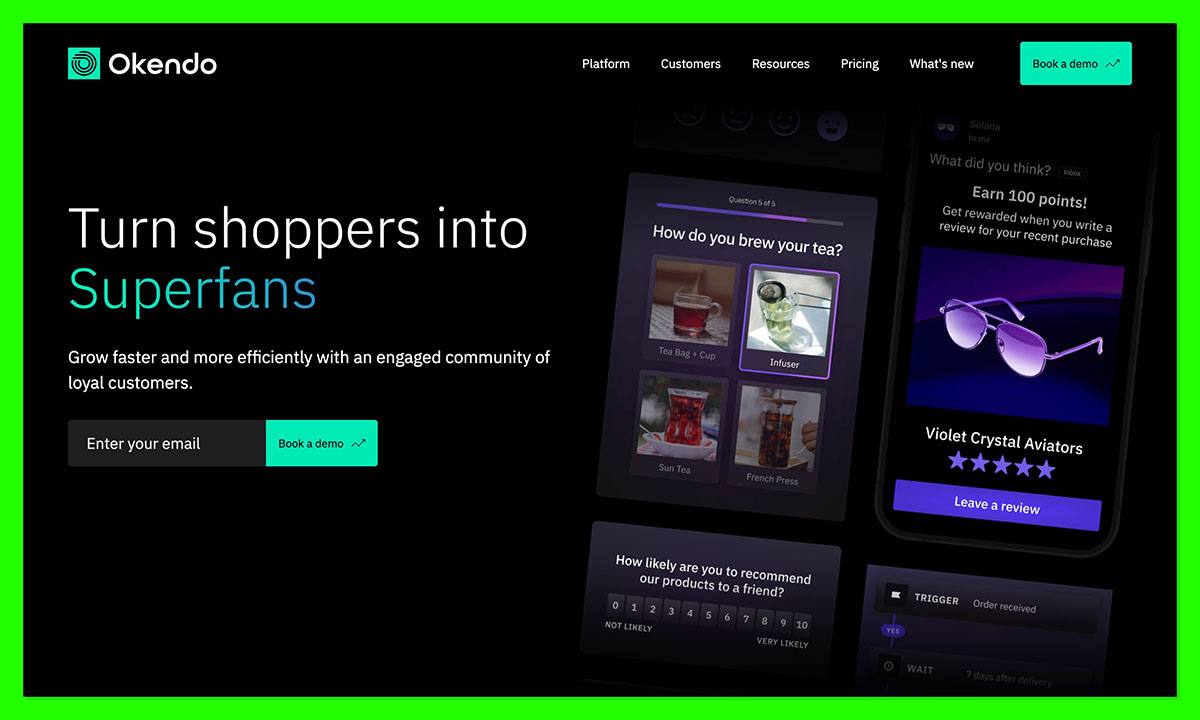
Okendo is a leaner, reviews-first platform designed specifically for Shopify brands. While it doesn’t offer loyalty or SMS marketing, it focuses on creating high-converting review experiences and tight integrations with tools like Klaviyo, Gorgias, and Postscript.
Core difference:
Yotpo is better for all-in-one solutions
Okendo is better for clean, fast review collection and display
Most Shopify brands evaluating these tools aren’t just comparing feature checklists — they’re looking at speed, ease of use, and impact on conversion.
Yotpo often appeals to brands with internal teams or agency partners that can manage multi-channel marketing tools. Okendo, meanwhile, works better for scrappy DTC brands that want high performance without complexity.
While both platforms offer robust capabilities, their positioning is clear: Yotpo caters to brands that need marketing at scale across multiple channels. Okendo is purpose-built for those who want high-quality reviews integrated directly into their email, SMS, and PDP experiences.
Here’s a quick comparison to set the stage:
| Platform | Best For | Starting Price | Key Features |
|---|---|---|---|
| Yotpo | Enterprise brands, all-in-one | Free to custom pricing | Reviews, SMS, loyalty, referrals |
| Okendo | DTC Shopify brands | Starts at $19/mo | Reviews, UGC, surveys, integrations |
Features Breakdown
Let’s compare their key features and highlight where each one shines. This matters a lot depending on your tech stack and marketing priorities.
Shared Features (Both Offer These):
-
Product reviews with text, photo, and video
-
Star ratings and customizable widgets
-
Google Seller Ratings eligibility
-
Klaviyo, Shopify, and Gorgias integrations
-
Ability to collect reviews via email or SMS
-
Custom review forms with attributes
These features are table stakes now. If your main goal is collecting and showing reviews, both platforms cover the basics well.
Where Yotpo Stands Out:
Yotpo offers a broader marketing suite beyond reviews:
-
Loyalty & rewards programs
-
Referral marketing tools
-
SMS marketing (via SMSBump)
-
Review request flows inside SMS and email
-
Dynamic coupons in exchange for reviews
This all-in-one approach means fewer tools to manage. But it can be overkill for brands that just want best-in-class reviews.
Yotpo’s full suite is ideal if you’re managing multiple marketing channels under one roof. For example, running loyalty campaigns, sending SMS reminders, and collecting photo reviews can all happen in the same dashboard — which may reduce tool fatigue for large teams.
Where Okendo Shines:
Okendo doubles down on review quality and usability:
-
Surveys and customer attributes on reviews
-
Detailed personalization options for review widgets
-
Fast-loading displays with modern UI
-
High email deliverability for review requests
-
Best-in-class Klaviyo integration for DTC flows
Because Okendo focuses purely on reviews and customer feedback, the UX feels more intuitive and is easier to implement without a dev team.
Okendo also makes it easy to tailor each review form with custom questions — such as size, fit, age range, or skin type — which helps brands display meaningful and relevant content. These custom attributes can be used to filter reviews or segment email campaigns inside Klaviyo.
Pricing Comparison
Pricing is often the biggest reason brands switch between these two tools. Let’s compare the numbers transparently.
| Tier | Yotpo | Okendo |
|---|---|---|
| Free Plan | Up to 50 orders/month | No free plan, starts at $19/month |
| Growth Plan | Custom pricing (starts ~$119/month) | $99–$299/month depending on features |
| Enterprise | Custom (based on volume) | $499+/month with custom SLAs |
-
Yotpo’s pricing depends heavily on your order volume
-
Many features (like loyalty or SMS) require separate contracts
-
You must speak with sales to get a detailed quote
-
Can quickly cost $1,000+/mo for growing brands with add-ons
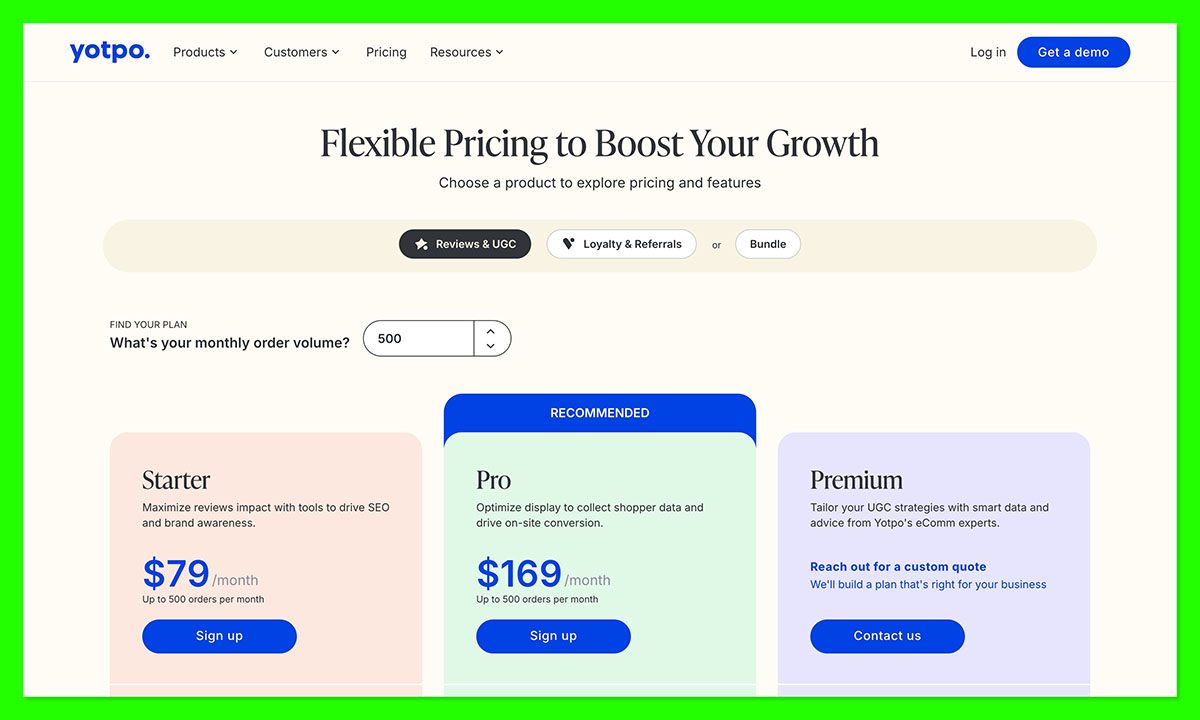
Yotpo splits its pricing across different product modules, such as Reviews & UGC, Loyalty & Referrals, and SMS Marketing. Each one comes with its own pricing tiers. For example, for a store with up to 500 monthly orders, Yotpo Reviews starts at $79/month (Starter plan), with the Pro plan at $169/month, and a Premium tier with custom pricing that includes advanced AI tools and a dedicated strategist.
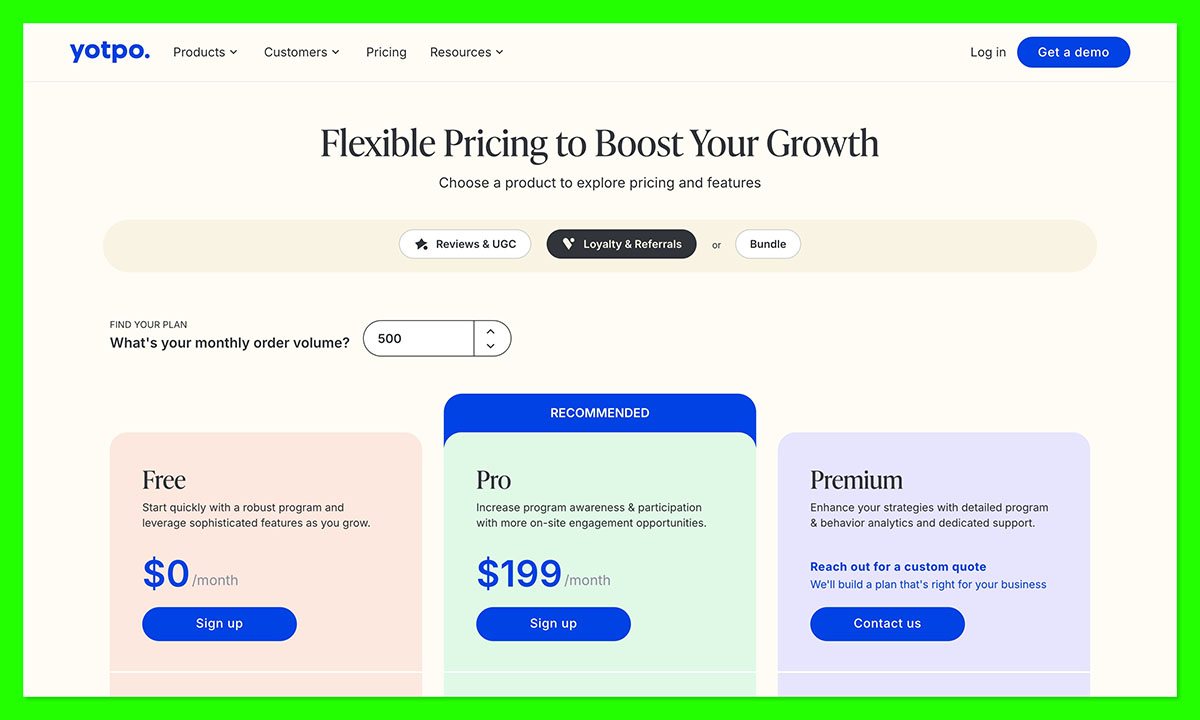
If you want to layer in Loyalty & Referrals, there’s a separate pricing structure starting at $0/month for basic points campaigns, scaling up to $199/month on the Pro plan — and again, a custom-priced Premium option for enterprise features like behavior analytics, segmentation, and program management tools.
When bundled, Yotpo offers up to 35% off across these modules, but the cost still adds up quickly if you need the full stack. For example, Reviews + Loyalty + SMS at mid-tier pricing can land between $350–$800/month, depending on order volume and feature access.
Okendo Pricing Details:
-
Clear tiered pricing based on order volume
-
Entry plan is $19/month for stores under 100 orders
-
Mid-tier $99–$299/month includes features like photo reviews, surveys, and Klaviyo integrations
-
No hidden fees or upsells for core features
Okendo keeps things predictable. All core features — including review forms, photo/video UGC, custom attributes, surveys, and Klaviyo syncing — are built into their main platform pricing. You don’t need to license loyalty tools separately, which keeps pricing simpler and easier to manage for brands focused purely on reviews and email integration.
Verdict:
Okendo is more affordable and easier to budget for. Yotpo might make sense for enterprise brands that want everything under one roof, but pricing can be a roadblock for smaller stores. It’s also more modular, which gives flexibility — but also adds complexity and potentially higher costs for brands that need multiple tools in one.
Integrations
Both platforms integrate with top ecommerce tools, but Okendo focuses more on modern DTC stacks, while Yotpo covers more legacy platforms and enterprise needs.
Yotpo Integrations:
-
Klaviyo
-
Gorgias
-
Shopify & Shopify Flow
-
Meta/Google Shopping
-
SMSBump (Yotpo-owned)
-
BigCommerce, WooCommerce
-
Google Seller Ratings
Okendo Integrations:
-
Klaviyo (very tight integration)
-
Gorgias
-
Postscript
-
Shopify & Shopify Flow
-
Rebuy, Alloy, Zendesk
Okendo’s Klaviyo integration allows:
-
Syncing customer reviews into email flows
-
Triggering abandoned cart flows based on reviews
-
Using review data for segmentation and targeting
If you’re running a Shopify brand with a lean, conversion-optimized stack, Okendo fits in smoothly. Yotpo offers more for brands that need broader support across multiple channels and platforms.
Yotpo’s ecosystem is wider, but less focused. For example, its integration with Google Ads and Meta lets you run UGC-powered ad campaigns directly from the platform. Okendo doesn’t go that deep on ad integrations, but nails the essentials for email and SMS-based growth.
Usability & Onboarding
User experience matters. Clunky platforms waste time and kill team productivity.
Yotpo:
-
Rich in features, but the UI can be overwhelming
-
Slower onboarding process due to complexity
-
Requires more configuration and dev support
-
Common complaints include: steep learning curve, poor dashboard UX
Yotpo’s interface hasn’t evolved much compared to newer tools, which means the learning curve can frustrate smaller teams. Simple actions — like editing review request timing or customizing widgets — may require support tickets or deep knowledge of the UI.
Okendo:
-
Clean, fast-loading dashboard
-
Easy to configure without developers
-
Excellent onboarding and live chat support
-
Features are streamlined, focused, and intuitive
If you’re a lean team or working with a small agency, Okendo is easier to manage day-to-day. Yotpo works better if you have a team or agency handling setup and maintenance.
Okendo’s onboarding specialists help with everything from review import to widget styling, often completing migrations within days. For brands coming off Yotpo or other legacy tools, this speed can make a big difference when transitioning platforms.
Customer Support & Reviews
Customer service often gets overlooked — until you need it.
Yotpo Support:
-
Mixed feedback across G2, Reddit, and Shopify
-
Slower responses on non-enterprise plans
-
Complex billing and cancellation policies frustrate some users
-
Dedicated CSMs only available on high-tier plans
Several merchants report long wait times for support tickets, especially for billing or data import issues. Unless you’re on a premium plan with a Customer Success Manager (CSM), support may feel impersonal or sluggish.
Okendo Support:
-
Consistently praised for fast response times
-
1:1 onboarding on all paid plans
-
Easy migration from other tools (including Yotpo)
-
Highly rated on Shopify App Store (4.9 stars)
Okendo’s support is more hands-on and consistent regardless of your pricing tier. Their team actively assists with configuration, widget setup, Klaviyo syncing, and troubleshooting — making them a solid partner, not just a software vendor.
Yotpo’s support can be a bottleneck, while Okendo’s team is often mentioned by name in reviews — a good sign of consistent service quality.
Real-World Performance & Case Studies
Looking at actual outcomes helps cut through the marketing.
Yotpo Case Studies:
-
Steve Madden used Yotpo to scale UGC across product pages and saw a 10% increase in CVR
-
Brooklinen layered loyalty with reviews and boosted repeat purchases by 15%
-
Some brands report 6–8% review collection rates from email, or 20%+ with incentives
Yotpo performs well when its full stack is implemented properly. Brands that leverage SMS, referrals, and reviews together often report strong retention gains. However, these results usually require high-volume traffic and significant setup work.
Okendo Case Studies:
-
SKIMS reported a 25% lift in email CTR after using Okendo + Klaviyo
-
Truly Beauty saw a 13% increase in AOV after adding Okendo photo reviews
-
Brands switching from Yotpo to Okendo report a 32% increase in review volume
Okendo’s performance is most noticeable in email and PDP conversion. Because its widgets load fast and look modern on mobile, many DTC brands see immediate improvements to bounce rate and review engagement within the first month.
If you’re focused on conversion and email performance, Okendo’s tight Klaviyo sync provides clear results. Yotpo is more multi-purpose, but requires more coordination to get these results.
Final Verdict: Yotpo or Okendo?
So which platform should you go with?
Here’s a breakdown by use case:
| You Should Choose… | If You… |
|---|---|
| Yotpo | Need an all-in-one suite (reviews, loyalty, SMS, referrals) |
| Yotpo | Are an enterprise brand with internal dev and support teams |
| Okendo | Want high-converting, photo-rich reviews |
| Okendo | Use Klaviyo and want fast review-email syncing |
| Okendo | Are a DTC brand focused on Shopify only |
For most growing Shopify brands, especially under $20M/year in revenue, Okendo offers better value, faster onboarding, and a leaner toolset. For larger, complex brands or those running loyalty/referral programs, Yotpo makes more sense — if you can afford it.
Quick Summary Table
| Feature Category | Winner |
|---|---|
| Pricing | Okendo |
| Usability | Okendo |
| Review Quality | Okendo |
| Integrations | Tie |
| All-in-One Capabilities | Yotpo |
| Customer Support | Okendo |
| Enterprise Features | Yotpo |
Frequently Asked Questions
Is Okendo better than Yotpo for Shopify?
For most DTC brands using Shopify, yes. Okendo is more focused, easier to set up, and integrates more deeply with tools like Klaviyo and Postscript.
Does Yotpo offer more features than Okendo?
Yes — Yotpo also includes loyalty, referrals, SMS marketing, and other tools. However, this comes at a higher cost and complexity.
Can I migrate from Yotpo to Okendo easily?
Yes. Okendo offers concierge-level migration from Yotpo, including importing reviews, mapping attributes, and recreating widgets.
Which platform helps collect more reviews?
Okendo users often see a higher review collection rate due to better UX and email deliverability. But results may vary depending on incentives and list quality.
Is there a free plan?
Yotpo offers a free tier (up to 50 orders/month). Okendo starts at $19/month with no free plan, but offers more features at entry-level.
Conclusion
Choosing between Yotpo vs Okendo depends on your growth stage and marketing needs. If you’re a fast-growing Shopify brand that values clean UX, strong support, and conversion-focused features — Okendo is likely your best choice. If you want an all-in-one suite and have the budget and team to manage it, Yotpo may be the better fit.


