Shopify is a dedicated ecommerce platform built to run and scale online stores, while Systeme.io is an all-in-one marketing suite that bundles funnels, email, courses, and simple selling into a single dashboard.
We’ve spent weeks digging into both platforms, testing features, comparing pricing, and building real pages, to help you figure out which one actually fits your business.
As a result of our testing, Shopify is the better choice if you’re building a traditional online store with physical products, a growing catalog, and multi-channel selling needs.
But if you’re a solopreneur selling digital products, courses, or coaching through funnels, Systeme.io offers more value at a fraction of the cost.
Shopify vs Systeme.io: Quick Verdict
Shopify – Best overall for ecommerce stores, ideal for growing product-based businesses
Systeme.io – Best for solopreneurs, digital products, and funnel-driven businesses
In this review, I’ll walk you through exactly why these two platforms serve very different kinds of businesses, comparing them on pricing, ecommerce features, marketing tools, ease of use, and more.
Quick Comparison: Shopify vs Systeme.io
Get a quick and clear overview of both platforms in the table below:
| Feature | Shopify | Systeme.io |
|---|---|---|
| Starting Price | $39/mo (Basic) | $0/mo (Free plan) |
| Best For | Physical products, multi-SKU stores | Digital products, funnels, courses |
| Transaction Fees | 2.9% + $0.30 (Basic) | None from the platform |
| Email Marketing | Built-in + apps (Klaviyo, etc.) | Fully built-in on all plans |
| Sales Funnels | Requires third-party apps | Native funnel builder included |
| Online Courses | Requires third-party apps | Native course hosting included |
| App Marketplace | 8,000+ apps | Limited integrations |
| Templates | 190+ store themes | Template-based page builder |
| Free Trial | 3 days | Free plan (forever) |
Best for Pricing: Systeme.io
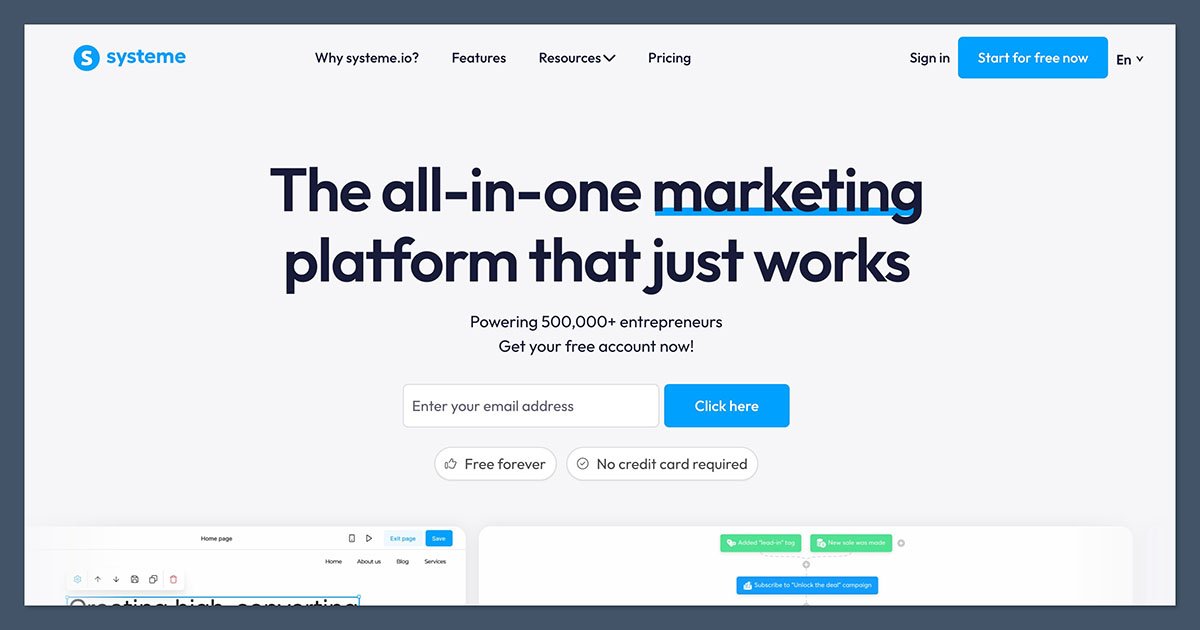
If you’re looking for the most budget-friendly option, Systeme.io wins this round hands down. The gap here is significant—Systeme.io offers a genuinely usable free plan, while Shopify’s cheapest full-store option starts at $39 per month.
Shopify’s Pricing
Shopify’s pricing ranges from $5 to $399 per month on its standard plans, with annual billing bringing costs down a bit. Here’s how the plans break down:
- Starter – $5 per month. This is a very stripped-down option that lets you sell through links and social media, but you don’t get a full online store. Think of it more as a checkout link than a storefront.
- Basic – $39 per month ($29 on annual billing). Your entry point to a real Shopify store with a full product catalog, basic reporting, and standard ecommerce features.
- Grow – $105 per month ($79 on annual billing). Formerly called “Shopify,” this plan gets you improved reporting, more staff accounts, and better shipping discounts.
- Advanced – $399 per month ($299 on annual billing). Designed for larger operations that need advanced analytics, calculated duties, and third-party shipping rates at checkout.
On top of your subscription, Shopify charges processing fees on every transaction. Using Shopify Payments, you’ll pay around 2.9% + $0.30 per transaction on Basic, dropping to 2.5% + $0.30 on Advanced. If you use a third-party payment gateway instead, there’s an additional platform fee that ranges from 2.0% on Basic down to 0.6% on Advanced.
Shopify does offer a three-day free trial, which—let’s be honest—is barely enough time to explore the dashboard, let alone test whether the platform works for your business.
Systeme.io’s Pricing
Systeme.io keeps things refreshingly simple with four plans:
- Free – $0 per month. This isn’t a trial—it’s a forever-free plan that gives you access to funnels, email marketing, automation, and even course hosting. The limits are tight (2,000 contacts, 3 funnels), but it’s genuinely usable for small projects and testing the waters.
- Startup – $17 per month ($170/year). Bumps up your contact and funnel limits and is plenty for most solopreneurs getting their digital business off the ground.
- Webinar – $47 per month ($470/year). Adds webinar hosting and significantly higher limits on automations and contacts.
- Unlimited – $97 per month ($970/year). Removes all caps on contacts, funnels, emails, and automations.
Here’s the kicker: Systeme.io charges zero platform transaction fees. You’ll still pay your payment processor (Stripe, PayPal), but the platform itself doesn’t take a cut. For businesses processing significant volume, this adds up to real savings.
Pricing Comparison Table
| Plan | Monthly | Annual | Platform Fees | Notes |
|---|---|---|---|---|
| Shopify Starter | $5 | N/A | Yes (3rd-party) | Links/social only |
| Shopify Basic | $39 | $29/mo | Up to 2.0% | Full store, basic reports |
| Shopify Grow | $105 | $79/mo | ~1.0% | Better reports, discounts |
| Shopify Advanced | $399 | $299/mo | ~0.6% | Advanced reports, duties |
| Shopify Plus | $2,300+ | $2,300+ | ~0.2% | Enterprise |
| Systeme.io Free | $0 | $0 | None | Limited funnels & email |
| Systeme.io Startup | $17 | $14/mo | None | Small lists, automations |
| Systeme.io Webinar | $47 | $39/mo | None | Adds webinars |
| Systeme.io Unlimited | $97 | $81/mo | None | No limits |
The cost difference is stark. A Shopify Basic store at $39/month plus transaction fees can easily run you $60–$80+ per month when you factor in essential apps for email marketing and funnels. Meanwhile, Systeme.io’s Startup plan at $17/month includes email, funnels, and automations with no extra fees.
The Winner Systeme.io is the clear winner on pricing With a forever-free plan, lower paid tiers, and zero platform transaction fees, Systeme.io is dramatically more affordable than Shopify, especially for solopreneurs and small digital businesses. |
Best for Selling Online: Shopify
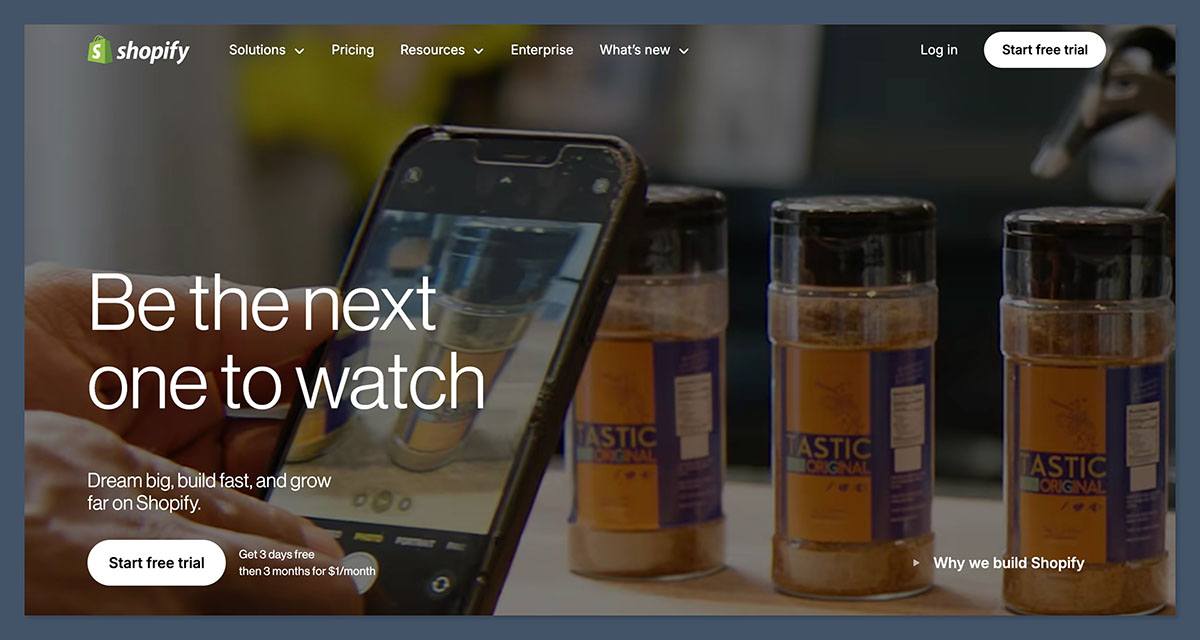
This is where Shopify really flexes. If your business revolves around selling physical products—whether that’s fashion, electronics, home goods, or anything with a proper catalog—Shopify is built for exactly that.
Ecommerce Features
Shopify gives you a robust product catalog with support for variants, collections, inventory tracking across multiple locations, shipping profiles, and automated tax calculations. It’s built for the kind of “browse, add to cart, checkout” shopping experience that customers expect from an online store.
Systeme.io approaches selling differently. It’s designed around funnels and single-offer order forms, not browsing catalogs.
You can absolutely sell products on Systeme.io—digital downloads, coaching packages, courses, even some physical items—but it’s optimized for a smaller number of offers rather than a sprawling product catalog.
If you’re selling 5–10 digital products or coaching packages, Systeme.io handles that cleanly. But if you have 200 SKUs with sizes, colors, and warehouse tracking, Shopify is the only real option here.
Payment Options
Shopify connects you to over 100 payment methods including PayPal, Apple Pay, Google Pay, and its own native gateway, Shopify Payments. Using Shopify Payments minimizes your transaction fees—on the Basic plan, you’ll pay 2.9% + $0.30 per transaction, and this drops as you move to higher plans.
Systeme.io integrates with Stripe and PayPal for payment processing. It’s a much smaller selection, but for most solopreneurs and course creators, Stripe and PayPal cover the vast majority of use cases. And remember—no platform transaction fee on top.
App Marketplace
Shopify’s app marketplace is massive, with over 8,000 third-party integrations. Need subscription billing? There’s an app. Customer reviews? App. Loyalty programs, advanced SEO, print-on-demand? Apps for all of it. The trade-off is that Shopify leans on this ecosystem heavily—features that could arguably be built-in often require a paid app, which adds to your monthly costs.
Systeme.io takes the opposite approach. Instead of a sprawling app marketplace, it bundles everything into the core platform—email marketing, funnels, automations, course hosting, membership areas, and affiliate management.
The integration options are limited compared to Shopify, but the upside is that you’re not cobbling together a stack of paid tools to get basic functionality.
The Winner Shopify’s ecommerce features are unmatched for product-based stores Shopify provides a full-powered online store with extensive catalog management, 100+ payment options, and 8,000+ apps. For physical product businesses, it’s the stronger platform. |
Best for Marketing: Systeme.io
Here’s where the comparison gets interesting. While Shopify has solid marketing tools, Systeme.io was literally built as a marketing platform first—and it shows.
Marketing Tools
Shopify offers built-in email marketing through Shopify Email, and you can connect your store to social media platforms like Instagram and TikTok or sync products to Amazon and Etsy through the Marketplace Connect app. It’s a strong suite for multichannel product promotion.
But if you want proper sales funnels, A/B testing on landing pages, automated email sequences, upsells, order bumps, and tripwire offers, you’ll need to bolt on third-party tools. That typically means adding something like Klaviyo for email ($20–$100+/month), a funnel builder like ClickFunnels ($97+/month), and possibly a course platform if you’re offering digital products.
Systeme.io includes all of this natively. Every plan—including the free one—gives you a funnel builder, email marketing with automation, A/B testing, and course/membership hosting.
There’s no need for a separate email tool, a separate funnel builder, or a separate course platform. For direct-response marketing and funnel-driven businesses, this is a major advantage.
SEO
Both platforms offer standard SEO essentials like custom URLs, meta titles, image alt text, and sitemaps. Shopify has a slight edge here with its partnership with Semrush and the Ecommerce Booster app, which provides actionable SEO recommendations specifically for online stores. Shopify also benefits from a more established blogging feature for content marketing.
Systeme.io’s SEO capabilities are more basic. You can optimize your pages and blog posts, but you won’t find the same depth of SEO tooling. If organic search traffic is a major part of your growth strategy, Shopify gives you more to work with.
Email Marketing and Automations
This is a decisive difference. Systeme.io includes full email marketing with visual automation workflows on every plan. You can build complex sequences triggered by purchases, page visits, tags, and more—all without paying for an additional tool.
Shopify’s built-in email feature (Shopify Email) is functional for basic campaigns, but most serious store owners end up using third-party tools like Klaviyo or Omnisend for segmentation, advanced automations, and proper email sequences. That’s an additional monthly cost of $20 to $100+ depending on your list size.
The Winner Systeme.io has the better built-in marketing stack With native funnels, email marketing, automations, A/B testing, and course hosting included on every plan, Systeme.io eliminates the need for multiple paid marketing tools that Shopify users typically rely on. |
Easiest to Use: It’s a Tie
Both platforms are relatively straightforward to get started with, though they’re optimized for different workflows.
Shopify walks you through a quick onboarding questionnaire when you sign up—it asks whether you’re just starting or already selling, where you want to sell, and what types of products you carry.
From there, you land on a clean dashboard with a setup checklist to guide you through adding products, choosing a theme, and configuring payments. The section-based editor is simple to use, if a bit restrictive for creative freedom.
Systeme.io’s onboarding is equally fast. You sign up, pick a template, and start building funnels or pages with a drag-and-drop editor. The interface is clean and the learning curve is gentle—especially since everything lives in one platform rather than across multiple apps you need to configure separately.
Where Shopify has an edge is in the polish and refinement of its editor and dashboard. It feels like a more mature product with better documentation. Where Systeme.io has an edge is in simplicity—there’s less to configure because the whole marketing stack is already integrated.
I’d call this one a draw. Shopify is more polished; Systeme.io is more streamlined.
The Winner Shopify and Systeme.io are equally accessible for different reasons Shopify offers a polished, well-documented setup experience for store owners. Systeme.io keeps things simple by bundling everything in one place, reducing the setup complexity of managing multiple tools. |
Best Store Templates: Shopify
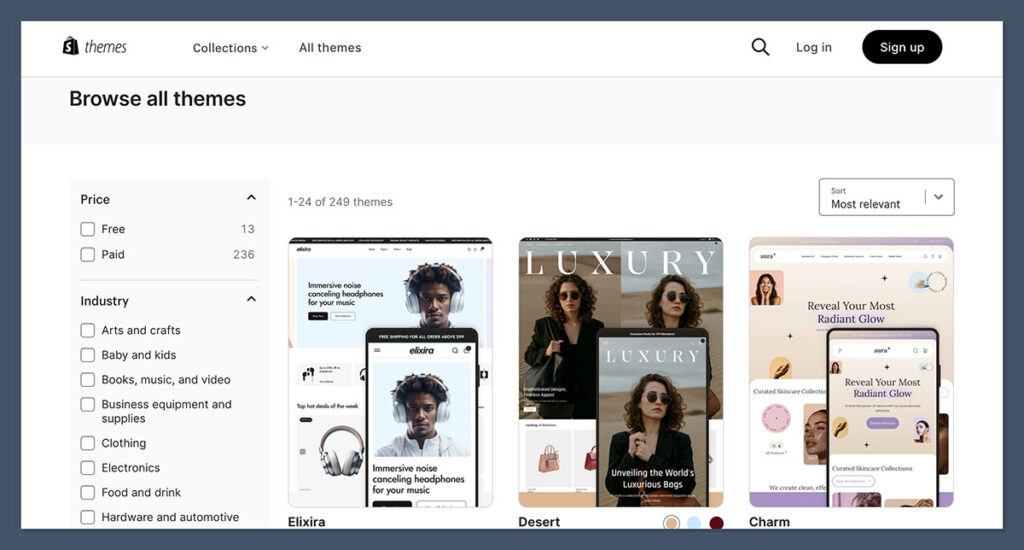
When it comes to making your online presence look professional, Shopify has a clear advantage in template quality and variety.
Shopify offers more than 190 templates, organized by industry and store type. You’ll find themes designed specifically for fashion, electronics, food and drink, pet supplies, jewelry, and more.
There are 13 free options, with premium themes ranging from $100 to $500 as a one-time purchase. The themes are modern, mobile-responsive, and customizable through Shopify’s section-based editor.
Systeme.io provides a template-based page and funnel builder with drag-and-drop sections. The templates are functional and get the job done, but they don’t offer the same visual polish or industry-specific variety that Shopify delivers.
If you’re building a funnel or landing page, the templates work fine. But if you need a full browsing store with a distinctive brand look, Shopify’s theme ecosystem is significantly stronger.
The Winner Shopify offers a more diverse and polished template library With 190+ themes covering different industries and a mature theme editor, Shopify gives businesses more options to create a distinctive, professional-looking storefront. |
Best for Business Support: Shopify
When you run into issues or need guidance, the quality of available support matters. Shopify takes the lead here thanks to its size and resources.
Shopify Support
Shopify offers 24/7 live chat support through its Help Center, with the option to escalate to a human Support Advisor for complex issues. The Help Center itself is extensive, featuring guides, video tutorials, a community forum, and even business courses. Shopify Plus merchants also get access to 24/7 phone support and priority assistance.
On the downside, email support has been removed, and priority support is reserved for enterprise customers on Plus plans. Still, the breadth of self-service resources is impressive.
Systeme.io Support
Systeme.io offers email-based support and an active Facebook community. The knowledge base covers the essentials, and Systeme.io’s founder Aurélien Amacker is fairly active in the community, which gives it a more personal feel. However, there’s no live chat or phone support, and response times can vary.
For non-technical users who prefer figuring things out independently, Systeme.io’s simpler platform means there’s less that can go wrong. But when you do need hands-on help, Shopify’s support infrastructure is more robust.
The Winner Shopify provides better support options for businesses With 24/7 live chat, a comprehensive Help Center, community forums, and video tutorials, Shopify gives merchants more ways to get help when they need it. |
Who Should Choose Shopify vs Systeme.io?
The right platform depends entirely on what kind of business you’re building. Here’s a practical breakdown:
Choose Shopify if you…
- Sell physical products with multiple SKUs, variants, sizes, and colors
- Need inventory management across multiple locations or warehouses
- Want to sell across multiple channels: your website, Instagram, TikTok, Amazon, Etsy, and in-person with POS
- Need a professional, customizable storefront with industry-specific themes
- Value a large ecosystem of apps and developers and are willing to invest in building a tailored tech stack
Choose Systeme.io if you…
- Sell digital products, online courses, coaching packages, or memberships
- Run a funnel-driven business with upsells, order bumps, and automated email sequences
- Want email marketing, automations, and a course platform without paying for separate tools
- Are budget-sensitive and want predictable costs with no platform transaction fees
- Are a solopreneur or small team that doesn’t want to manage multiple subscriptions and integrations
Shopify vs Systeme.io: Our Verdict
These two platforms aren’t really competing for the same customer—and that’s the most useful thing to understand here.
If you’re building an online store with a real product catalog, inventory needs, and plans to sell across multiple channels, Shopify is the stronger choice. Its ecommerce features, template ecosystem, and app marketplace make it the go-to platform for product-based businesses at any scale.
If you’re a course creator, coach, affiliate marketer, or solopreneur selling digital offers through funnels, Systeme.io delivers more for less. The all-in-one approach—funnels, email, courses, automations—means you skip the $200+/month tool stack that Shopify users often end up assembling.
My recommendation? Start with the question “What am I actually selling, and how?”
If the answer is “products in a store,” go with Shopify. If the answer is “offers through funnels,” go with Systeme.io. Both platforms offer ways to test before you commit—Shopify with a short free trial, and Systeme.io with a genuinely usable free plan.


