Shopify and Booqable are both well-known platforms in the ecommerce space, but they serve different business needs.
If you run a rental business, sell products online, or need a combination of both, choosing between these two tools can be challenging.
In this comparison, I’ll walk through the key differences between Shopify and Booqable, based on pricing, rental and ecommerce features, ease of use, and ideal business use cases.
I’ve also included my own experience testing both platforms, and I’ll share what type of business is best suited for each.
Shopify vs Booqable: Quick Verdict
Shopify is a better fit if your business sells products online and needs a customizable ecommerce storefront.
Booqable is ideal if your business is focused on rentals and needs tools to manage bookings, inventory, and availability.
If you need both ecommerce and rental functionality, using Shopify and Booqable together is often the most flexible and professional option.
A Quick Comparison of Shopify vs Booqable
Here’s a side-by-side overview of Shopify and Booqable for a fast comparison.
| Feature | Shopify | Booqable |
|---|---|---|
| Core Focus | Ecommerce | Rentals and Bookings |
| Starting Price | $29 per month | $29 per month |
| Rental Features | Not built-in (requires apps) | Built-in |
| Full Online Store | Yes | No |
| Inventory Management | Basic | Rental-specific |
| Embedded Checkout | Native | Through integration |
| Booking Calendar | Requires third-party app | Included |
| POS System | Built-in | Optional add-on |
| Free Trial | 3 days | 14 days |
| Best For | Product sellers | Rental businesses |
Who Are These Platforms Best For?
Choosing between Shopify and Booqable comes down to what your business actually does, and what it needs to operate smoothly.
Each platform is tailored to support a specific type of workflow, so understanding where they shine will help you avoid unnecessary complications later on.
Shopify is best suited to businesses focused on selling products online. Whether you’re a solo entrepreneur or an established brand, Shopify offers the flexibility and tools to scale efficiently.
It’s built for ecommerce from the ground up, with everything from professional storefront templates to multichannel integrations.
You’ll likely benefit from Shopify if:
- Your core business involves selling physical or digital products
- You’re planning to scale and need marketing and automation tools
- You want a highly customizable storefront with access to thousands of apps
- You’re looking to sell across multiple channels like Facebook, Instagram, and Amazon
Booqable, in contrast, is purpose-built for rental operations.
If your business revolves around bookings, reservations, or inventory that needs to be returned, Booqable provides the rental-specific functionality Shopify doesn’t offer natively.
It simplifies the complexities of managing availability, time-based inventory, and customer check-ins and returns.
Booqable is a better fit if:
- You run an equipment rental or hire-based business
- You manage bookings for events, fashion rentals, tools, or recreational gear
- You need built-in features like booking calendars, quotes, deposits, and rental contracts
- Your business requires tracking availability in real-time or across multiple locations
For businesses that need both a storefront and rental functionality, combining Shopify and Booqable often delivers the most complete solution.
This setup gives you the polished design and ecommerce power of Shopify, along with the operational depth of Booqable’s rental system.
The combination of both tools works best when:
- You want to sell and rent products through one branded website
- Your business needs a smooth, customer-facing storefront and a backend to manage complex rentals
- You’re looking to expand into ecommerce while maintaining strong control over bookings and inventory
By understanding how these platforms complement different business models, it becomes easier to decide whether you should rely on one—or both—to support your long-term goals.
Pricing Comparison: How Much Do These Platforms Cost?
Pricing is one of the first things I compare when evaluating tools for a business.
Both Shopify and Booqable start at similar monthly prices, but they include different features in each plan.
Shopify Pricing (Billed Annually)
| Plan Name | Monthly Cost | Key Features Included |
|---|---|---|
| Starter | $5 | Share checkout links (no storefront) |
| Basic | $29 | Online store, 2 staff accounts |
| Shopify (Grow) | $79 | Reports, more staff accounts |
| Advanced | $299 | Advanced analytics, 15 staff accounts |
| Plus | From $2,300 | Enterprise tools and custom solutions |
Transaction fees apply unless you use Shopify Payments. On the Basic plan, that’s 2.9 percent plus 30 cents per transaction.
Booqable Pricing
| Plan Name | Monthly Cost | Key Features Included |
|---|---|---|
| Start | $29 | Core rental features, calendar, booking system |
| Grow | $69 | Reports, more users, customer portals |
| Scale | $149 | API access, multi-location support, barcode scanning |
Booqable also offers a 14-day free trial and optional add-ons such as a website builder for $19 to $24 per month and mobile POS for $9 to $12 per user monthly.
Value Comparison
If you want to run a full online rental business with a branded storefront, you may need to use both platforms. That could look like this:
- Shopify Basic: $29 per month
- Booqable Grow: $69 per month
- Total Monthly Cost: $98 per month (not including add-ons)
This combined setup gives you both ecommerce and rental functionality without major compromises.
Best for Rentals: Booqable
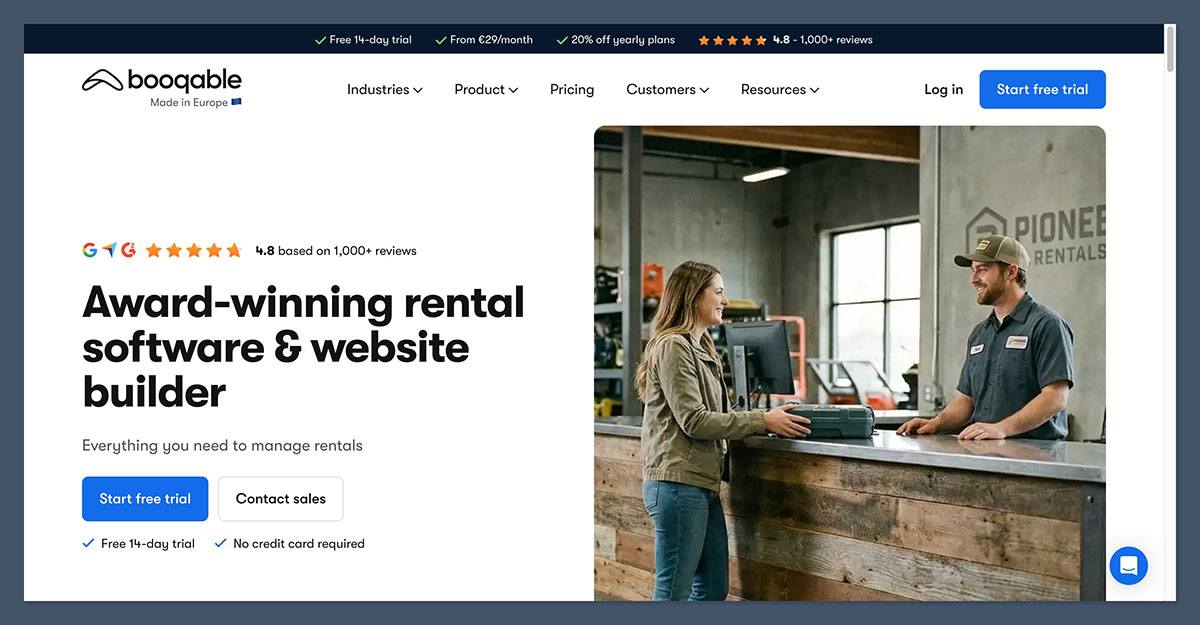
Booqable is designed specifically for rentals.
During testing, I found that it performs well in managing availability, scheduling, and inventory tracking. These features are all built-in and available out of the box.
Rental Features I Used in Testing
- Booking calendar with check-in and return dates
- Inventory tracking that prevents double-booking
- Option to collect deposits or send quotes before confirming orders
- Workflow tools for preparing, renting out, and returning equipment
- Easy-to-use dashboard with daily rental overview and order summaries
These features are critical for businesses that need to schedule physical goods over time, especially when inventory is limited and timing matters.
Whether you’re managing daily rentals, weekend bookings, or long-term hires, having accurate availability data ensures you don’t overbook or miss out on revenue opportunities.
Tools like real-time calendars, automated conflict prevention, and clear check-in and return workflows help reduce errors, improve customer experience, and free up staff time.
For rental-based businesses, this kind of operational control isn’t just useful—it’s essential for running efficiently and scaling without bottlenecks.
Limitations
- The website builder is functional but lacks design flexibility
- You may still need a separate ecommerce platform for a full storefront
- Some advanced functions require higher-tier plans or add-ons
Overall, Booqable is a strong option for any business that revolves around managing bookings and equipment availability.
Its focused feature set is designed to handle the real-world logistics of rentals, making it far more reliable and scalable than trying to piece together booking functionality through general-purpose ecommerce platforms.
Best for Ecommerce: Shopify
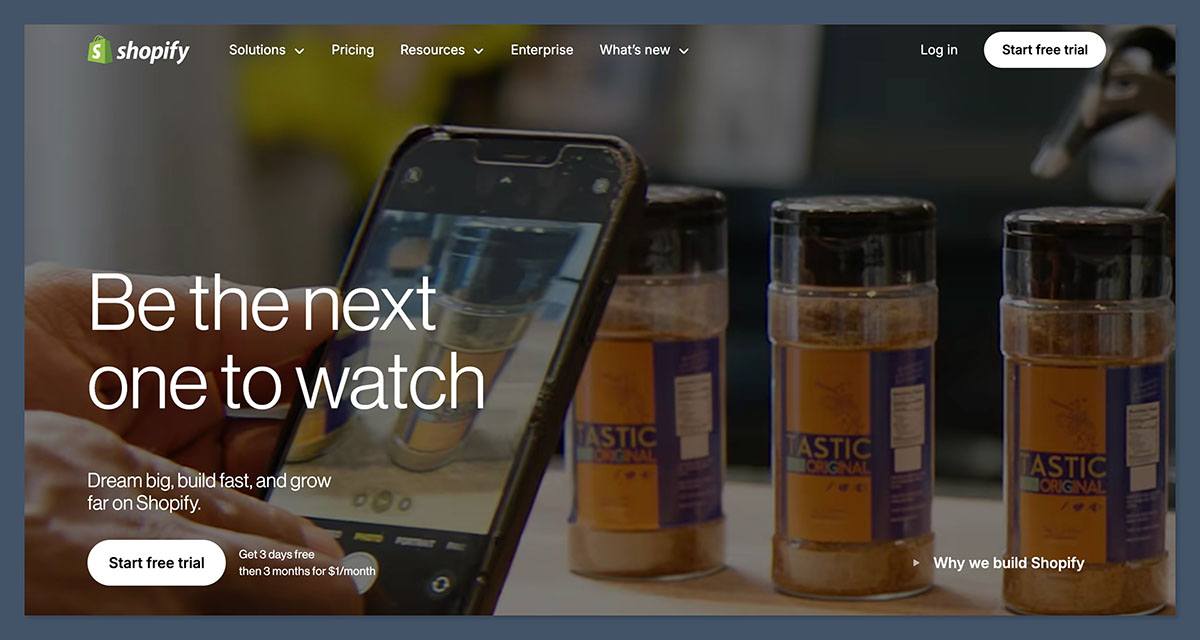
Shopify is one of the most popular ecommerce platforms for a reason.
It supports stores of all sizes and comes with a large number of built-in features, including support for physical and digital products, international shipping, and multichannel selling.
Ecommerce Features I Found Most Useful
- Easy-to-edit product pages with variants and stock tracking
- Built-in support for multiple payment gateways
- Abandoned cart recovery, discounts, and promotional tools
- Shopify Email for simple marketing campaigns
- Ability to sell on Instagram, Facebook, Amazon, and more
Shopify’s ecosystem includes more than 8,000 apps, covering everything from inventory management and marketing automation to subscription billing and customer reviews.
This extensive app marketplace makes the platform highly customizable, allowing businesses to tailor their store to specific needs and workflows.
However, many of the more advanced or niche features are only available through third-party apps, which often come with additional monthly fees.
As your store grows and you rely on more integrations, the total cost of ownership can increase significantly—especially if you’re stacking multiple paid apps to fill feature gaps.
Limitations
- Rental businesses will need to use apps like BookThatApp or Sesami to add booking logic
- These apps can be expensive and often lack native integration with inventory rules
- Shopify’s rental-related features can feel limited or patched together compared to Booqable
If ecommerce is your main business model, Shopify is a better starting point. For rentals, it requires more workarounds.
You’ll likely need to rely on third-party booking apps, which can introduce limitations in flexibility, increase monthly costs, and require extra time to configure properly.
Integration: Using Shopify and Booqable Together
One of the most flexible solutions is combining both platforms. You can use Shopify as your ecommerce storefront and connect it to Booqable for rental management.
Benefits of Integrating Shopify with Booqable
- Create a professional storefront with Shopify
- Let customers browse products and book them with Booqable’s embedded calendar
- Manage check-in, check-out, deposits, and rental logistics in Booqable
- Sync your Shopify products with Booqable to manage stock and availability
Booqable provides a Shopify app that makes integration easier. During testing, I was able to set it up in under an hour.
The result was a polished shopping experience combined with real rental functionality. For businesses that offer both products for sale and for rent, this is one of the best possible setups.
Ease of Use: How Beginner-Friendly Are These Platforms?
Shopify: A Familiar Ecommerce Experience
Shopify has a simple onboarding process. I was asked a few questions about my business, and then I was taken to the dashboard where I could begin adding products and choosing a theme.
The editor is section-based and easy to learn.
You do not need technical skills to launch a store, and there are many tutorials available. Shopify also offers 24/7 customer support through chat, phone, and email.
Booqable: Built for Rental Logic
Booqable’s interface is designed with rentals in mind. During setup, I could add rental products, define their availability, and start taking bookings with just a few steps.
The calendar and rental dashboard are more advanced than anything in Shopify or its rental apps.
That said, Booqable’s site builder feels more limited. If branding and design matter, combining it with Shopify may be necessary.
Which One Should You Use?
Choosing between Shopify and Booqable comes down to your core business model.
Use Shopify if:
- You sell physical or digital products online
- You want full control over the look and feel of your website
- You need access to a wide range of ecommerce tools and integrations
- You plan to scale and need built-in marketing tools
Use Booqable if:
- Your business is focused on rentals, bookings, or equipment hire
- You need precise control over availability, deposits, and check-in or check-out
- You want to manage logistics across locations or teams
Use Both Together if:
- You want to offer both sales and rentals on your website
- You need the design flexibility of Shopify and the rental power of Booqable
- You want to grow with the support of two specialized platforms
Final Thoughts
Both Shopify and Booqable are powerful tools in their own right, but they are designed for different goals.
Shopify is the better choice if your focus is ecommerce, while Booqable is better if your business revolves around rentals and bookings.
If you try to use Shopify alone for rentals, you will likely hit limits quickly. If you only use Booqable, you might struggle with storefront customization and online selling.
But if you combine the two, you get the strengths of both platforms.
When used together, Shopify and Booqable give rental businesses the ability to build a branded storefront while managing rental operations with professional tools.


