Stan Store and Linktree are two of the most recognizable link in bio tools, but they are built for very different jobs.
I spent time setting up, selling through, and stress testing both platforms to work out which one earns a place in your bio.
The short answer: Stan Store is the better pick if your goal is to actively sell digital products, coaching, or memberships straight from the page, while Linktree is the better pick if you mainly need a flexible, branded hub for all of your links.
Stan Store vs Linktree: Quick Verdict
- Stan Store: Best overall, ideal for selling digital products and services from your bio (14-day free trial, no platform fees)
- Linktree: Best for a free, flexible link hub with strong branding control
In this comparison I will walk through why these two tools suit different creators, looking at pricing, selling features, marketing, ease of use, design, and support so you can decide which one fits your business.
Quick Comparison: Stan Store vs Linktree
Here is a clear overview of how the two platforms stack up:
| Stan Store | Linktree | |
|---|---|---|
| Best for | Selling digital products from your bio | A free, flexible link hub |
| Starting price | $29 per month (no free plan) | $0 per month (free plan) |
| Paid plans | $29 and $99 per month | $8, $15, and $35 per month |
| Free option | 14-day free trial | Permanent free plan |
| Platform sales fee | 0% (Stripe or PayPal processing only) | Up to 12% on free, 9% on Starter and Pro, 0% on Premium |
| Native checkout | Yes, built in | Limited, leans on external carts |
| Content types | Products, courses, memberships, bookings, links | Links, media, video, FAQ, forms, maps, products |
| Built-in email | Yes (marketing flows on Pro) | Lead capture only |
| Customization | Around 11 store templates, basic styling | Themes, backgrounds, animations, strong branding |
Best for Pricing: Linktree
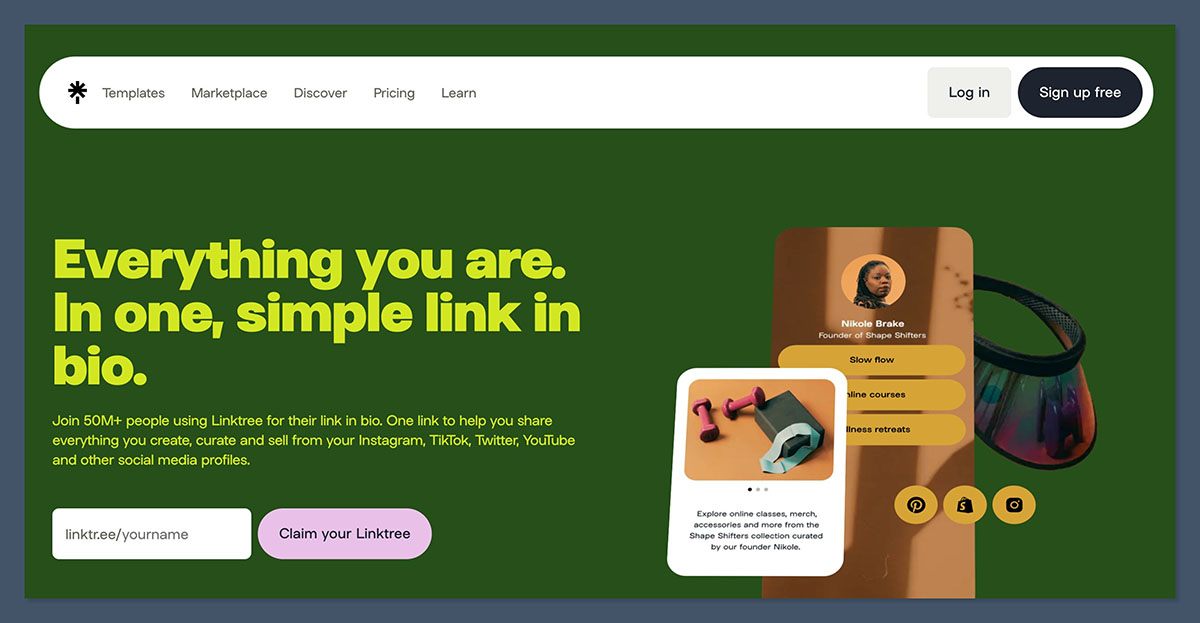
If budget is your first concern, Linktree wins on entry cost. It has a genuinely free, permanent plan that gives you unlimited links, basic analytics, and a linktr.ee URL with no card required.
Its paid tiers run at $8 per month (Starter), $15 per month (Pro), and $35 per month (Premium), with annual billing knocking off roughly 20 percent.
Stan Store takes a different approach. There is no free plan, only a 14-day trial, after which you pay $29 per month for Creator or $99 per month for Creator Pro. That is a real monthly cost from day one, even before you make a sale.
The trade-off sits in the fees. Linktree charges a seller fee on commerce: 12 percent on the free plan, 9 percent on Starter and Pro, and 0 percent only on Premium, all on top of Stripe processing.
Stan Store charges 0 percent platform fee on every plan, so once you are selling consistently, its flat fee often works out cheaper than Linktree’s per-sale cut.
The Winner: Linktree is the cheaper way to start
Linktree’s free plan and low entry tiers make it the easiest platform to launch on a tight budget. Stan Store can become the better value once your sales volume grows, thanks to its 0 percent platform fee.
Best for Selling Online: Stan Store
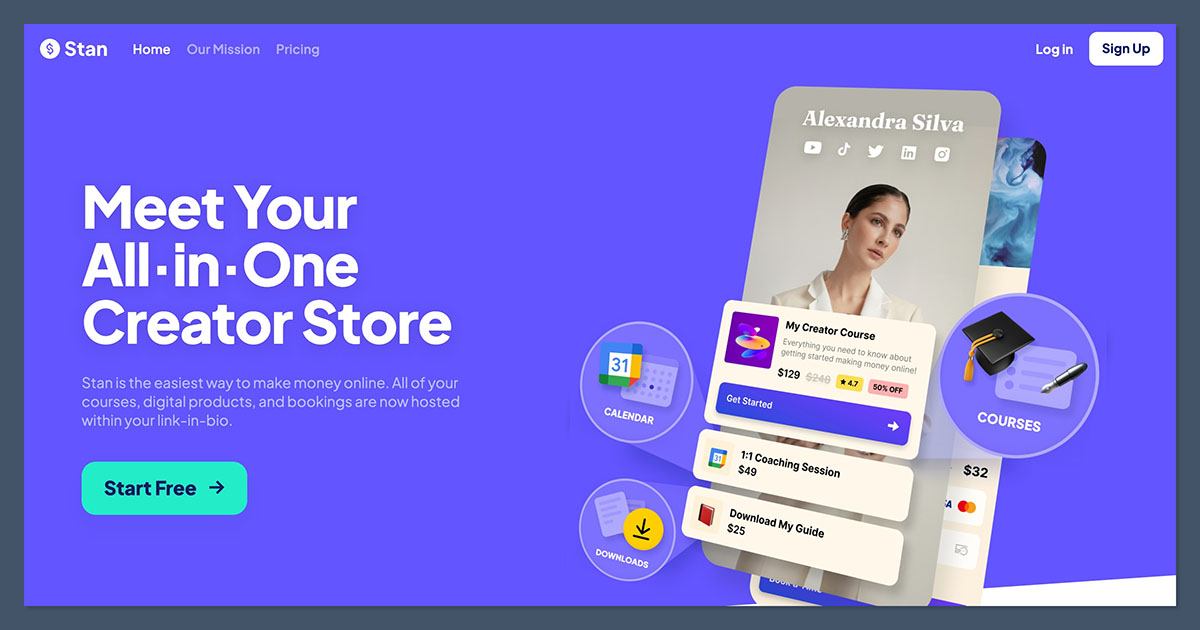
This is where the two tools split most sharply. Stan Store is built as a one-page storefront with native checkout, so a follower can go from tapping your bio to buying in seconds, without ever leaving the page.
What you can sell
When testing Stan Store, I was able to set up digital downloads, online courses, webinars, recurring memberships, and one-to-one coaching calls with calendar and Zoom integration, all hosted in the same place. Checkout runs through Stripe and PayPal, and on Creator Pro I could add order bumps, upsells, discount codes, payment plans, and time-limited offers to push conversions higher.
Linktree handles selling very differently. Its core job is routing traffic, so most creators send people out to an external cart like Shopify, Gumroad, or PayPal.
Linktree does now support selling digital products on the page, but the flow is less integrated, and the advanced tools like upsells and built-in coupons are far weaker or simply missing.
The cleanest way to think about it: Stan Store is a mini storefront with a till built in, while Linktree is a directory that points people toward a checkout somewhere else.
The Winner: Stan Store is a true revenue engine
Stan Store’s native checkout, upsells, memberships, and bookings make it the obvious choice for creators who want to earn directly from their bio. Linktree needs a real store behind it to do the same job.
Best for Marketing Products: Stan Store
Setting up a store is only half the work; you still need tools to capture leads and bring buyers back. Stan Store leans into this.
Every plan includes email capture and basic analytics, and Creator Pro adds email marketing flows plus campaign and UTM tracking, which can replace a separate email tool for simple sequences.
Linktree captures emails through forms and passes them into other platforms, but there is no native email marketing or funnel building. You always hand contacts off to an external tool for any real nurturing. Its analytics are also thin on the free plan, with the more detailed views and data export locked behind higher tiers.
In practice, Stan Store wants to be your lightweight marketing stack, whereas Linktree expects you to already have one.
The Winner: Stan Store keeps marketing in one place
Built-in lead capture, plus email flows and tracking on Pro, mean Stan Store can run simple campaigns on its own. Linktree leaves the nurturing to other tools.
Easiest to Use: Linktree
Both platforms are quick to set up, but Linktree has the gentler learning curve. Onboarding is as simple as claiming a username, filling in a basic profile, and stacking links and app blocks like Spotify or TikTok. Anyone comfortable with social media can build a usable page in a few minutes, and changes go live instantly.
Stan Store is not difficult, but it asks more of you up front. Setup involves naming your store, uploading a profile, connecting socials and a payment processor, picking a theme, and then adding your products.
Its drag-and-drop editor and templates make it realistic to go from zero to a live store in under an hour, which is fast for a full storefront, just not as instant as a link list.
One thing worth knowing: Linktree publishes changes immediately, so it pays to design your page before you drop the URL into your bios.
The Winner: Linktree is faster to launch
Linktree’s near-instant setup and minimal learning curve make it the easiest tool to get live. Stan Store is still approachable, but you are building a store, so it takes a little longer.
Best for Customization: Linktree
If a visually rich, on-brand page matters most to you, Linktree is the stronger tool. It offers a wide range of themes, solid color, image, and video backgrounds, animated buttons, custom button shapes, and broad font and color control.
That makes it well suited to a media-kit style presence rather than just a shop. On higher paid tiers you can also remove Linktree branding, though the free plan keeps the logo.
Stan Store gives you around 11 clean, mobile-first templates designed for selling. Customization is mostly limited to background color, fonts, and block layout, with no advanced animations or rich background media.
The result is a tidy storefront look, but your page will still clearly read as a Stan Store, and removing that branding is more limited than on Linktree’s top tiers.
The Winner: Linktree gives you more creative control
Themes, backgrounds, animations, and stronger branding options make Linktree the better fit for a visually expressive bio. Stan Store prioritizes a clean, conversion-focused layout over design flexibility.
Best for Support: Stan Store
Every creator needs help eventually, so support is worth checking before you commit. Stan Store positions itself as creator-first, with a strong emphasis on human support and a fast average response time. Its public ratings are high, driven by ease of use and the all-in-one nature of the tool.
That said, some independent reviews report slower or unresponsive email support around billing issues, so it is not flawless.
Linktree offers a knowledge base and email support across all tiers, but free and Starter users get no guaranteed response time. Faster support targets are reserved for top-tier Premium customers. Its public reputation is more mixed, with recurring complaints about delayed responses.
Neither platform is perfect, and both rely heavily on documentation and email. Still, Stan Store’s creator-first approach gives it the edge for hands-on help.
The Winner: Stan Store leans into creator-first support
Stronger ratings and a faster typical response time give Stan Store the advantage, while Linktree’s best support is gated behind its most expensive plan.
How We Test Link in Bio Tools
To keep this comparison fair, I tested both platforms myself, building real pages, adding products, and running through checkout and setup as a creator would.
I weighted seven areas according to how much they matter to readers selling and sharing from their bio:
| What we test | Weight | What it covers |
|---|---|---|
| Selling features | 30% | Native checkout, product types, upsells, coupons, and fees |
| Marketing tools | 15% | Lead capture, email flows, analytics, and tracking |
| Ease of use | 15% | Onboarding, editor, and overall learning curve |
| Design and customization | 12% | Templates, branding control, and content formats |
| Value for money | 13% | Plan pricing, free options, and total cost with fees |
| Support | 10% | Available channels, response times, and reputation |
| Content flexibility | 5% | How freely you can mix links, media, and offers |
Stan Store vs Linktree: Our Winner
There is no single winner here, because these two tools are built for different goals, and the right pick depends on what you want your bio to do.
If your bio is a sales funnel, Stan Store is the better platform. Its native checkout, memberships, bookings, built-in marketing tools, and 0 percent platform fee make it a genuine launch stack for creators ready to sell digital products or services.
The monthly cost is real, but for active sellers it usually pays for itself.
If you mainly need a clean, branded place to gather your links, Linktree is hard to beat. Its free plan, low entry pricing, flexible content formats, and strong design options make it the easiest and cheapest way to point an audience wherever you want to send them.
A smart middle path some creators use: keep a rich, on-brand Linktree page, then feature one “Shop” or “Work with me” button that sends high-intent visitors to a Stan Store for checkout.
That way you get Linktree’s branding strength and Stan Store’s selling power in one setup. Whichever way you lean, try Stan Store’s trial and Linktree’s free plan before you commit.


