Shopify is a full ecommerce powerhouse while Helcim is a payment processing specialist – but which one does your business actually need?
We dug into the pricing, features, and real-world trade-offs to help you decide.
Shopify vs Helcim: Quick Verdict
Shopify – Best overall if you need an all-in-one online store with built-in payments, marketing tools, and a massive app ecosystem.
Helcim – Best for high-volume or cost-conscious merchants who already have a website and primarily need transparent, scalable payment processing.
These two platforms serve fundamentally different purposes, so which one wins depends entirely on what problem you’re trying to solve.
If you need a storefront and everything that comes with it, Shopify is the obvious pick. If you already sell online (or in person) and just need better, cheaper card processing, Helcim is tough to beat.
In this review, I’ll break down exactly how Shopify and Helcim compare across pricing, features, payment processing, ease of use, and more – so you can figure out which one makes sense for your business.
Quick Comparison: Shopify vs Helcim
Get a quick overview of how Shopify and Helcim stack up before we dive into the details:
Dimension | Shopify | Helcim |
Primary role | Full ecommerce platform with built-in payments and POS | Payments/merchant services platform with POS, invoicing, and online payments |
Pricing model | Monthly subscription + card processing fees + extra gateway fee if non-Shopify Payments | Interchange-plus card pricing, no monthly processing fee on core model, small incidental fees |
Typical online card rates | Around 2.9% + $0.30 (Basic) down to about 2.5% + $0.30 (Advanced) with Shopify Payments | Around 3.3% + $0.30 on entry tiers, but effective margin shrinks significantly with volume |
Website & store builder | Full hosted store, 190+ themes, large app marketplace | No full site builder; focuses on payment pages, invoicing, POS, and integrations |
App ecosystem | 8,000+ third-party integrations and add-ons | Smaller ecosystem, more emphasis on APIs and custom integrations |
Ideal customer | Merchants starting or scaling an online store, omnichannel retailers | Volume-driven merchants, B2B/service businesses, cost-sensitive retailers with existing systems |
Best for Pricing: Helcim
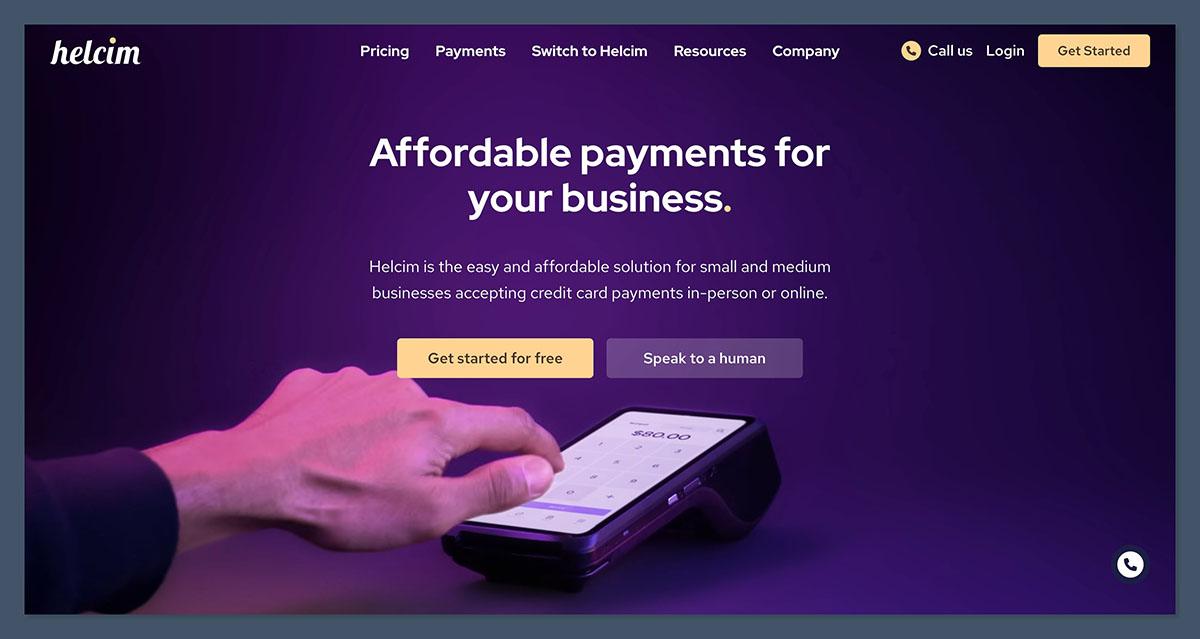
If keeping costs down is your top priority, Helcim’s interchange-plus model gives you more bang for your buck – especially once you start processing serious volume. But the comparison isn’t entirely apples-to-apples, since Shopify bundles far more into its subscription.
Shopify’s Pricing
Shopify charges a monthly subscription plus payment processing fees on every transaction. In 2026, plans range from roughly $33–$39 per month for Basic up to around $399 for Advanced, with Shopify Plus available on custom enterprise contracts running into the thousands.
Using Shopify Payments, online card rates start at around 2.9% + $0.30 on Basic, drop to 2.7% + $0.30 on the mid-tier plan, and come down to 2.5% + $0.30 on Advanced. In-person rates are lower across the board.
But here’s the catch: if you use a third-party payment gateway like Stripe or PayPal instead of Shopify Payments, you’ll get hit with an additional transaction fee – up to about 2% on Basic, which decreases on higher plans.
That extra gateway surcharge is something a lot of merchants don’t anticipate when budgeting.
Helcim’s Pricing
Helcim works on an interchange-plus model, which means you pay the wholesale interchange rate set by the card networks plus a transparent markup from Helcim. There’s no classic monthly processing fee on the core model, which is already a different starting point from Shopify.
Published example rates come in around 2.6% + $0.10 to 2.6% + $0.15 for in-person transactions and roughly 3.3% + $0.30 for online payments on entry tiers.
The real advantage kicks in with volume: once you’re processing above about $50,000 per month, Helcim’s margins shrink automatically, potentially saving you a significant chunk compared to flat-rate pricing.
Helcim also doesn’t charge PCI compliance fees or lock you into long-term contracts. There are some edge-case fees – $5 for returned ACH payments and $15 per chargeback (which they refund if you win) – but nothing hidden or surprising.
The Cost Reality
At low volumes – say, a few thousand dollars a month – Helcim’s savings in absolute dollar terms are relatively small, and Shopify’s higher processing rates are offset by all the tools you get bundled into the subscription.
But at higher volumes, especially above $50k/month, Helcim’s interchange-plus pricing and automatic volume discounts can generate real, meaningful savings.
One thing to keep in mind: Shopify’s total cost of ownership goes beyond the subscription. Factor in premium apps, paid themes, and add-ons, and the monthly bill can climb quickly.
With Helcim, your costs are focused on effective blended processing rates, but you’ll need to budget separately for your website, marketing tools, and anything else Shopify would have included out of the box.
The Winner: Helcim offers more transparent and scalable pricing
Helcim’s interchange-plus model and volume discounts make it the more cost-effective choice for merchants processing significant volume. Shopify’s flat-rate pricing is simpler to understand, but you’re paying for convenience – plus potential gateway surcharges.
Best for Selling Online: Shopify
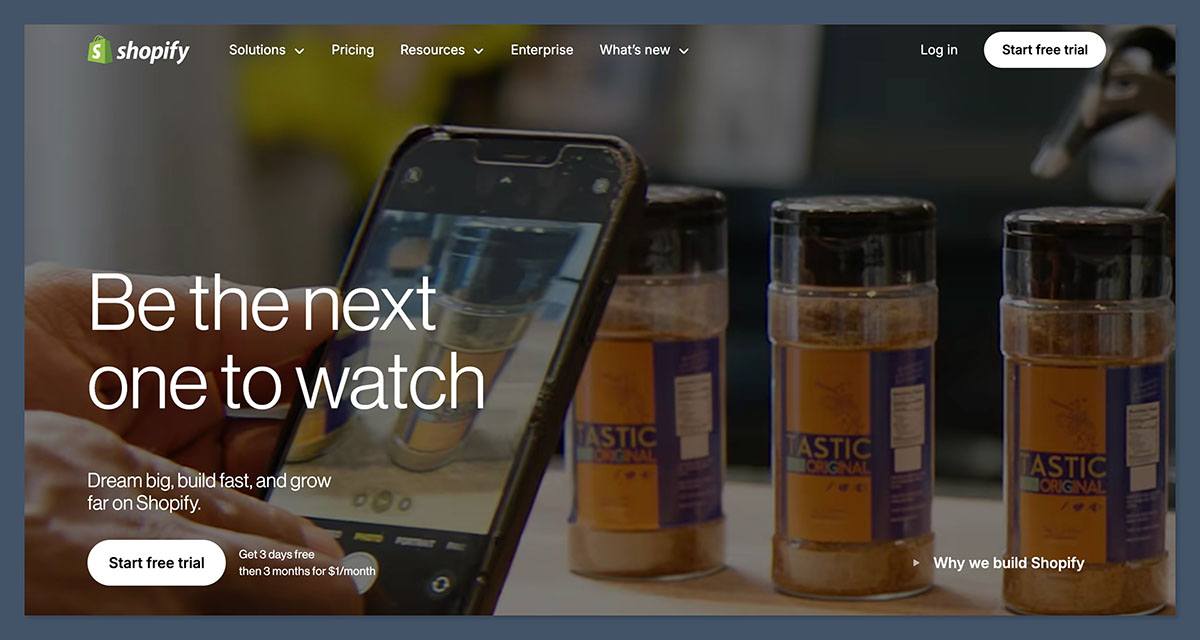
If your primary goal is to build, manage, and grow an online store, Shopify is in a different league. Helcim isn’t trying to be a website builder – it’s a payment processing platform. That’s an important distinction.
Ecommerce Features
Shopify gives you a fully hosted online store with themes, product management, checkout, inventory tracking, basic CRM, and marketing tools. You can create discount codes, recover abandoned carts, and sell across multiple channels including social media and marketplaces – all from a single dashboard.
Shopify’s AI integration, Shopify Magic, lets you generate product descriptions and other content quickly, which is a nice time-saver when you’re managing a large catalog. And the platform keeps rolling out new commerce features year after year.
Helcim, by contrast, focuses on payment acceptance. You get in-person POS, a virtual terminal, invoicing, recurring billing, and hosted payment pages.
It also offers APIs for custom integrations, which is great if you have a developer building something bespoke. But it doesn’t have a full store builder, themes, or a product management system in the way Shopify does.
App Ecosystem
Shopify’s app marketplace is one of its biggest advantages – and also one of its biggest gotchas. With over 8,000 third-party integrations, you can extend your store into practically any direction: subscriptions, loyalty programs, advanced analytics, shipping automation, email marketing, ERP connections, and more.
The downside? Shopify relies on these apps to provide a lot of functionality rather than building it all into the core plans. That means extra monthly fees from app subscriptions can add up fast. It also takes time to research and vet the right apps for your needs.
Helcim’s ecosystem is much smaller and more developer-focused. Instead of a sprawling app marketplace, Helcim emphasizes APIs and custom integrations.
That’s ideal if you’re embedding payments into existing workflows or custom software, but it means less plug-and-play convenience for non-technical merchants.
Payment Options
Shopify connects to over 100 payment methods, including PayPal, Apple Pay, and Google Pay. You can use its native Shopify Payments to minimize transaction fees, or choose an external gateway and accept the surcharge.
Helcim supports major card brands and payment methods through its own processing infrastructure. Since Helcim is the payment processor (not a platform sitting on top of one), you get a more direct relationship with your payment stack.
For merchants who care about processing costs and transparency, that’s a meaningful difference.
The Winner: Shopify’s ecommerce features are unmatched for online selling
Shopify is purpose-built for ecommerce with a full store builder, 8,000+ apps, and powerful sales tools. Helcim is a payment processor, not a store builder – if you need an online store, Shopify is the clear choice.
Best for In-Person Selling: It Depends
Both Shopify and Helcim offer point-of-sale solutions, but they approach it from very different angles.
Shopify POS connects your in-store and online inventory seamlessly. You get hardware options, staff permissions, omnichannel gift cards, and integrations to marketplaces and social channels. It’s designed for retailers who want a unified view of online and offline sales.
Helcim’s POS is praised for its transparent pricing and rich customization, particularly for businesses that need to embed payments into existing workflows. If you already have your systems in place and just need a flexible, cost-effective way to accept in-person payments, Helcim is an excellent fit.
The key difference: Shopify POS is part of a larger commerce ecosystem, so you’re getting more than just a card reader. Helcim’s POS is more focused and modular – great for what it does, but it doesn’t come with the broader retail toolkit.
The Winner: Choose based on your existing setup
Shopify POS wins for omnichannel retailers who want everything integrated. Helcim POS wins for businesses that already have systems in place and just need transparent, affordable card processing at the counter.
Easiest to Use: Shopify
Shopify has spent years refining its onboarding and user experience. When you sign up, you’re guided through a setup checklist that walks you through adding products, choosing a theme, configuring payments, and launching your store. Even if you’ve never sold online before, you can realistically have a store live within a few hours.
The section-based editor is straightforward – you stack design elements on top of each other rather than dealing with a full drag-and-drop builder. It’s not the most flexible design approach, but it keeps things simple and hard to break.
Helcim’s interface is clean enough, but the platform has a steeper learning curve, particularly for non-technical merchants. User reviews consistently point to onboarding complexity as one of Helcim’s weaker areas. If you’re a developer or already comfortable with payment processing concepts, you’ll be fine. If you’re looking for a hand-held, intuitive setup experience, Shopify has the edge.
That said, Helcim’s dashboard and tools are well-designed for what they do – the learning curve is more about understanding payment processing itself than about the platform being poorly built.
The Winner: Shopify is more beginner-friendly and intuitive
Shopify’s guided onboarding and simple editor make it accessible to merchants at any experience level. Helcim’s interface is solid but assumes more technical knowledge upfront.
Best for Customer Support: Shopify
Shopify offers 24/7 live chat through its Help Center, with the option to be redirected to a human Support Advisor for complex queries. Shopify Plus merchants also get 24/7 phone support and priority access.
Beyond direct support, Shopify’s Help Center is extensive: guides, video tutorials, a community forum, and even business courses for merchants looking to level up their skills. You can also reach out via social media on practically every major platform.
Helcim’s support is solid but more limited in scope. You get responsive customer service and the company has earned a good reputation for actually answering questions helpfully, which is a low bar that plenty of payment processors fail to clear.
However, the support infrastructure doesn’t have the breadth of resources and community that Shopify has built over the years.
The Winner: Shopify’s support infrastructure is more comprehensive
Shopify’s 24/7 live chat, detailed Help Center, and active community give merchants more ways to get help when they need it.
What Users Are Saying
Shopify sits at around 4.5 out of 5 across thousands of reviews. Users consistently praise the ease of use, strong templates, and broad integrations. Common complaints center on the cost of apps, processing fees, and occasional integration headaches with certain ERPs.
Helcim’s ratings land in the low-to-mid 4s but with far fewer total reviews. Users highlight the transparent interchange-plus pricing and solid developer tooling as standout strengths. The most common criticism? Onboarding complexity and a learning curve that can be steep for merchants who aren’t particularly technical.
Neither platform generates a lot of angry reviews – both have clearly invested in their products. The difference is mostly about what each user base cares about: Shopify users care about building and growing stores, while Helcim users care about payment processing costs and flexibility.
Who Should Use Shopify vs Helcim?
Choose Shopify if you’re:
- Starting a new online store and need everything in one place
- A DTC brand looking to scale with marketing tools, apps, and multichannel selling
- An omnichannel retailer who wants online and in-person sales unified
- Not particularly technical and want a beginner-friendly platform
Choose Helcim if you’re:
- A higher-volume merchant looking to reduce processing costs
- A B2B or service business that needs invoicing, recurring billing, and flexible payment acceptance
- Already have a website or ERP/CRM and just need a payment processor
- Cost-sensitive and want transparent interchange-plus pricing without long-term contracts
Shopify vs Helcim: The Bottom Line
Here’s the thing – Shopify and Helcim aren’t really direct competitors in the way that Shopify and BigCommerce are.
Shopify is an all-in-one ecommerce platform. Helcim is a payment processing company. They overlap in some areas (POS, online payments), but they’re solving different core problems.
If you need an online store – with themes, product management, checkout, apps, marketing tools, and the whole ecosystem – Shopify is the clear winner. It’s the most complete ecommerce platform on the market, and it keeps getting better.
If you already have a website, an existing sales infrastructure, or a business model where payment processing costs are your biggest concern, Helcim’s interchange-plus pricing, volume discounts, and no-contract model make it the smarter financial choice. You’ll save money on every transaction, and those savings compound as your volume grows.
For some businesses, the answer might actually be both: build your store on Shopify, but evaluate whether Helcim’s processing rates make sense for your in-person or B2B payment needs. The two aren’t mutually exclusive.
Whichever direction you lean, make sure you’re calculating total cost of ownership – not just the sticker price. Factor in apps, themes, processing fees, gateway surcharges, and any external tools you’ll need to round out your stack.


