Yotpo and Trustpilot are two of the biggest names in customer reviews, but they solve very different problems for ecommerce brands.
I have tested both platforms across multiple stores and growth stages, and the answer is not as simple as picking one winner.
If your goal is to increase product page conversions, Yotpo tends to deliver stronger results.
If your goal is to build public trust that shows up across Google, ads, and brand searches, Trustpilot usually makes more sense.
In this comparison, I will break down Yotpo vs Trustpilot across pricing, review features, automation, SEO value, Shopify integration, and real world use cases so you can decide which platform fits your business today.
This guide reflects current features and pricing as of 2026.
Yotpo vs Trustpilot: Quick Verdict
Yotpo
Best for ecommerce brands that want to improve product page conversion rates using reviews, photos, videos, and on site widgets.
Trustpilot
Best for brands that need a public reputation layer and third party credibility that works across search results, ads, email, and partnerships.
Use both
Best for larger or fast growing brands that want product level conversion optimization and brand level trust at the same time.
Quick Comparison: Yotpo vs Trustpilot
Here is a high level overview of how Yotpo and Trustpilot compare:
| Category | Yotpo | Trustpilot |
|---|---|---|
| Primary focus | Product reviews and UGC for ecommerce | Public brand reviews and trust signals |
| Best for | Shopify and WooCommerce stores | Ecommerce, SaaS, and service brands |
| Where reviews live | On your website | On Trustpilot.com plus widgets |
| Shopify app rating | 4.8 stars with thousands of reviews | 1.6 stars for the connector app |
| Starting price | Free | $339 per month |
| Contract type | Monthly | Annual commitment |
Best for Pricing: Yotpo
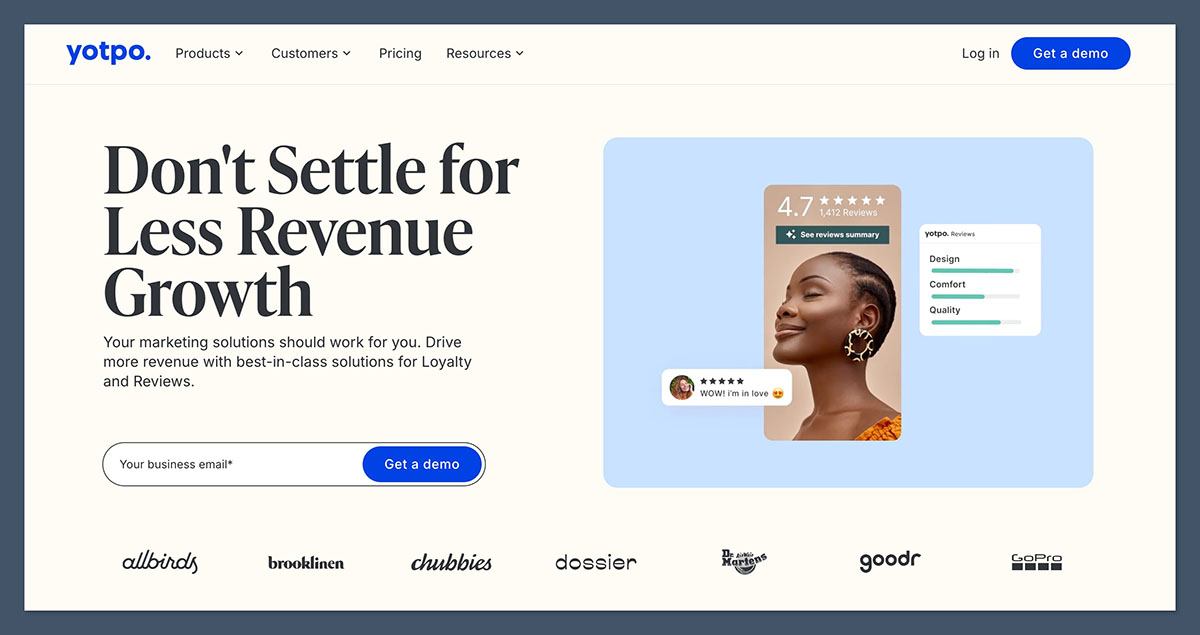
Pricing is one of the biggest differences between Yotpo and Trustpilot, and it often determines which tool a brand chooses first.
Yotpo Pricing
Yotpo offers a flexible pricing structure that works well for ecommerce brands at different stages.
Current plans include:
- Free plan for up to 50 orders per month
- Starter plan at $15 per month
- Pro plan at $119 per month
- Higher tiers based on order volume and feature usage
The free plan is useful for testing reviews on product pages without committing to a paid tool. As your order volume increases, you can upgrade gradually without being locked into a long contract.
Trustpilot Pricing
Trustpilot uses a very different pricing model that is designed for established businesses.
Current pricing starts at:
- Plus plan from $339 per month
- Premium plan from $699 per month
- Advanced plan from $1,229 per month
- Enterprise pricing available on request
All Trustpilot plans are billed annually and priced per domain. This means you are committing to a full year regardless of performance.
The winner: Yotpo.
Yotpo is far more accessible for small and mid sized ecommerce brands. Trustpilot pricing only makes sense once brand reputation and third party trust become a core growth lever.
There’s no long-term contract required, which gives you room to test and scale at your own pace.
Best for Ecommerce Conversion: Yotpo
When it comes to improving on site performance, Yotpo has a clear advantage.
Product Page Reviews
Yotpo is designed to sit directly inside the buying journey. Reviews appear on product pages, collection pages, and featured sections across your store.
Key features include:
- Star ratings above product titles
- Written customer reviews
- Photo and video uploads
- Question and answer sections
- Review carousels and galleries
These elements help shoppers make faster decisions and reduce hesitation at the point of purchase.
User Generated Content
One of Yotpo’s strongest features is UGC collection. Customers can upload photos and videos directly with their reviews, which can then be reused across the store.
This content works well because it feels authentic and shows real customers using the product in real settings.
Conversion Impact
In my experience, adding photo reviews and visible star ratings to PDPs almost always improves conversion rates. Yotpo focuses entirely on this outcome.
The winner: Yotpo
Yotpo is designed to drive conversions directly on your product pages by showcasing reviews, UGC, and star ratings exactly where customers need reassurance.
Its Shopify-native tools and AI-powered summaries help turn browsers into buyers more efficiently.
Best for Brand Trust and Public Reputation: Trustpilot
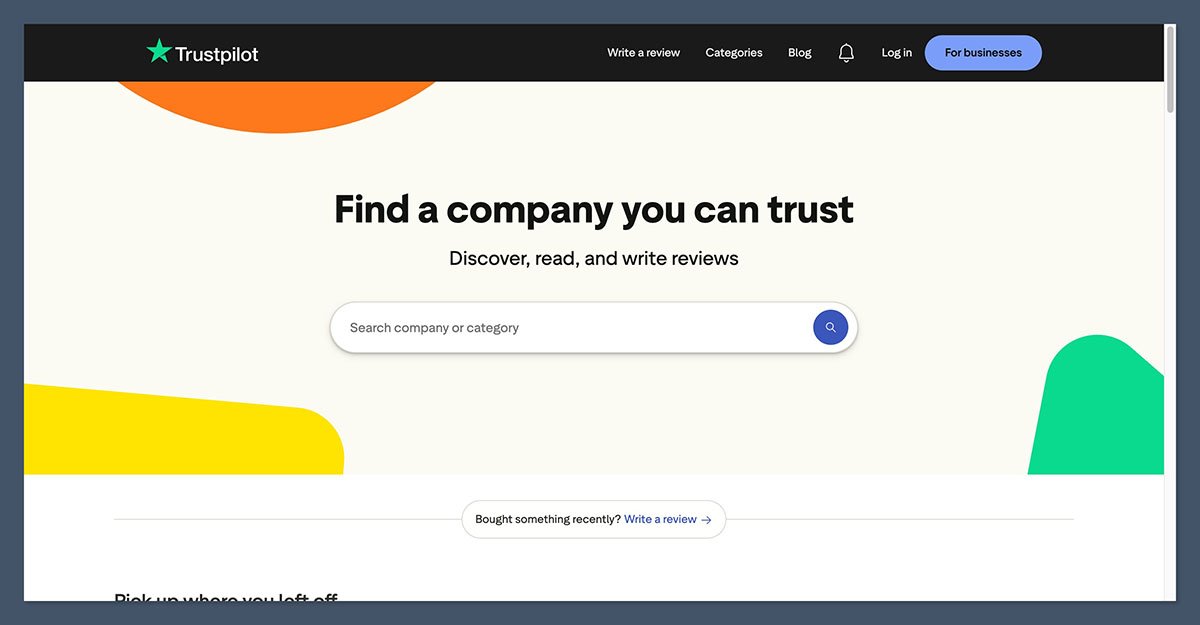
Trustpilot shines when trust needs to extend beyond your website.
Public Review Profiles
Trustpilot reviews live on Trustpilot.com, not just on your site. This creates a public brand profile that customers can find when searching your company name.
This matters when:
- Customers are comparing brands
- You are running paid ads
- You are pitching partnerships or affiliates
- You sell higher priced products or services
Trust Widgets
Trustpilot offers TrustBox widgets that can be embedded on your homepage, checkout, and footer.
These widgets display your overall rating and total number of reviews, which helps reassure new visitors who do not yet trust your brand.
Off Site Credibility
Trustpilot reviews often appear in branded search results and can influence click through rates from Google. This is especially valuable for brands relying on cold traffic.
The winner: Trustpilot
Trustpilot builds third-party trust by hosting your reviews on an independent, high-authority platform, which is especially valuable in Google search and when running ads.
The visibility of a verified company profile adds public credibility that lives beyond your website.
Review Collection and Automation
Both platforms support automated review collection, but they are optimized for different workflows.
Yotpo Automation
Yotpo integrates tightly with Shopify order data and post purchase flows.
Automation features include:
- Email review requests
- SMS review requests
- Timing based on order fulfillment
- One click review submission
- Smart reminders
This setup works well for ecommerce brands focused on product reviews rather than brand feedback.
Trustpilot Automation
Trustpilot emphasizes verified review collection and compliance.
Key features include:
- Automated review invitations
- API based triggers
- Support for service and product reviews
- Integration with order management systems
- Google compliant review verification
This system works well for businesses with complex operations or multiple sales channels.
The winner: Yotpo
Yotpo’s automation is deeply integrated with Shopify, offering seamless post-purchase flows via email and SMS to collect reviews without manual input.
It’s optimized specifically for ecommerce triggers, which makes it easier to collect high volumes of quality feedback.
SEO Value: Product Pages vs Brand Searches
Yotpo and Trustpilot contribute to SEO in different ways.
Yotpo SEO Benefits
Yotpo helps improve on site SEO by:
- Adding structured data for star ratings
- Increasing content depth on product pages
- Supporting Google Rich Snippets
- Improving engagement metrics
This benefits long tail product searches and category pages.
Trustpilot SEO Benefits
Trustpilot supports brand level SEO by:
- Ranking for brand plus reviews searches
- Providing high authority backlinks
- Supporting Google Seller Ratings
- Increasing trust in search results
This is especially useful when brand reputation influences buying decisions.
The winner: Trustpilot
It supports brand-level SEO with a public review profile that ranks well in search results and strengthens your branded SERP presence.
If someone googles your brand, a strong Trustpilot score can increase clicks and boost credibility at the first impression.
Shopify Integration and Ease of Use
Shopify compatibility is another major factor for ecommerce brands.
Yotpo on Shopify
Yotpo is one of the most established Shopify review apps.
Benefits include:
- Easy installation
- Native Shopify workflows
- Strong app store ratings
- Responsive support
Setup is straightforward even for non technical store owners.
Trustpilot on Shopify
Trustpilot does offer a Shopify app, but the experience is less polished.
Common feedback includes:
- Complicated setup
- Limited customization
- Lower app store ratings
Trustpilot works better as a standalone reputation tool rather than a core Shopify app.
The winner: Yotpo
Yotpo’s app is built specifically for Shopify, with an intuitive setup process, strong user reviews, and direct integration into the Shopify backend.
Everything from install to automation feels native and well-supported, which speeds up time to value.
When Using Both Makes Sense
For larger brands, the best solution is often combining both tools.
Here is how I typically structure it:
- Yotpo handles product reviews, photos, and PDP conversion
- Trustpilot handles brand trust, homepage widgets, and external credibility
This approach allows each platform to do what it does best without overlap.
Final Recommendation
Here is how I recommend choosing between Yotpo and Trustpilot.
Choose Yotpo if:
- You run a Shopify or WooCommerce store
- You want to improve product page conversion rates
- You need an affordable and flexible review tool
- You want to collect photos and videos from customers
Choose Trustpilot if:
- You rely heavily on brand reputation
- You sell services, SaaS, or high ticket products
- You want reviews to appear outside your website
- You can justify an annual contract
Choose both if:
- You are scaling quickly
- You invest heavily in paid traffic
- Trust plays a major role in your buying journey
Closing Thoughts
Yotpo and Trustpilot are not direct replacements for each other. They serve different roles in an ecommerce growth strategy.
Yotpo helps convert traffic you already have. Trustpilot helps convince people who do not trust you yet.
The right choice depends on where your business is today and where trust matters most in your funnel.


