We’ve spent hours analyzing both platforms to bring you an expert recommendation. As a result of our testing, Shopify is the stronger choice if you need global reach and advanced customization, while Tiendanube is the better fit for most Latin American merchants who want local payments, local currency billing, and Spanish-first support to just work out of the box.
Shopify vs Tiendanube: Quick Verdict
- Shopify – Best overall for global selling and long-term scalability
- Tiendanube – Best for Latin American SMEs and first-time merchants in the region
In this comparison, I’ll take a closer look at how Shopify and Tiendanube stack up on pricing, sales features, payments, ease of use, and support — so you can decide which platform makes the most sense for your store.
Quick Comparison: Shopify vs Tiendanube
| Category | Winner |
|---|---|
| Pricing | Tiendanube (for LatAm merchants) |
| Sales Features | Shopify |
| Payments & Shipping (LatAm) | Tiendanube |
| Apps & Integrations | Shopify |
| Templates & Design | Shopify |
| Ease of Use | Tiendanube (for LatAm beginners) |
| Business Support | Tiendanube (Spanish-first) |
| Scalability | Shopify |
Best for Pricing: Tiendanube (for LatAm Merchants)
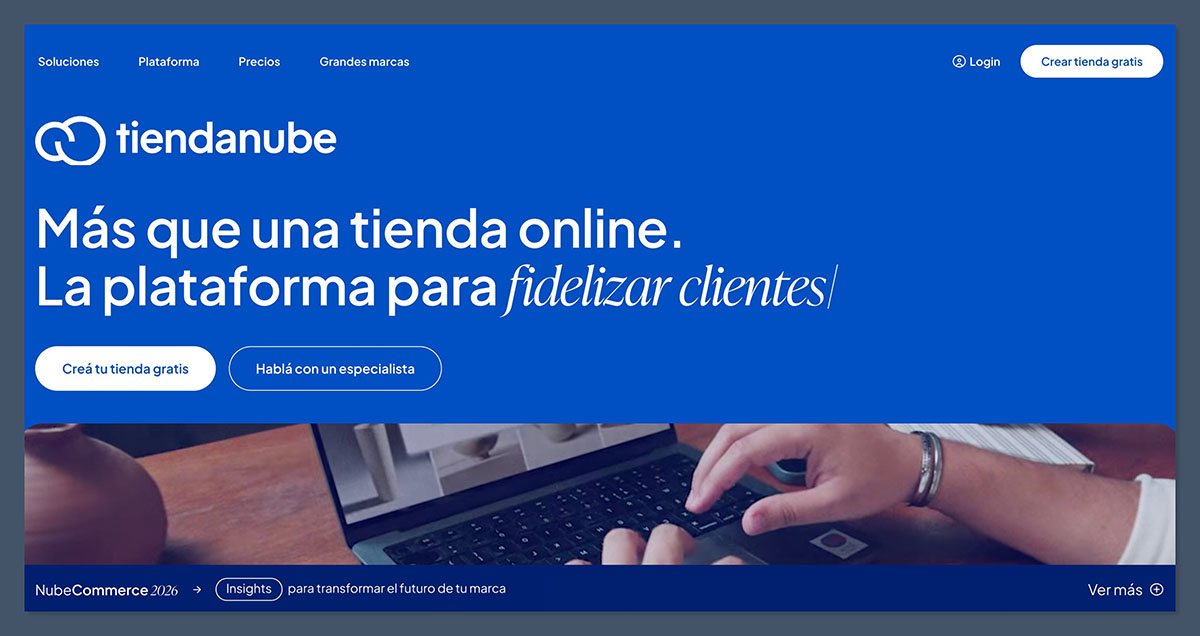
Pricing is where the two platforms diverge most sharply — and where your location has the biggest impact on which one actually costs less.
Shopify bills in USD globally. Its core plans (billed annually) are:
- Starter – $5/month (link-based selling only, no full storefront)
- Basic – $29/month
- Grow (formerly “Shopify”) – $79/month
- Advanced – $299/month
- Plus – from around $2,300–$2,500/month (enterprise)
Shopify also offers a 3-day free trial. On top of the monthly fee, Shopify Payments charges 2.9% + $0.30 per transaction on the Basic plan, dropping to 2.5% + $0.30 on Advanced.
If you use an external payment gateway — which is common in Latin American markets where Shopify Payments isn’t available, including Argentina — you’ll pay an extra 0.6–2.0% per transaction depending on your plan.
Tiendanube bills in local currencies (ARS, MXN, CLP, COP, and others) and offers multiple tiers per country. A few examples from their official pricing:
- Argentina: Esencial at 24,999 ARS/month, Impulso at 73,999 ARS/month, with lower and higher tiers available
- Colombia: Tiendanube plan at 49,900 COP/month, Avanzado at 149,900 COP/month
- Chile: Tiendanube plan at 14,999 CLP/month, with higher tiers for more catalog and reporting features
Tiendanube also offers a 7-day free trial, and in Argentina and Mexico there is a free plan available.
When using Pago Nube — Tiendanube’s native payment solution available in AR and MX — there is no additional platform transaction fee beyond the gateway’s own rate, which is a meaningful advantage for high-volume local merchants.
| Aspect | Shopify | Tiendanube |
|---|---|---|
| Billing currency | USD globally | Local currencies (ARS, MXN, CLP, COP, etc.) |
| Entry plan | Starter $5, Basic $29/month | Low-cost local tiers; free plan in AR/MX |
| Free trial | 3 days | 7 days (+ free plan in some countries) |
| Transaction fees (own gateway) | 2.5–2.9% + fixed fee via Shopify Payments | No extra platform fee with Pago Nube (AR/MX) |
| Extra fee with external gateways | 0.6–2.0% depending on plan | No extra platform transaction fee advertised |
The real-cost picture for a LatAm merchant often favors Tiendanube — local currency billing means no exposure to USD exchange rate fluctuations, and the absence of extra transaction fees with Pago Nube makes the total cost more predictable.
For brands already earning in USD or targeting cross-border sales, Shopify’s pricing structure becomes more competitive.
The Winner
Tiendanube wins on pricing for Latin American merchants. Local currency billing, a longer free trial, and no extra transaction fees with Pago Nube make it the more cost-efficient choice for most LatAm SMEs.
Best for Selling Online: Shopify
When it comes to raw sales features and ecosystem breadth, Shopify is the stronger platform — but Tiendanube is well-matched for the needs of most LatAm stores.
Sales Features
Both platforms cover the essentials: product catalogs, discount codes, abandoned cart recovery, and multichannel selling.
Shopify adds AI-powered tools through Shopify Magic for things like product description generation, and its Plus tier unlocks advanced checkout customization via Shopify Scripts and Functions.
Tiendanube keeps things more streamlined, with a focus on the promotional flows and catalog structures that are common in LatAm commerce.
For stores with complex inventory needs, B2B pricing, or subscription models, Shopify’s depth is hard to match. For a growing regional brand selling fashion, food, or lifestyle products across a single country, Tiendanube covers the bases without the overhead.
Payment Options
Shopify supports over 100 payment methods globally, including PayPal, Apple Pay, and Google Pay, and offers its own native gateway — Shopify Payments — which reduces transaction fees when available.
The catch for LatAm merchants is that Shopify Payments is not available in several Latin American countries, including Argentina, which means falling back to third-party gateways and paying the extra platform transaction fee on top.
Tiendanube’s approach is essentially the opposite: built from the ground up around how people actually pay in Latin America. P
ago Nube (AR/MX) handles local card payments, cash-on-delivery, and bank transfers natively with no added platform fee.
The platform also connects with regional payment processors across other LatAm markets, which means less configuration and fewer surprises at checkout for local customers.
Apps and Integrations
Shopify’s app marketplace has over 7,000 third-party integrations covering everything from email marketing and subscriptions to ERP, logistics, and B2B pricing tools. This breadth is one of Shopify’s biggest advantages for merchants who need niche functionality.
The trade-off is that many of those apps come with their own subscription fees, and finding the right combination takes time.
Tiendanube’s app ecosystem is considerably smaller — somewhere between 150 and 350 apps depending on the market — but is deliberately focused on Latin American use cases: local payment processors, regional shipping carriers, local invoicing requirements, and LatAm marketplace integrations.
For most SMEs in the region, the app catalog covers what they actually need without the noise of a 7,000-app store.
The Winner
Shopify wins on sales features overall. Its depth of tools, payment options, and app ecosystem is unmatched. But for LatAm merchants who don’t need that complexity, Tiendanube’s focused feature set may be a better practical fit.
Best for Payments and Shipping in Latin America: Tiendanube
This is where Tiendanube’s regional focus pays off most clearly, and where Shopify’s global infrastructure shows its limitations for LatAm-only sellers.
Shopify Shipping — the platform’s built-in shipping and label buying tool — is not widely available in Latin America. Merchants typically integrate local carriers through apps or third-party aggregators, which adds setup time and cost.
Combined with Shopify Payments being unavailable in key markets like Argentina, a LatAm merchant on Shopify ends up stitching together multiple third-party solutions to replicate what Tiendanube offers natively.
Tiendanube includes Envío Nube in Argentina and Mexico — an integrated shipping solution that lets merchants buy labels, track shipments, and connect with regional carriers directly from the dashboard.
Paired with Pago Nube for payments, this creates a genuinely turnkey local commerce stack that Shopify can’t match out of the box for LatAm merchants.
The Winner
Tiendanube wins decisively for LatAm payments and shipping. Integrated local payment and logistics tools mean less configuration, lower fees, and a smoother experience for both merchants and their customers.
Best Online Store Templates: Shopify
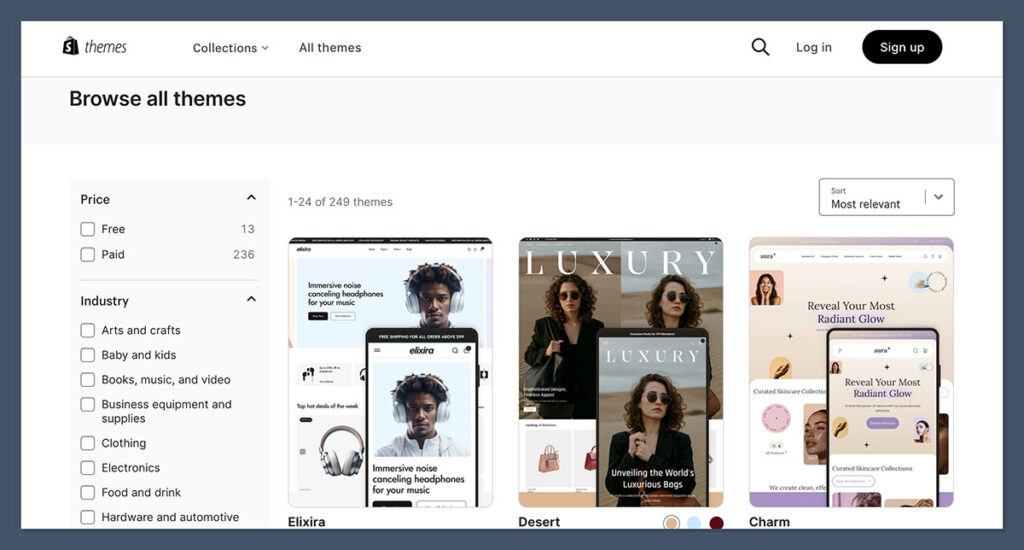
Your store’s design is often the first thing customers notice, so having a strong template library matters.
Shopify offers more than 190 templates covering a wide range of industries, from pet supplies to jewelry to electronics. Thirteen are available for free; premium templates range from $100 to $500 as a one-time purchase.
The modern, section-based editor makes it relatively straightforward to customize layouts without touching code, and Plus merchants can go further with deep checkout customization.
Tiendanube offers 60+ free templates and a selection of paid designs, all manageable from a visual panel. Code-level customization via HTML, CSS, and JavaScript is available, but the platform is more constrained when it comes to complex checkout flows or advanced UX experiments.
For most catalog-driven stores in LatAm, the available templates are clean and functional — but the selection is narrower.
The Winner
Shopify wins on templates and design flexibility. A larger, more diverse library and deeper customization options give it the edge — especially for brands where storefront design is a competitive differentiator.
Easiest to Use: Tiendanube (for LatAm Merchants)
Ease of use is partly about interface design and partly about how well the platform speaks your language — literally.
Shopify’s admin is polished and well-organized, with a clean onboarding flow that asks a few questions about your business before walking you through a setup checklist.
The interface is primarily in English, though storefronts can be translated. For merchants comfortable working in English with some technical capacity or agency support, Shopify’s learning curve is manageable.
For first-time LatAm merchants operating in Spanish, it introduces unnecessary friction.
Tiendanube’s entire admin — the dashboard, documentation, help resources, and onboarding flows — is in Spanish and Portuguese, with local teams in each country.
For a first-time merchant in Mexico City or Buenos Aires, this removes a significant barrier.
There’s no need to work around an English interface, translate documentation, or navigate support in a second language.
The Winner
Tiendanube wins for ease of use for Latin American merchants. Spanish-first admin, local onboarding, and regionally focused educational content make it meaningfully easier to get started for LatAm entrepreneurs.
Best for Business Support: Tiendanube (for LatAm Merchants)
Both platforms offer support around the clock, but the quality and relevance of that support differ depending on where you’re operating.
Shopify support includes a 24/7 AI-powered live chat in the Help Center, with escalation to human advisors for complex issues.
Phone support is available for Plus merchants. The Help Center is comprehensive — guides, video tutorials, a community forum, and business courses — and Shopify is reachable via social media.
The downsides: priority support is gated behind the Plus tier, email support has been removed, and Spanish coverage can be inconsistent depending on the time of day and plan level.
Tiendanube support is built around local teams in each LatAm country, with Spanish-language chat, phone support, and documentation.
Onboarding materials are designed specifically for the LatAm merchant experience, covering topics like local tax requirements, how to set up Pago Nube, and integrating with regional carriers.
For merchants who will be running and troubleshooting their stores in Spanish, this local depth matters.
The Winner
Tiendanube wins for support quality for LatAm merchants. Local teams, Spanish-first resources, and regionally relevant onboarding content give it the edge over Shopify’s more generalist global support model.
Shopify vs Tiendanube: Scalability and Long-Term Fit
Shopify scales from solo founders all the way to multi-storefront, multi-warehouse global enterprises via Shopify Plus.
Deep API access, advanced B2B pricing, headless commerce capabilities, and integrations with ERP, OMS, and WMS systems make it the safer bet for brands with long-term global ambitions or complex operational needs.
Tiendanube scales well within the LatAm context — higher-tier plans (like Tiendanube Evolución) unlock larger catalogs, more reporting, and additional integrations — but its API and customization options are more modest.
Complex multi-region architectures or headless builds are less common on the platform, and most merchants hitting serious scale eventually evaluate Shopify as a parallel or replacement solution.
A useful way to frame the decision: a small clothing brand in Buenos Aires selling domestically will likely onboard faster, pay more predictable fees, and get better local support with Tiendanube.
If that same brand starts selling to the US and Europe, Shopify becomes the stronger fit for multi-currency pricing, global tax handling, and international fulfillment integrations.
How We Evaluate Ecommerce Platforms
Our platform comparisons are based on hands-on testing and structured analysis across the following areas:
- Sales Features – Ecommerce capabilities, payment options, and app ecosystem
- Pricing and Value – Plan structure, transaction fees, and real-cost scenarios
- Payments and Shipping – Gateway availability, local integrations, and logistics tools
- Design and Templates – Theme quality, library size, and customization depth
- Ease of Use – Onboarding, admin interface, and day-to-day usability
- Help and Support – Contact channels, language coverage, and resource quality
- Scalability – Long-term growth paths and enterprise capabilities
We also factor in regional context — for a comparison like this one, the practical experience of a merchant in Argentina or Mexico is weighted more heavily than a global average.
Shopify vs Tiendanube: Our Winner
There’s no single winner here — the right platform depends on where you’re selling and where you’re headed.
Tiendanube is the better choice for most Latin American SMEs.
If you’re a first-time merchant or an established brand selling within LatAm, Tiendanube’s local payment and shipping integrations, Spanish-first admin, and local currency billing make it a more practical and cost-efficient foundation.
The platform is built around how commerce actually works in the region — and that shows.
Shopify is the better choice for global ambitions and advanced needs.
If you’re building a brand that will eventually sell across borders, need niche apps, or require enterprise-level integrations, Shopify’s depth and scalability are hard to replicate. It’s also the stronger option for merchants with technical capacity or agency support who want maximum control over their store.
If you’re on the fence, both platforms offer free trials — Tiendanube’s 7-day window (plus a free plan in AR and MX) gives you more room to explore before committing.


