An expert comparison based on hands-on testing to help you pick the right platform for your business.
Shopify is a purpose-built ecommerce platform, while Jotform is a form and no-code app builder that can be extended into lightweight stores. Both tools let you collect payments online, but they take very different approaches to get you there.
I’ve spent time testing both platforms to give you a clear picture of where each one shines.
If you need the short answer: Shopify is the obvious winner if your primary goal is to sell products online. Jotform is better suited for businesses whose core need is data collection, with ecommerce as a secondary layer.
In this comparison, I’ll walk you through pricing, ecommerce features, ease of use, and more so you can make the right call for your business.
Shopify vs Jotform: Quick Verdict
Shopify – Best overall for selling online, ideal for growing stores and serious ecommerce
Jotform – Best for form-based workflows with occasional payment collection
Quick Comparison: Shopify vs Jotform
Here’s a side-by-side snapshot of the two platforms:
| Feature | Shopify | Jotform |
|---|---|---|
Best for | Full ecommerce stores | Forms, workflows, simple stores |
Starting price | ~$5/mo (Starter) | Free (limited) |
Products | Unlimited on all plans | Form-field based, small catalogs |
Payment gateways | 100+ options | 25–40+ gateways |
Abandoned cart recovery | Yes, all paid plans | No |
POS / in-person sales | Yes | No |
App store | 8,000+ apps | Integrations via workflows |
Templates | 190+ store themes | 10,000+ form templates |
Free trial | 3 days | Free plan available |
Best for Pricing: Shopify (With a Caveat)
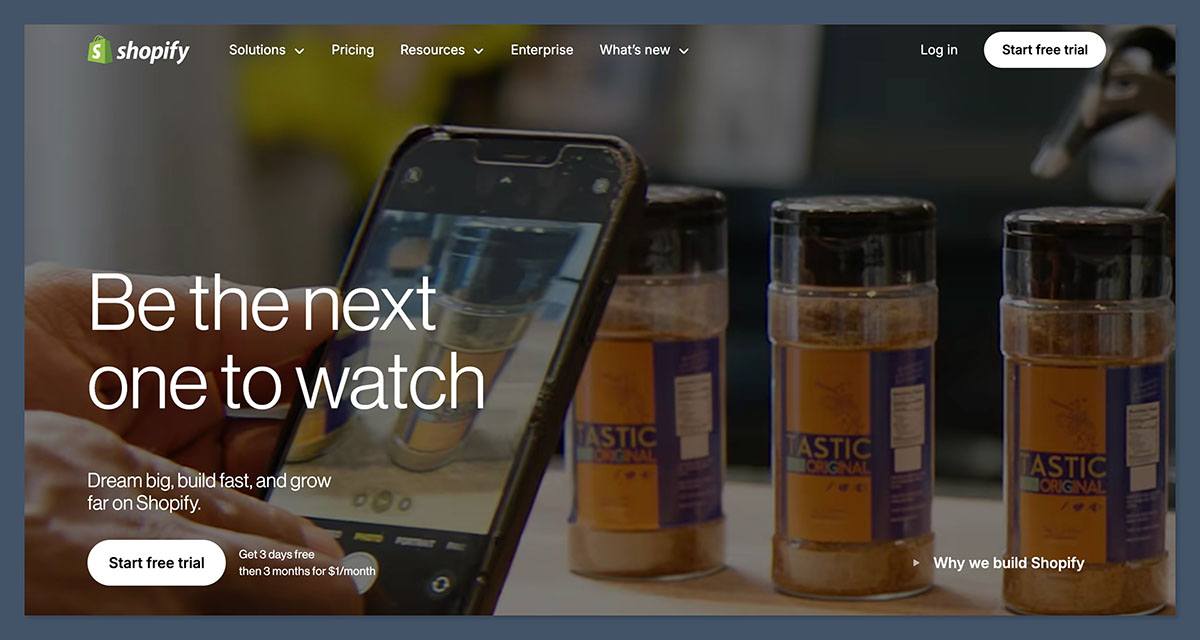
Comparing pricing between Shopify and Jotform is a bit like comparing apples and oranges. Shopify’s pricing is designed around running a store, while Jotform’s pricing reflects its roots as a forms and SaaS tool.
Let me break it down.
Shopify’s Pricing (2026)
Shopify offers five tiers, from a bare-bones Starter plan to enterprise-level Plus:
| Plan | Monthly Price | Best For |
|---|---|---|
| Starter | ~$5/mo | Social/link-based selling |
| Basic | ~$29–$39/mo | New stores with low volume |
| Grow (Shopify) | ~$79–$105/mo | Growing brands, more staff |
| Advanced | ~$299–$399/mo | Scaling stores, lower fees |
| Plus | From ~$2,300/mo | Enterprise/high-volume |
All paid Shopify plans include unlimited products, discount codes, gift cards, and access to the full app store.
Keep in mind that the real cost also factors in payment processing fees, premium themes, and paid apps – which can add up on mature stores.
Jotform’s Pricing
Jotform takes a completely different approach. Its Store Builder feature is promoted as free to start, and the paid plans scale based on monthly submissions, storage, and number of forms or apps – not SKUs or sales volume.
This means low-volume ecommerce can be genuinely cheaper on Jotform. If you’re only selling a handful of items or collecting donations occasionally, you might not need to pay anything at all.
But the moment you need a real storefront with inventory management, shipping logic, and conversion-focused checkout, those savings evaporate because Jotform simply wasn’t built for that.
🏆 The Winner Shopify offers better value for dedicated ecommerce While Jotform can be cheaper for very low-volume selling, Shopify’s pricing is purpose-built for stores. You get unlimited products, abandoned cart recovery, and a full sales stack – features Jotform doesn’t offer at any price. |
Best for Selling Online: Shopify
This is where the gap between the two platforms becomes really obvious. Shopify is an ecommerce machine; Jotform is a form builder that learned a few sales tricks.
Catalog and Inventory
Shopify supports unlimited products and collections on all paid plans, complete with variants, SKUs, inventory tracking across locations, and fulfillment workflows. It’s designed to handle stores with hundreds or even thousands of SKUs and complex product assortments.
Jotform Store Builder takes a different approach. Products are essentially implemented as fields within forms and apps rather than sitting inside a dedicated catalog engine.
This is practical if you’re selling a small set of items – think a simple menu, a few merchandise items, or donation tiers – but there’s no deep merchandising capability. You won’t find collection rules, metafields, or native product feeds.
Payments and Checkout
Shopify offers its own native payment gateway (Shopify Payments) alongside over 100 third-party options. Its unified checkout is optimized for conversion, and all paid plans include abandoned cart recovery, discount codes, and gift card support.
Jotform supports 25 to 40+ payment gateways including PayPal, Stripe, Square, Apple Pay, and Google Pay, which is respectable.
But the checkout experience is form-based – you’re essentially filling out a form with payment fields, not going through a commerce-optimized flow. There’s no abandoned cart recovery or dedicated discount engine.
Omnichannel Selling
Shopify gives you social selling through Instagram and TikTok, marketplace integrations with Amazon and eBay, and POS hardware for in-person sales. These aren’t afterthoughts – they’re core to the platform.
With Jotform, you can share store links and embed stores on websites, which covers the basics. But there’s no native POS, no deep marketplace integration, and no social commerce channels built into the platform.
🏆 The Winner Shopify’s ecommerce features are in a different league Shopify gives you everything you’d expect from a full ecommerce platform: inventory management, conversion-optimized checkout, abandoned cart recovery, and omnichannel selling. Jotform’s Store Builder works for simple payment collection, but it can’t compete as a sales engine. |
Easiest to Use: Jotform
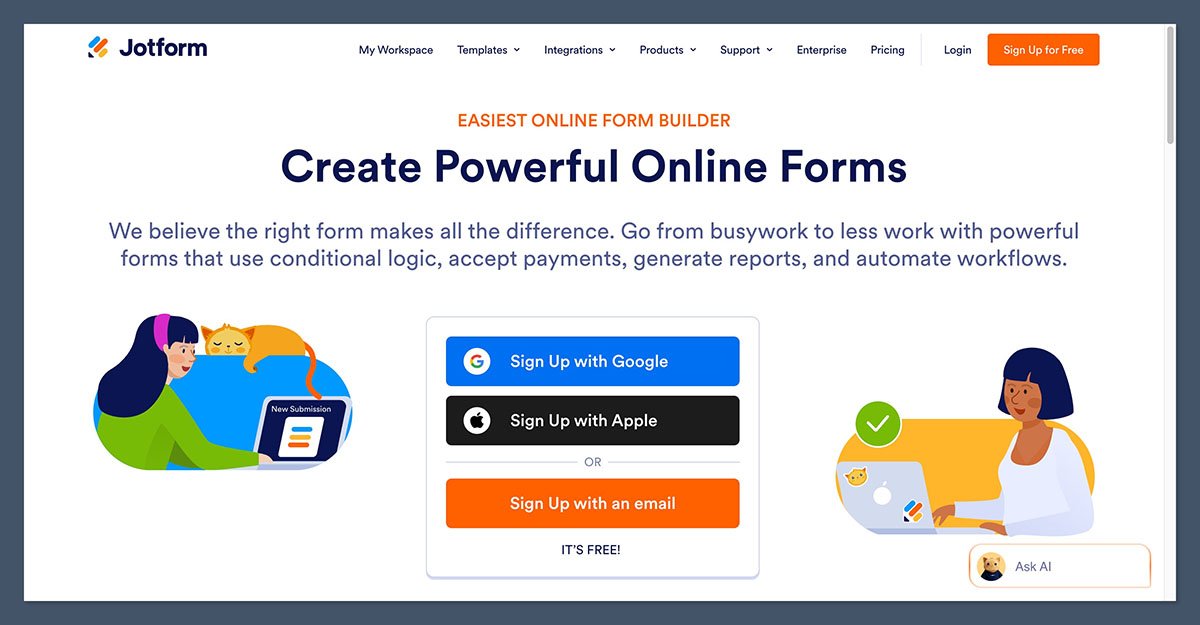
Here’s where Jotform gets to claim a win. If simplicity and speed are your top priorities, Jotform’s interface is hard to beat.
Jotform’s drag-and-drop builder is genuinely intuitive. With over 10,000 templates covering forms, stores, and apps, you can get something functional live in minutes with minimal training.
The whole experience feels like assembling workflows: you combine fields, logic, and payment elements into whatever you need.
Shopify, by contrast, feels more like setting up a full retail system. You’re configuring themes, products, shipping zones, tax rules, and apps – which is powerful but comes with a steeper learning curve.
The section-based editor (rather than drag-and-drop) keeps things structured but can feel restrictive if you’re used to more visual builders.
That said, Shopify’s onboarding has improved considerably. The platform asks smart setup questions to identify your business needs and presents a clear checklist to get your store live. It’s just that there’s more to configure because there’s more to the platform.
🏆 The Winner Jotform is simpler to pick up and start using immediately Jotform’s drag-and-drop builder and massive template library make it the easier platform to learn. Shopify is intuitive for an ecommerce tool, but the depth of its feature set means a longer ramp-up time. |
Best App Ecosystem: Shopify
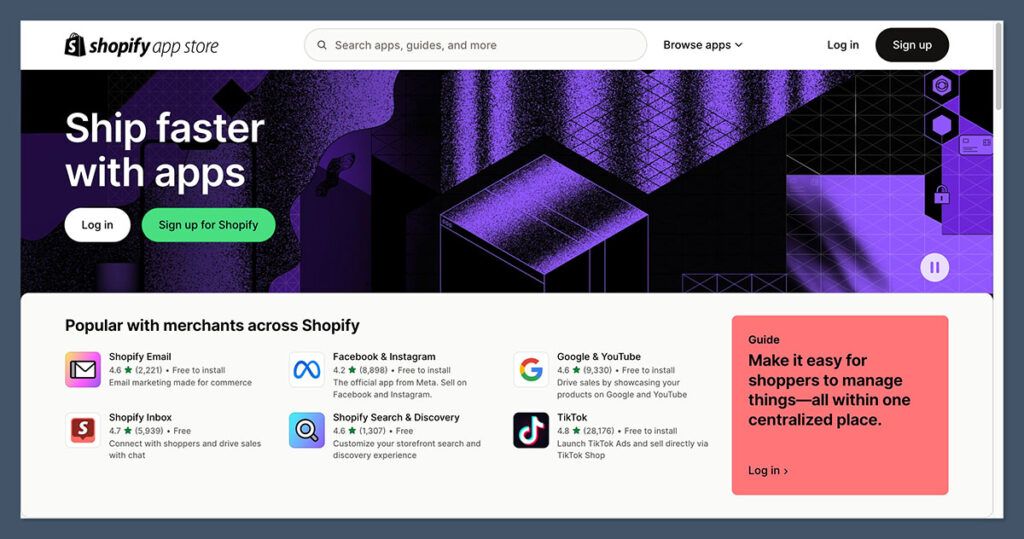
Shopify’s app store offers over 8,000 third-party integrations covering marketing, subscriptions, B2B, accounting, reviews, loyalty programs, and just about everything else a merchant might need.
The flip side? Shopify relies heavily on apps for functionality that other platforms build in natively, and some of those apps come with their own monthly fees.
Jotform’s integration approach is different. Rather than a centralized app marketplace, Jotform connects with tools like Google Sheets, CRMs, email platforms, and payment processors through its workflow and integration system.
It’s effective for what Jotform does well – data collection and process automation – but the ecosystem isn’t merchant-focused.
The fundamental difference here is philosophical. Shopify’s ecosystem revolves around traffic, conversion, and order value. Jotform’s ecosystem revolves around submissions, data workflows, and reporting.
🏆 The Winner Shopify’s app store is unmatched for ecommerce With 8,000+ apps purpose-built for online selling, Shopify gives you the flexibility to extend your store in almost any direction. Jotform’s integrations are solid for form and workflow use cases but don’t offer the same depth for merchants. |
Best for Analytics and Reporting: It Depends
This one isn’t a clear-cut winner because it depends entirely on what you’re measuring.
Shopify includes ecommerce-specific analytics on all plans: sales reports, traffic sources, conversion rates, and customer behavior. Higher-tier plans unlock advanced reports covering profit margins, retail sales breakdowns, and custom reporting. If you’re running a store, this is exactly the data you need.
Jotform offers submission analytics, form performance stats, and flexible reporting through Jotform Tables. It’s powerful for survey-style data, tracking form completions, and analyzing responses – but it’s not built around commerce metrics like average order value or customer lifetime value.
🏆 The Winner Shopify wins for ecommerce analytics; Jotform wins for form data If you’re selling products, Shopify’s commerce-focused reporting is what you want. If your primary concern is tracking submissions and workflow performance, Jotform’s analytics are more relevant. |
When to Choose Shopify
- Your primary business model is selling products or services online
- You need inventory tracking, order management, shipping integrations, and tax handling
- You plan to sell across multiple channels: website, social media, marketplaces, or in person
- You expect to scale to a large catalog or high order volumes over time
- You want access to a rich ecosystem of ecommerce-focused apps and integrations
When to Choose Jotform
- Your core need is data collection, forms, or workflows – with ecommerce as a bonus
- You sell a small number of products or services and want to embed payment forms on an existing site
- You need advanced form customization: conditional logic, multi-step workflows, approval processes
- You value drag-and-drop simplicity and thousands of templates over ecommerce depth
- Your budget is tight and you only need occasional payment collection
Worth Noting: They Can Work Together
Here’s something the typical comparison article won’t tell you: Shopify and Jotform aren’t purely competitive.
Many businesses use both. Shopify handles the transactions and catalog, while Jotform handles lead capture, intake forms, customer surveys, or internal workflows. For complex operations, this combination actually makes a lot of sense.
Shopify vs Jotform: Our Verdict
For businesses whose goal is to sell online and grow, Shopify is the better platform by a wide margin. Its sales features, checkout optimization, omnichannel capabilities, and app ecosystem are built specifically for merchants. That’s what it does, and it does it well.
Jotform isn’t trying to be Shopify, and that’s fine. If your business runs on forms, data collection, and workflows – and you occasionally need to collect payments or sell a few items – Jotform’s Store Builder is a convenient add-on that saves you from adopting a full ecommerce stack you don’t need.
The real question isn’t which platform is “better.” It’s whether your business needs a storefront or a smart form with a payment field. Answer that honestly, and the right choice becomes obvious.


