If you’ve spent any time trying to grow an ecommerce brand, you’ve likely heard of Shopify and Faire.
Both tools are popular with merchants, but they’re built to do very different things.
After testing both platforms, I can confidently say that Shopify is your best choice for running a branded online store, while Faire is your go-to for wholesale growth through retailer discovery.
They’re not competing services; they actually work extremely well together.
In this full breakdown, I’ll walk through how each platform works, who it’s best for, and where it performs best across categories like pricing, ease of use, features, integrations, and more.
Let’s start with a quick comparison to give you a clear overview.
Shopify vs Faire: Quick Verdict
Shopify – Best for building and scaling your branded DTC ecommerce store
Faire – Best for accessing a wholesale marketplace and reaching independent retailers
Use Both – If you want a complete DTC and B2B sales setup with synced operations
Key Takeaways
- Shopify gives you full control over your online storefront, checkout, customer experience, and branding
- Faire is a wholesale marketplace where retailers browse, discover, and place wholesale orders from suppliers
- Shopify has subscription pricing starting at $39/month, while Faire has no monthly fee, working off commissions instead
- The platforms integrate seamlessly, letting you sync products and inventory across both channels
- Shopify is best for direct sales to consumers, while Faire is ideal for wholesale growth through retailer discovery
What Kind of Seller Are You?
The choice between Shopify and Faire depends entirely on your sales model.
Shopify is Best For:
- Merchants who want to own their customer journey from start to finish
- Brands that want full control over product pages, pricing, and website design
- Businesses ready to invest in direct traffic through SEO, email, paid ads, or organic social
- Sellers who want to build brand equity through their own website
Faire is Best For:
- Brands that want to reach new wholesale buyers quickly without building a lead funnel
- Businesses looking to scale B2B sales to independent boutiques and retail shops
- Sellers who don’t have a wholesale strategy yet and want a plug-and-play option
- Merchants who want to reduce manual wholesale processes like invoicing and payment terms
1. Best for Pricing: Faire Has the Lower Barrier, But Shopify Offers Value
Pricing Overview
Shopify operates on a monthly subscription model, while Faire has no monthly fees, charging a commission per wholesale order instead.
| Platform | Pricing Structure | Monthly Cost | Additional Fees |
|---|---|---|---|
| Shopify | Subscription-based | $39 to $399 (billed annually for lower rates) | Transaction fees if not using Shopify Payments |
| Faire | Commission-based | $0 per month | 15% commission on marketplace orders, $10 first-order fee per retailer, processing fees on payouts |
Faire is the clear winner when it comes to entry-level costs. You can list your brand and products on the marketplace for free, and only pay when you make a sale. This makes it low-risk to test, especially for wholesale.
But Shopify’s subscription model brings long-term value. You’re paying for full ownership of your storefront, customer data, brand presentation, and marketing flexibility.
Shopify doesn’t take a cut of your sales when you use Shopify Payments, which helps protect your margins as you scale.
If you’re planning to grow both direct and wholesale sales, I recommend budgeting for both platforms. Shopify gives you brand control. Faire gives you retailer access. Together, they support two complementary revenue channels.
2. Best for Building an Online Store: Shopify Wins by Design
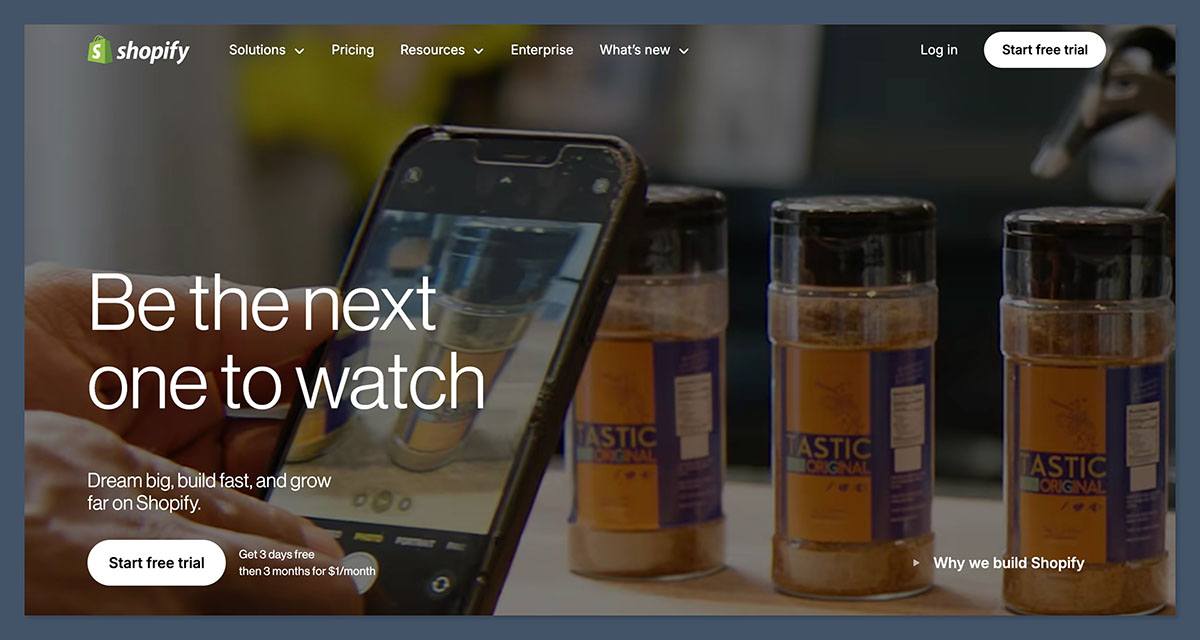
Faire isn’t designed for DTC. It doesn’t offer store-building tools or theme customization. Instead, it gives you a brand profile within the Faire marketplace.
Shopify gives you everything you need to launch and manage a full-fledged ecommerce store. It includes:
- Customizable templates and themes
- Product pages with variants, inventory, and rich media
- A section-based editor for site design
- Mobile optimization built-in
- Checkout and cart management tools
- Blogging, SEO tools, and content capabilities
If you’re building your own brand presence, Shopify is the clear winner. It allows you to craft a unique store experience that reflects your brand’s identity. This includes homepage layouts, product filters, and how your customers navigate the site.
Faire’s brand profile is more functional than creative. Your store on Faire looks like every other vendor’s. That’s not a bad thing for discovery, but it’s not ideal for storytelling or brand differentiation.
3. Best for Wholesale Sales: Faire Specializes in B2B Growth
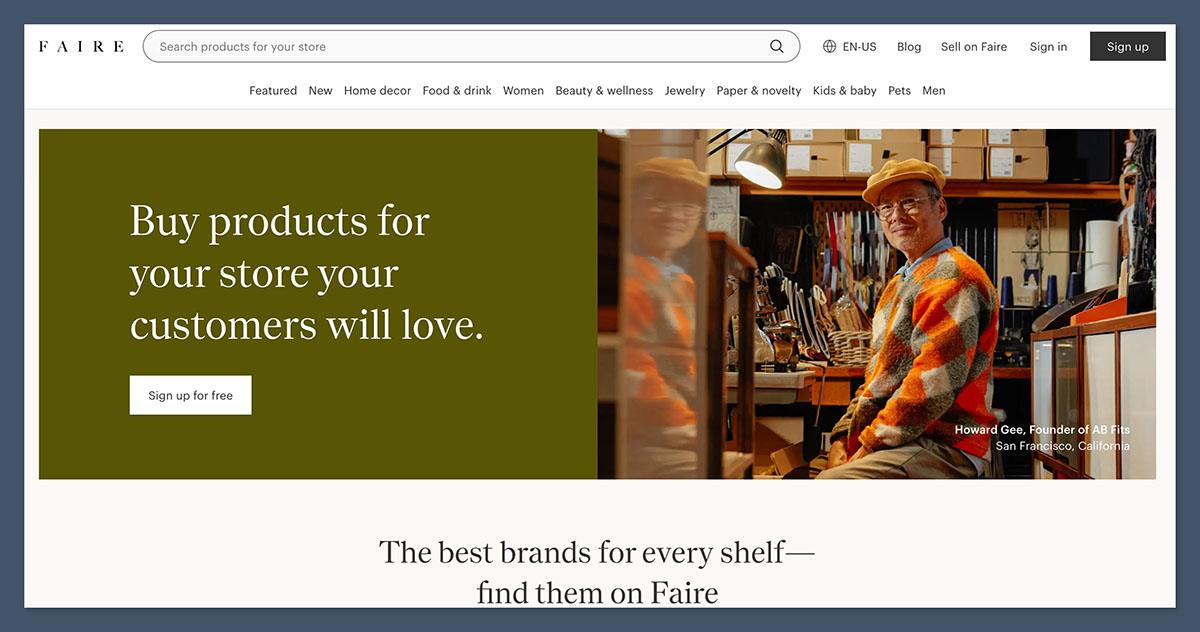
Shopify does support wholesale via apps and B2B-focused features, especially on higher-tier plans or Shopify Plus. But you have to bring in the leads yourself. That usually means:
- Cold outreach to retailers
- Wholesale applications and forms
- Separate price lists and order forms
- Manual invoicing and terms
Faire streamlines this entire process. It connects you with thousands of verified retailers actively searching for new products to carry. As a brand on Faire, you’ll benefit from:
- Marketplace visibility and retailer discovery
- Instant order placement from verified retailers
- 60-day payment terms managed by Faire
- Commission-free orders via Faire Direct links
- Integrated shipping and inventory tools
Faire is a true wholesale platform. It’s not just a plug-in or app. It was built from the ground up for B2B transactions, and the network effect is strong. Retailers come back often, and many brands report that once they’re established, repeat orders become a regular source of revenue.
If your business is moving into wholesale, Faire will likely outperform anything you can set up manually on your own site in terms of speed and scalability.
4. Best for Integrations and Operational Sync: Shopify and Faire Together Are Stronger
Shopify offers an enormous app ecosystem, with more than 8,000 tools available for payments, email, reviews, shipping, loyalty, and more. It’s one of Shopify’s biggest strengths.
Faire integrates directly with Shopify via an official sales channel. This integration means:
- Your product catalog syncs between Faire and Shopify
- Inventory updates automatically
- Orders placed on Faire can appear in your Shopify backend
- Reduces the need for separate fulfillment or double entry
This integration is easy to set up through the Shopify App Store and requires no coding. It’s designed for brands using Shopify as their central platform and Faire as their wholesale channel.
I found this connection especially helpful for simplifying operations. It allows me to run everything through Shopify’s backend, while still benefiting from Faire’s retailer marketplace.
5. Best for Seller Support and Onboarding: Shopify Offers a More Structured Experience
Shopify offers 24/7 customer support through live chat and help documentation. There’s also a huge amount of third-party training content, courses, and tutorials.
On the other hand, Faire provides strong onboarding for wholesale-specific needs. This includes:
- Personalized onboarding for new brands
- Access to support reps and documentation
- Wholesale best practice guides
- Order and fulfillment tools tailored to B2B workflows
Both platforms offer strong support, but they focus on different user journeys. Shopify helps you build and grow a brand from scratch. Faire helps you plug into an existing marketplace of buyers.
If you’re new to either channel, the learning curve is manageable, and both platforms are intuitive enough to get started quickly. The real complexity begins when you’re scaling, which is where Shopify’s structured backend and Faire’s retailer network each shine.
6. Which Should You Use?
The most important takeaway from my experience is this: Shopify and Faire solve different problems. They’re not rivals, and in most cases, the best solution is to use both.
Use Shopify if:
- You want to build your brand and sell direct to consumers
- You need a custom online store with full control
- You want to create a central system for orders, products, and marketing
Use Faire if:
- You’re looking to grow your wholesale sales without cold outreach
- You want to get discovered by new retailers quickly
- You’re tired of managing wholesale orders manually
Use Both if:
- You want a hybrid model of DTC and wholesale revenue
- You’re using Shopify as your main ecommerce backend
- You want to automate inventory and fulfillment across both channels
This combination works well. Shopify gives you stability and control. Faire gives you speed and access. And when they’re synced through the official integration, you get the best of both worlds.
Final Verdict
If I had to pick one for building a store, Shopify is the obvious winner. Its combination of design flexibility, app integrations, and scalability makes it the top choice for any brand looking to grow online.
But if your goal is to increase wholesale sales, Faire is the best channel I’ve tested. It brings in qualified retail buyers, streamlines the order process, and offers built-in tools tailored to wholesale success.
If your business model allows, I strongly recommend using both platforms.
Set up your Shopify store as your main ecommerce site. Use Faire as your wholesale discovery engine. Sync the two, and you’ll have a lean system that works across B2B and DTC.


