Over the past few years, I’ve worked with ecommerce brands, service-based businesses, and marketing agencies, and one of the most common questions I hear is, “Should I use Shopify or GoHighLevel?”
On the surface, they seem to overlap. Both offer landing pages, automation tools, and scalable infrastructure.
But once you dig into what each platform is actually designed to do, the differences become obvious.
These two platforms are built for completely different types of businesses; and picking the wrong one can cost you both time and money.
In this review, I’ll walk you through what I discovered after spending weeks testing and comparing Shopify and GoHighLevel side by side.
Whether you’re selling physical products or managing leads for local clients, this guide will help you choose the right platform for your goals.
Shopify vs GoHighLevel: Quick Verdict
Shopify is the better platform if your core business involves selling products online. It’s purpose-built for ecommerce, from the way products are listed and managed to the way payments and fulfillment are handled. It supports everything from small side hustles to global product brands.
GoHighLevel, on the other hand, is more suited to service businesses, marketing agencies, and anyone who focuses on capturing leads, automating communications, and managing client relationships. It’s a powerful CRM with integrated outreach and follow-up tools, not an ecommerce platform.
To put it simply:
| Platform | Best For | Starting Monthly Cost |
|---|---|---|
| Shopify | Ecommerce brands, DTC stores, physical or digital products | $39 |
| GoHighLevel | Agencies, lead generation, service-based businesses | $97 |
While you can build a funnel and capture payments on both, you’ll get the best results when you use the platform that’s aligned with the type of business you run.
Pricing Comparison: How Much Will You Actually Spend?
Understanding the true cost of each platform takes more than glancing at the base price.
There are transaction fees, usage-based pricing models, and optional add-ons that can significantly impact your monthly spend, especially once your business starts to scale.
Shopify Pricing: Flexible Tiers, But Hidden Costs
Shopify offers three main pricing plans for most US-based businesses:
- Basic – $39 per month
- Shopify (Standard) – $105 per month
- Advanced – $399 per month
If you choose to pay annually, you can save between 20 and 25 percent, bringing those prices down to $29, $79, and $299 per month respectively.
Each plan includes a full ecommerce storefront, a built-in checkout, unlimited product listings, and access to Shopify’s robust app store.
However, there are several factors that affect your real monthly cost:
- Third-Party Transaction Fees
If you use a payment processor other than Shopify Payments — for example, Stripe or PayPal — Shopify charges additional fees on every transaction. These fees are:- 2.0% on the Basic plan
- 1.0% on the Shopify plan
- 0.6% on the Advanced plan
- App Subscriptions
Shopify’s app ecosystem is one of its strengths, but it’s also a source of recurring expenses. Many essential tools — such as advanced product filtering, loyalty programs, or email marketing — require third-party apps. It’s common to see businesses spending $50 to $200 per month on apps alone. - Themes and Design
Shopify offers a handful of free themes, but many of the best-designed templates cost between $100 and $500 as a one-time fee.
In practice, the total cost of running a Shopify store looks something like this:
- Small store with minimal extras: $50 to $70/month
- Growing business with 2–3 paid apps: $150 to $250/month
- High-volume store using Advanced plan: $400 to $700/month
It’s worth noting that Shopify’s fees are predictable and generally scale in line with your revenue. That said, the third-party transaction fees can become frustrating if you’re not using Shopify Payments.
GoHighLevel Pricing: Usage-Based CRM and Automation Suite
GoHighLevel takes a different approach. Instead of pricing based on product sales or store size, it’s built around the number of client accounts, automations, and communication tools you use.
There are three core plans:
- Agency Starter – $97 per month
This plan allows up to 3 client sub-accounts, making it suitable for freelancers or smaller agencies. - Agency Unlimited – $297 per month
As the name suggests, you can create unlimited sub-accounts. This is the standard plan for most serious agencies. - Agency Pro (SaaS Mode) – $497 per month
This unlocks full SaaS white-labeling, rebilling options, and extended support for resellers. You can package GoHighLevel as your own software and bill clients monthly.
However, GoHighLevel also uses a wallet system to charge for communication usage:
- SMS messages cost $0.007 to $0.01 each, depending on volume and carrier.
- Emails are routed through services like Mailgun, and typically cost $0.001 per send.
- Voice calls and recordings are billed per minute and can add up quickly for call-heavy workflows.
For example, an agency sending 10,000 emails and 3,000 SMS messages per month will spend an additional $30 to $50 in usage credits.
Here’s a realistic breakdown:
- Solo user or coach with low automation volume: $100 to $150/month
- Agency with 5+ clients, moderate automations: $300 to $500/month
- SaaS reseller managing dozens of clients: $600 to $1,200/month (offset by client revenue)
GoHighLevel often replaces multiple tools — including ClickFunnels, Calendly, Mailchimp, and ActiveCampaign — so while it can seem expensive, the cost becomes more reasonable when compared to buying those tools separately.
Feature Comparison: Selling Products vs Managing Pipelines
When comparing Shopify and GoHighLevel, it’s important to understand that they’re optimized for very different business models.
Shopify: Best-in-Class Ecommerce Platform
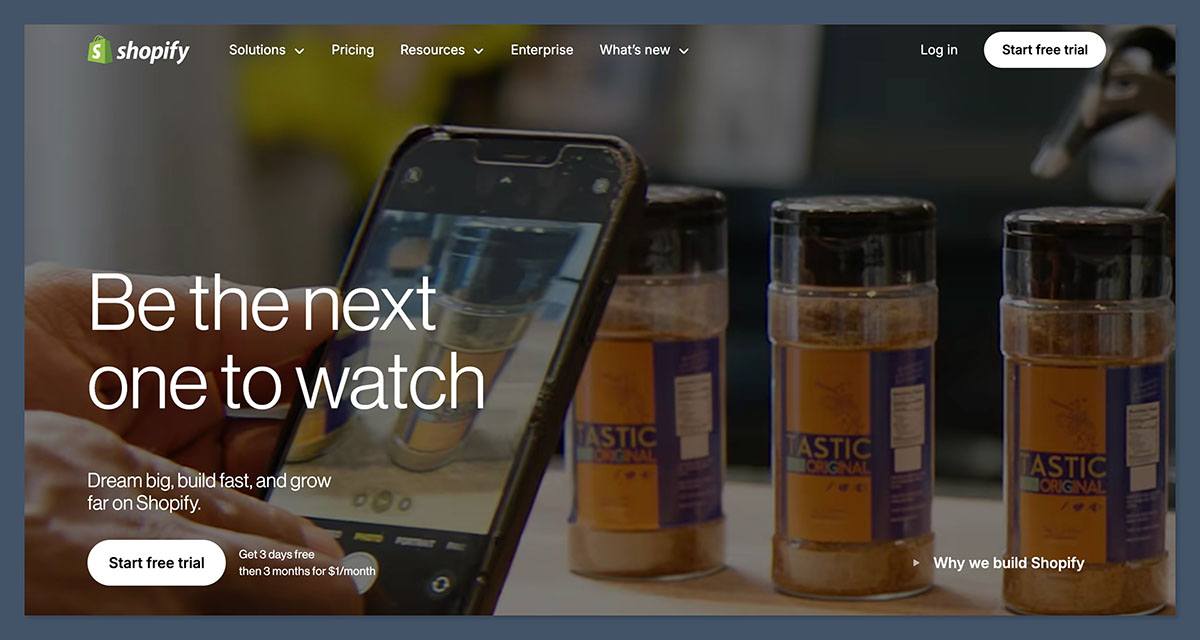
Shopify is built for one purpose: to help people sell products online.
Whether you’re running a one-product store or managing a catalogue of 10,000 SKUs, the platform is designed to handle every step of the ecommerce process.
Core features include:
- Product management tools: Track inventory, manage variants, and create collections.
- Professional storefront themes: Mobile responsive and conversion optimized.
- Optimized checkout: Designed for speed and ease of use, with support for one-click checkout options like Shop Pay.
- Multichannel selling: Sell on Amazon, Facebook, Instagram, Google Shopping, and even in person via Shopify POS.
- Shipping and fulfillment tools: Real-time rates, label printing, and integrations with major carriers and 3PLs.
- Order management: Track orders, manage returns, and automate customer notifications.
The platform is especially strong in areas like checkout performance and theme customization, which directly impact sales. It’s also highly reliable and secure, with PCI compliance and built-in fraud analysis tools.
However, Shopify is not a full CRM, and it doesn’t include native tools for things like pipeline management, automated lead follow-up, or two-way texting.
GoHighLevel: CRM and Automation Powerhouse
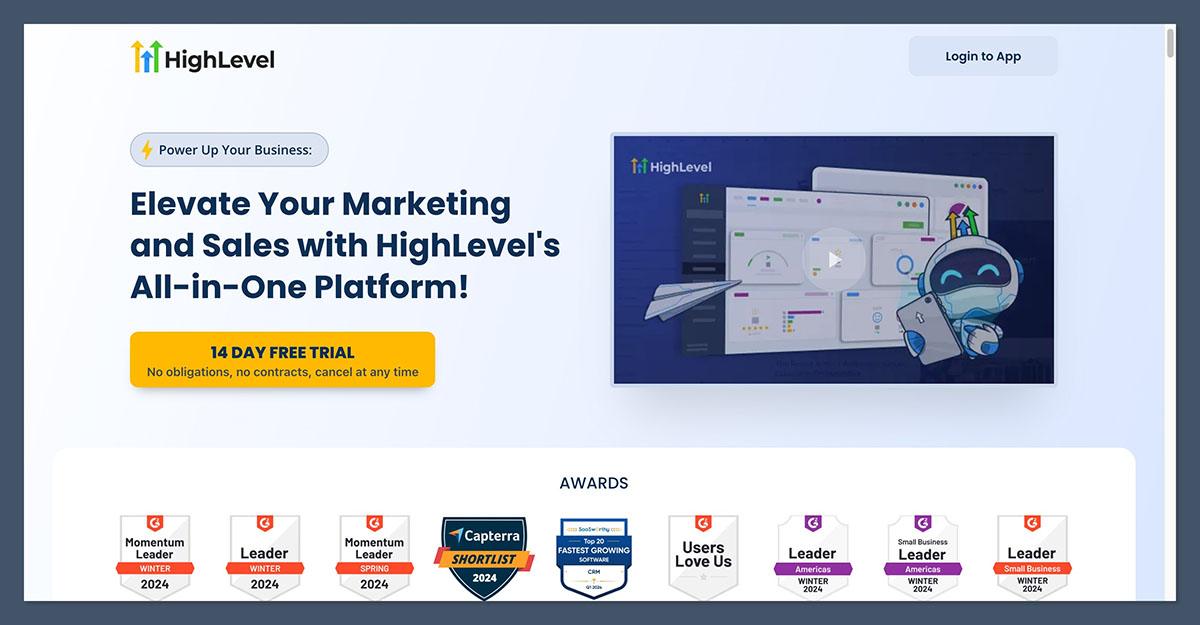
GoHighLevel was created for agencies and marketers who need to capture leads, nurture them, and convert them into clients. It’s less focused on product listings or order fulfillment, and more focused on client relationships and sales funnels.
Key capabilities include:
- CRM and pipeline builder: Visual sales pipelines, stage automation, and task assignments.
- Landing page and funnel editor: Build lead capture pages, opt-in forms, and thank you pages.
- Integrated calendar booking: Automate appointment scheduling and confirmations.
- Email, SMS, and voice automation: Set up drip campaigns, reminders, and follow-up workflows.
- White label and SaaS Mode: Brand the platform as your own software and bill clients monthly.
- Custom dashboards for each client account: Keep campaigns and reporting separated.
This makes GoHighLevel perfect for service businesses, coaches, consultants, or marketing agencies managing local business clients. It consolidates everything from follow-ups to reporting in one place.
That said, GoHighLevel doesn’t have native features for managing inventory, product variants, or shipping; and that’s where Shopify is clearly the better fit for product sellers.
Design, Templates, and Customization
When it comes to design flexibility, Shopify and GoHighLevel approach it from different angles.
Shopify: Polished Storefronts with Industry-Specific Templates
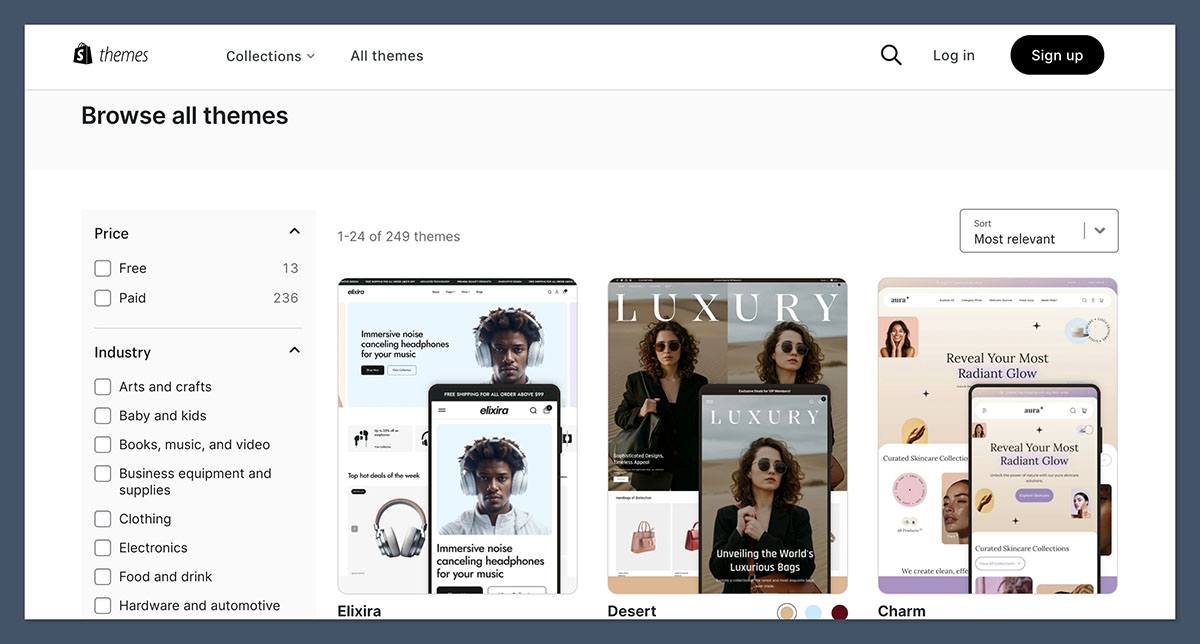
Shopify offers over 200 storefront themes, with 24 free options and premium designs priced from $100 to $500.
Each theme is built with ecommerce best practices in mind: clear CTAs, mobile optimization, and product-focused layouts.
You can customize fonts, colors, imagery, and content blocks through a section-based editor that’s accessible even to non-technical users.
For more advanced needs, you can edit the theme’s Liquid code or hire a developer from Shopify’s partner network.
GoHighLevel: Functional Funnel and Page Templates
GoHighLevel’s design library includes templates for funnels, landing pages, and client portals. These templates are geared toward conversion rather than brand aesthetics.
The drag-and-drop editor is flexible, allowing users to add text, forms, countdown timers, and videos without writing code. You can build custom pages quickly, but the result is more functional than elegant.
If your focus is on performance marketing and lead gen, the simplicity is a strength. But if you’re trying to create a branded shopping experience, you’ll find GoHighLevel’s design tools limited.
Final Thoughts: Which Platform Should You Choose?
After testing both platforms in-depth, here’s my advice:
Choose Shopify if:
- You sell products and need a modern, conversion-focused store.
- You want reliable order management, shipping tools, and multichannel selling.
- Your priority is branding, design, and long-term ecommerce growth.
Choose GoHighLevel if:
- You run a service business or agency and need to manage client relationships.
- You’re focused on generating and nurturing leads through automation.
- You want a centralized tool for CRM, marketing, and communications.
They serve different purposes; and if you try to use either one outside of its ideal use case, you’ll run into friction.
For product-based businesses, Shopify is the clear winner.
For service-based or agency businesses, GoHighLevel offers unmatched efficiency.


