When it comes to selling online, Shopify and Depop cater to two very different types of sellers.
While Shopify gives you the tools to build and grow a complete ecommerce brand, Depop offers fast access to a social marketplace, ideal for fashion and secondhand sellers.
After reviewing both platforms and helping hundreds of ecommerce sellers choose the right setup for their business, I can say this confidently: Shopify is best for long-term growth and brand control, while Depop is better suited for fast, casual selling with minimal setup.
But that only scratches the surface. In this detailed comparison, I’ll walk through the real pros and cons of each platform, based on pricing, features, ease of use, ideal customer types, and the experience of running a store day to day.
Quick Verdict: Choose Based on What You’re Building
Shopify is the better choice if you want full control over your business, your branding, and your customer relationships. It’s built for sellers who plan to scale, optimize, and eventually grow beyond just a few sales a week.
Depop is the smarter choice if you’re selling unique or secondhand items, especially in fashion. You don’t need a website, and you can start selling in minutes. There’s no monthly fee, and your listings are automatically shown to buyers already browsing the app.
In fact, many successful sellers use both platforms in tandem: Depop for discovery, Shopify as the home base.
Pricing and Fees: Know What You’re Signing Up For
One of the most important factors when choosing between Shopify and Depop is how they make money — and how much of your revenue they take.
Let’s break down the pricing models for both platforms side by side.
Shopify Pricing
Shopify uses a traditional SaaS model, meaning you pay a fixed monthly fee to use the platform. You also pay transaction fees when customers place orders, though these vary depending on your plan and whether you use Shopify Payments.
| Plan | Monthly Price | Price if Paid Annually | Shopify Payments Fee | Fee if Using 3rd Party Gateway |
|---|---|---|---|---|
| Basic | $39 | ~$29 | 2.9% + $0.30 | Additional 2.0% |
| Grow | $105 | ~$79 | 2.7% + $0.30 | Additional 1.0% |
| Advanced | $399 | ~$299 | 2.5% + $0.30 | Additional 0.6% |
Shopify also offers a three-day free trial, but this is only a small window to test things out. After that, you’ll need to commit to a monthly or annual plan to continue selling.
If you’re using apps (and you probably will), those can add anywhere from a few dollars to a few hundred dollars more each month depending on what you need.
Depop Pricing
Depop, by contrast, doesn’t charge a monthly fee to sell. It works more like a marketplace — you list items, and Depop takes a cut when they sell.
Here’s how Depop’s pricing breaks down in the United States:
- No selling fee for most US-based listings since July 2024
- Payment processing fee: 3.3% + $0.45 per sale (charged on the total, including shipping and taxes)
- Boosted Listings (optional): 8% of the item’s sale price if promoted
- Marketplace Fee (charged to buyer): up to 5% of the purchase price plus a fixed fee of up to $1
You’re not paying upfront, but you are giving up a chunk of every sale — and that chunk can grow quickly if you’re using promotions to boost visibility.
Features That Matter: Functionality and Flexibility
While both platforms offer tools for selling products, their feature sets are built for very different goals.
Let’s look at the features that actually matter when it comes to launching, growing, and managing an online store.
Shopify: Built for Full Store Control and Long-Term Growth
Shopify gives you the kind of control that marketplace platforms just can’t. It’s your store, your domain, your product pages, and your branding.
Here are the key features that make a difference:
- Custom storefront: Choose from over 200 templates, customize your design, and use your own domain name
- Optimized checkout: Shopify’s checkout is fast, mobile-friendly, and includes tools for upsells, discounts, and email capture
- App ecosystem: Shopify has over 8,000 apps, letting you add anything from reviews to email automation to dropshipping integration
- Advanced inventory and product management: Track stock levels, set variants, organize collections, and handle large catalogs easily
- Analytics and reporting: Built-in dashboards give you sales data, traffic trends, and customer insights
IIf you plan to scale or build a serious business, these tools aren’t just helpful, they’re essential. They give you the infrastructure to manage growth without reinventing your processes every time you add a new product or sales channel.
Without them, you’ll likely hit a ceiling much sooner, struggling to deliver the kind of seamless customer experience that drives repeat sales.
Depop: Fast, Mobile-First Selling With Built-In Audience
Depop is designed for casual sellers, side hustlers, and fashion resellers who want quick visibility without having to build a site.
Key features include:
- Built-in audience: Depop users browse, search, and buy directly through the app, making it easier to make sales without traffic strategies
- Mobile-first interface: You can take a photo, list a product, and ship it — all from your phone
- Messaging and offers: Buyers can message you directly, submit offers, or follow your shop
- No website required: There’s no need to deal with domains, hosting, or web design
That simplicity comes at a cost though, you can’t customize the customer experience or build much of a brand.
You’re limited to Depop’s design, checkout flow, and communication tools, which means every seller’s store looks and feels the same. Over time, this makes it harder to stand out, create loyalty, or drive repeat purchases outside the app.
Pros and Cons: A Side-by-Side Reality Check
To make this even clearer, here’s a simple comparison of the biggest pros and cons of each platform, based on how sellers actually use them.
Shopify Pros
- You get a real business foundation with your own site and domain
- The platform can scale as you grow with apps, tools, and integrations
- You can use Shopify to build multi-channel sales across Amazon, Instagram, Etsy, and more
- Checkout optimization and upsell tools help you increase average order value
Shopify Cons
- There’s a monthly fee, and costs can rise quickly with apps and add-ons
- You’re responsible for driving your own traffic through SEO, social, or paid ads
- Setup can be overwhelming if you’re brand new to ecommerce
Depop Pros
- No upfront cost makes it ideal for testing or casual selling
- You get instant exposure to buyers already browsing the app
- Listing items is fast, easy, and mobile-friendly
- Built-in messaging and social features help you interact with customers
Depop Cons
- You have little control over branding, customer journey, or checkout
- Discovery is algorithm-driven, and visibility can be inconsistent
- You can’t collect emails, run promotions, or optimize the experience
- Higher per-sale fees over time can add up, especially with boosted listings
Best for Selling Fashion or Vintage Items: Depop
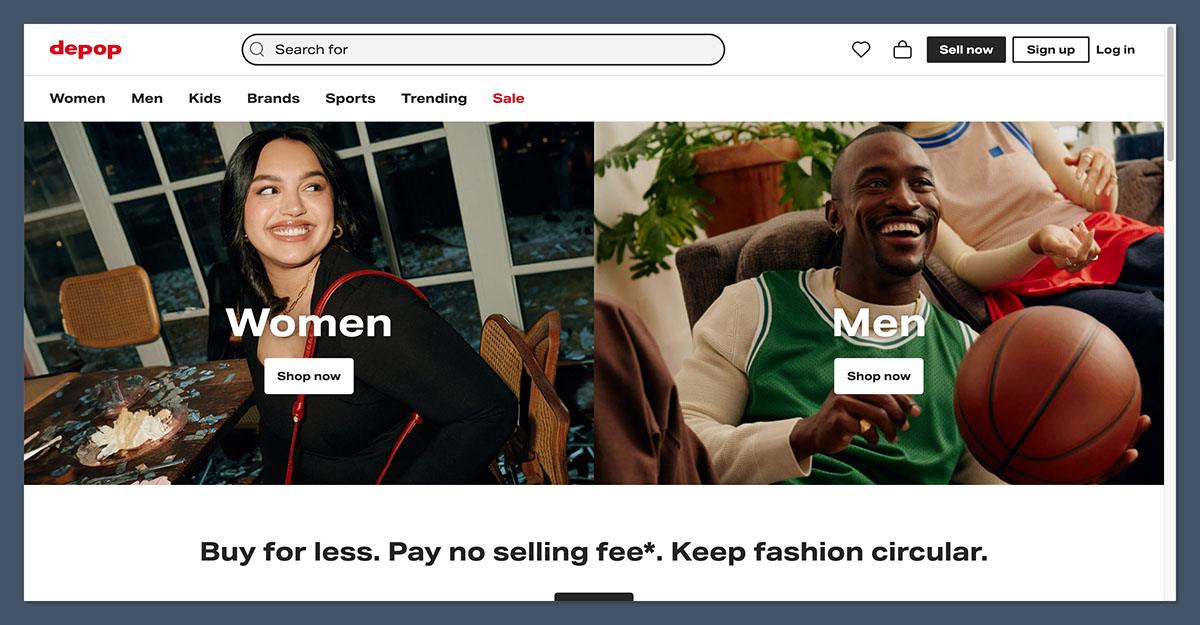
Depop has carved out a strong reputation as the go-to platform for fashion resellers, vintage collectors, and anyone flipping secondhand clothing.
Its user base is largely Gen Z, and its interface feels more like a social media app than a traditional ecommerce store, which makes it especially effective for visually-driven, trend-based selling.
If your business revolves around unique, one-of-a-kind fashion pieces, limited runs, or thrifted finds, Depop is a natural fit.
The platform is designed to help you list items quickly, connect with buyers through messaging, and build a following over time.
There’s no need to worry about designing a website or setting up complex payment systems, everything happens within the app.
One of Depop’s biggest advantages is discovery. Unlike a standalone website where you need to drive all your own traffic, Depop has millions of users actively browsing for new items every day.
If you use clear photos, write engaging descriptions, and price competitively, you can start making sales without investing in ads or SEO.
That said, it’s important to understand the limitations.
While Depop is great for fashion-focused sellers, it’s not ideal for scaling a large business or offering a wide product range. It works best as a fast, low-effort channel to move trend-based inventory and test ideas before investing more heavily elsewhere.
Best for Building a Brand and Scaling: Shopify
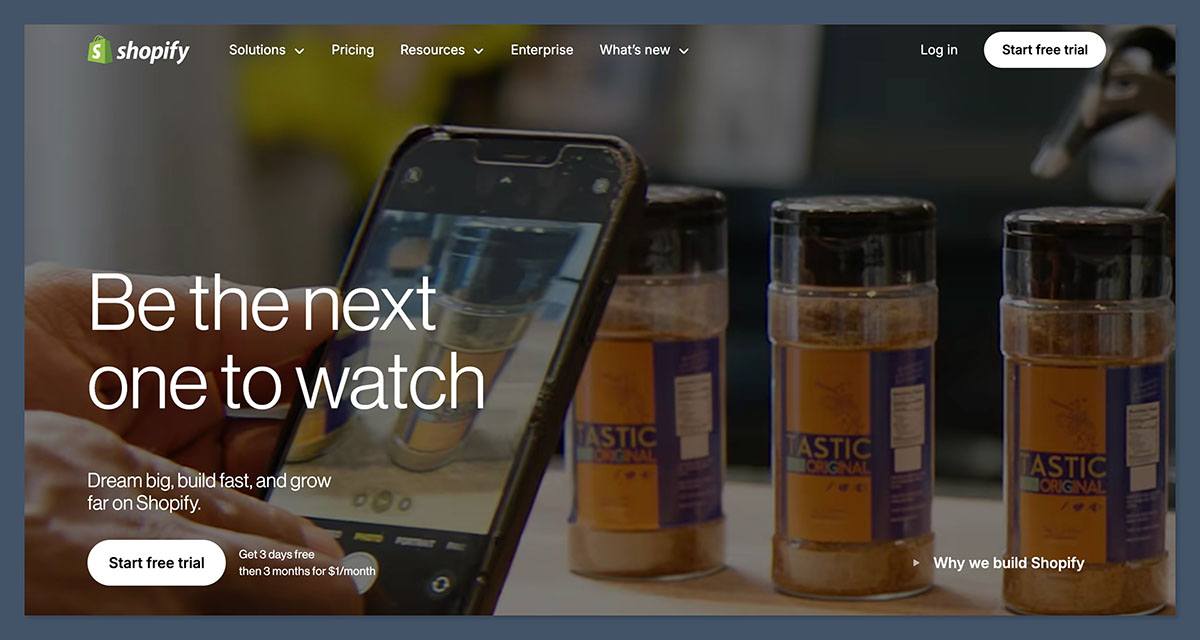
If you’re planning to grow a long-term business, Shopify is the better choice.
It’s ideal for sellers who:
- Want to collect customer emails and run newsletters or product drops
- Plan to run paid ads, influencer campaigns, or affiliate programs
- Sell items that are made to order or restocked regularly
- Need advanced tools for shipping, tax, or multi-location inventory
Once you start building momentum, Shopify gives you the tools to grow, not just sell. That long-term focus makes it worth the monthly investment.
Instead of hitting a wall as your sales increase, you’re able to scale your operations smoothly with built-in support for larger inventories, advanced analytics, and automation tools.
You can expand into new channels like Amazon or TikTok, run high-converting email campaigns, and create a customer experience that’s entirely your own. Shopify doesn’t just support growth, it actively enables it through a platform that evolves with your business.
That long-term focus makes it worth the monthly investment. You’re not just getting a storefront, you’re getting a full ecosystem to support marketing, automation, and customer retention. It becomes the foundation you can build on as your sales, team, and product line expand.
The Smartest Strategy: Use Both
Many successful ecommerce businesses use Shopify and Depop together. They’re not direct substitutes — they serve different parts of the sales funnel.
Here’s how a dual-platform strategy can work:
- List unique or trending products on Depop
This helps you tap into existing buyer interest and validate demand before investing in ads or inventory. - Use Shopify as your main storefront
Direct customers to your Shopify store for new collections, bundles, and exclusive products. - Build long-term relationships on Shopify
Collect emails, offer discount codes, run promotions, and turn first-time buyers into repeat customers.
Using both platforms allows you to stay visible on social marketplaces while building an asset you own and control.
Final Thoughts
Choosing between Shopify and Depop comes down to your goals and how you want to run your business.
If you’re just getting started, Depop is a fast, low-risk way to make your first sales, especially in fashion or vintage niches.
But if you’re thinking bigger and want to build something sustainable, Shopify is where you’ll have the control and tools to do it right.
For sellers with the time and focus, running both platforms is often the best move. You get the speed and discovery of Depop combined with the growth and control of Shopify.
Both platforms have a place. The question is, what kind of business are you trying to build?


