When it comes to choosing the right platform for selling online, Shopify and Bumpa both stand out, but for very different reasons.
Shopify is a globally recognized ecommerce platform built to scale, offering powerful tools for entrepreneurs looking to grow a serious online business.
Bumpa, on the other hand, is a mobile-first, lightweight platform specifically designed to help small businesses in Africa manage sales, inventory, and operations from their phone.
After reviewing both platforms closely (from pricing structures to product features, user experience, and long-term scalability) I can confidently say that Shopify is the better fit for businesses planning to grow beyond a local storefront.
But if you’re running a small operation and need something quick, simple, and affordable, Bumpa might be exactly what you’re looking for.
In this review, I’ll break down the differences between Shopify and Bumpa across six key areas that matter most to ecommerce businesses.
Quick Verdict: Shopify vs Bumpa
Shopify – Best for growth, international sales, and serious ecommerce operations
Bumpa – Best for small businesses in Africa looking for a mobile-first solution
1. Best for Pricing: Bumpa
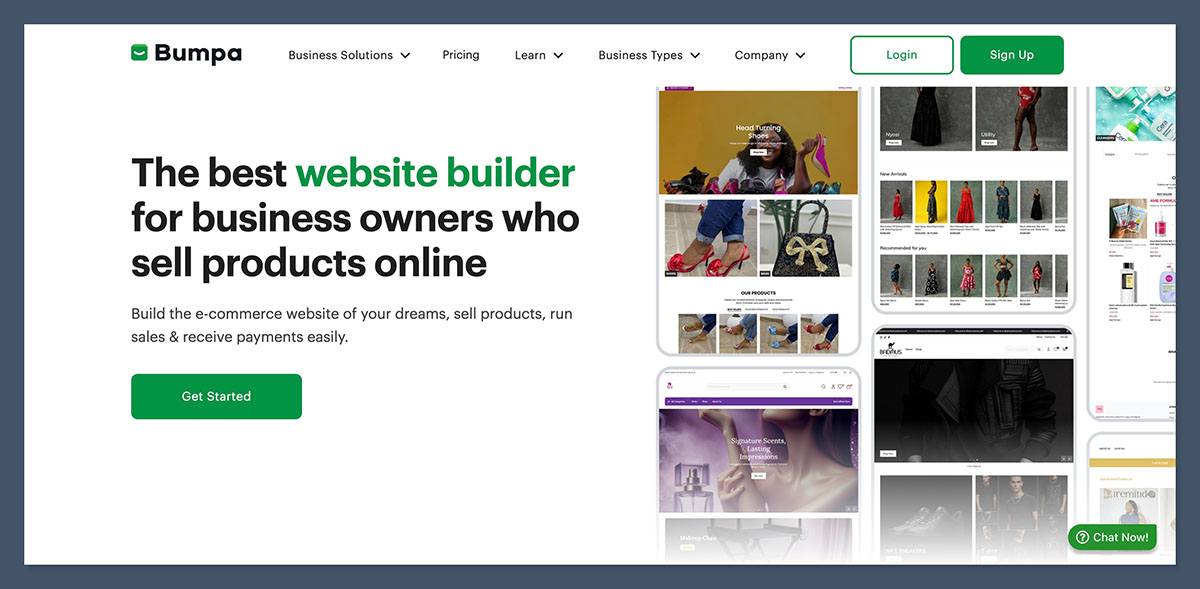
The Winner: Bumpa is significantly cheaper than Shopify
If you’re working with a tight budget or just starting out, pricing will play a big role in your decision. Bumpa is designed to be extremely affordable, with plans starting at just over $3 per month.
Shopify, in comparison, starts at $5 for a very limited starter plan, with its standard ecommerce features kicking in at $39 per month.
Here’s a breakdown of pricing for both platforms:
| Platform | Plan Name | Monthly Price (USD) | Notes |
|---|---|---|---|
| Shopify | Starter | $5 | Basic selling tools only |
| Shopify | Basic | $39 | Includes online store, checkout, and more |
| Shopify | Grow | $105 | More advanced analytics, staff accounts |
| Shopify | Advanced | $399 | Best for high-volume sellers |
| Bumpa | Starter | $3.21–$3.51 | Entry-level plan, billed quarterly or annually |
| Bumpa | Pro | $6.14–$7.01 | Adds marketing features |
| Bumpa | Growth | $14.61–$17.53 | Adds POS, logistics, and more staff access |
Bumpa’s pricing is presented in Nigerian Naira, and the USD conversions above use the mid-market exchange rate as of February 2026.
What You’re Actually Paying For
- Shopify charges additional transaction fees if you use a third-party payment provider. These fees can be as high as 2% per transaction on the Basic plan.
- Bumpa does not charge platform transaction fees, but you still pay payment gateway fees depending on your provider (e.g. Paystack or Flutterwave).
While Shopify offers significantly more in terms of ecommerce depth, it does come at a higher cost. Bumpa is clearly better suited for businesses looking to keep things lean and efficient.
2. Best for Selling Online: Shopify
The Winner: Shopify’s sales features are significantly more powerful
When comparing sales functionality, Shopify has a clear advantage.
It provides a complete ecommerce infrastructure for managing products, processing payments, tracking customers, automating fulfillment, and selling across multiple channels.
Some of the standout sales features on Shopify include:
- Advanced checkout customization
- Real-time shipping rates and fulfillment integrations
- Product bundling and subscriptions
- Cart recovery and discount engines
- Integrated Point-of-Sale (POS) system
- Sales across TikTok, Instagram, Facebook, Amazon, and more
Bumpa offers more limited tools focused on core operational needs like inventory management, basic website setup, and invoice generation. It’s effective for small retailers, especially those focused on local or regional sales.
Here’s a quick comparison of key selling features:
| Feature | Shopify | Bumpa |
|---|---|---|
| Abandoned Cart Recovery | Included on all standard plans | Not available |
| Product Variants | Fully supported | Limited |
| POS Integration | Native Shopify POS system | Included only on Growth plan |
| Multichannel Selling | Instagram, Facebook, TikTok, Amazon | Instagram integration only |
| App Store | 8,000+ apps | No app store |
| Custom Checkout | Fully customizable (Advanced/Plus) | Basic checkout only |
If you’re serious about scaling your store or selling internationally, Shopify is built to handle that kind of growth. Bumpa works best for managing smaller, simpler sales environments.
3. Best for Mobile Use: Bumpa
The Winner: Bumpa is better for mobile-first operations
One of Bumpa’s strongest features is its mobile-first design. From inventory to order tracking, Bumpa allows you to run most of your operations entirely from your phone.
Its mobile app is designed with simplicity in mind, offering:
- Inventory and stock management
- Invoicing and receipt generation
- Basic customer tracking
- Website creation and order management
- Integration with mobile payment processors
Shopify also has a powerful mobile app, but its features are more of an extension of the full desktop dashboard. If you want to run your entire business from your phone without touching a laptop, Bumpa makes that possible.
For mobile-based entrepreneurs, particularly those selling via WhatsApp or social media, Bumpa’s simplicity is a major benefit.
4. Best for International Sales: Shopify
The Winner: Shopify supports international growth from day one
If you’re planning to sell to customers outside of your local region, Shopify is the more capable platform.
It includes:
- Currency switching for international buyers
- Localized domains and language translation
- Tax calculation and shipping integrations for global logistics
- Multi-location inventory tracking
Bumpa, by contrast, focuses primarily on Nigeria and the West African market. It does allow for payment in USD on the Growth plan, but that’s about the extent of its international functionality. There’s no built-in language translation, multi-currency storefront management, or international shipping integrations.
If your strategy involves expanding into other countries or serving international audiences, Shopify is better positioned to support your growth.
5. Best for Customization and Integrations: Shopify
The Winner: Shopify wins for customization and third-party integrations
Shopify’s app store gives you access to over 8,000 third-party tools, including everything from marketing and SEO to shipping and product sourcing. You can find apps that help with email automation, AI-powered chatbots, dropshipping, loyalty programs, and more.
You can also customize your storefront using over 200 themes, including both free and premium options. Developers can even build custom functionality using Shopify’s APIs.
By contrast, Bumpa does not offer an app store or developer tools. You’re limited to the built-in features on each plan.
Here’s what that looks like:
| Customization Area | Shopify | Bumpa |
|---|---|---|
| Theme Selection | 200+ themes | Basic templates |
| Third-Party Apps | Yes, 8,000+ | No |
| API Access | Yes | No |
| Custom Checkout | Yes | No |
| Developer Support | Extensive | Not available |
If customization and flexibility are important to your business, Shopify gives you much more room to build and iterate.
6. Best for Support and Learning: Shopify
The Winner: Shopify offers stronger support resources and documentation
Both platforms provide basic customer support, but Shopify’s support system is more robust, especially for growing businesses.
Shopify offers:
- 24/7 live chat and phone support
- Email ticketing system
- Extensive help center with tutorials and videos
- Community forums
- Developer documentation
- AI-powered support chatbot
Bumpa provides a help center and basic support via messaging, but it lacks the depth and breadth of Shopify’s resources.
For entrepreneurs building their first store, Shopify’s onboarding process and tutorials can make a big difference. From domain setup to payment integration, there’s step-by-step guidance for nearly everything.
Final Verdict: Shopify vs Bumpa
Both platforms serve a purpose — the question is what your business actually needs right now.
Choose Shopify if you want:
- A platform that can grow with your business
- Tools to sell internationally
- Deep customization and app integrations
- Multichannel selling capabilities
- Reliable support and documentation
Choose Bumpa if you want:
- An affordable, mobile-first tool
- A way to manage inventory and sales from your phone
- A simple online storefront
- Localized support for Nigerian businesses
- A fast and easy setup process
If you’re looking to build a business beyond a local market and want a platform that can scale with you, Shopify is the better long-term investment.
But if your focus is staying lean, mobile, and local, Bumpa is a smart and affordable way to run a professional online operation.


